

The Supreme Court has one primary job, which is to preserve the illusion that it can do whatever it wants. Everything else that it wants to do relies on the persistence of that illusion.
An important part of preserving that illusion is avoiding the appearance of being political. That’s why Obamacare wasn’t struck down — not because any fifth grader can’t tell that that it’s unconstitutional, but because the court feared that acknowledging that the law is unconstitutional would be seen as ‘political’, which would undermine the ‘legitimacy’ of the court. The Court had to be political so that it wouldn’t seem political.
So what should the Court do when nineteen states approach it, saying that they believe that four other states didn’t follow their own constitutions during the most recent presidential election? Here’s what it should not do: Declare that those states don’t have standing to be heard.
It may be that the Supreme Court has grown so used to relying on the precedents set by previous Courts that it doesn’t bother to check the actual written Constitution any more. If it did check, it might notice that while it’s the people who elect representatives to Congress, it’s the states that elect a President. And if a state doesn’t have standing to challenge an election by the states in which it believes that other states have cheated — that it doesn’t even have the right to have its arguments heard and evaluated — then who has standing to challenge anything?
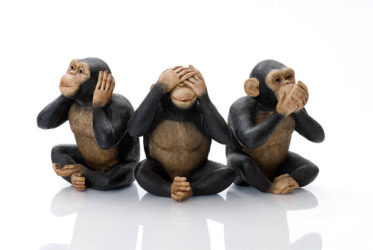
What stance could be more political than the one the Court is taking by burying its head in the sand, hoping the issue will resolve itself?
In the end, the optimal resolution would be for those nineteen states to decide that the Supreme Court is no longer relevant, and they are no longer bound by the ‘long train of abuses and usurpations’ represented by the previous opinions of the Court.
This would free those states to go back and operate under the written Constitution, rather than the oral one. That would in turn free them to ignore, not just federal judicial precedents, but also any federal regulations that were not directly voted on by Congress (to which the written Constitution assigns ‘all legislative power’). It would also free them to ignore federal laws that extend beyond the powers delegated to Congress — laws regarding education, medical care, the redistribution of wealth, and so on.
Which might induce a lot of other states to say: We’ll have what they’re having.
Which would be a great first step towards Making America States Again.
It would be hard to think of a better Christmas present for people who love what the Constitution could have been, but hate what it has become.
