

If you’ve read my discussion of why we don’t need a plan for re-opening the economy, and you still think we need a plan, here’s one for you to consider.
First, we formally repudiate the Declaration of Independence, replacing the old-fashioned ideas that (1) government is formed for the purpose of protecting rights, and (2) that it derives its just powers from the consent of the people, with the thoroughly modern ideas that (1) government is formed for the purpose of protecting public health, and (2) that it derives its powers from the will of the majority and the wisdom of judges — except in an emergency, when whoever happens to be in office can do whatever seems necessary to protect public health.
Dispensing with niceties like rights and consent changes this from a political problem to an engineering problem, and the simplest solution would be to assign everyone a number, kind of like a draft number. Your number would tell you when to report to an infection center, where you would be deliberately infected, and treated until you either recover or die. Anyone who has recovered would be free to go about his business as usual; and the people who haven’t been infected would remain under a real, enforceable stay-at-home order while awaiting their turn.
This plan has four important attributes.
First, it achieves the stated objective of flattening the curve, i.e., keeping the number of infections at any one time from getting high enough to overwhelm available medical facilities. Infections happen on schedule, rather than by accident.
Second, unlike the current strategy, it has a clear end game that doesn’t depend on hoping the virus will just go away, or that a vaccine will magically appear.
Third, it can be repeated for future outbreaks as needed. So the next time something like this happens, we’ll be ready.
Fourth, since this virus seems to kill mostly people who already have serious medical conditions, it would generate significant long-term savings by reducing expenditures on Medicare, Medicaid, and Social Security.
The numbers, of course, would not be randomly assigned. The most essential people would get the lowest numbers, so they could get back into circulation the soonest.
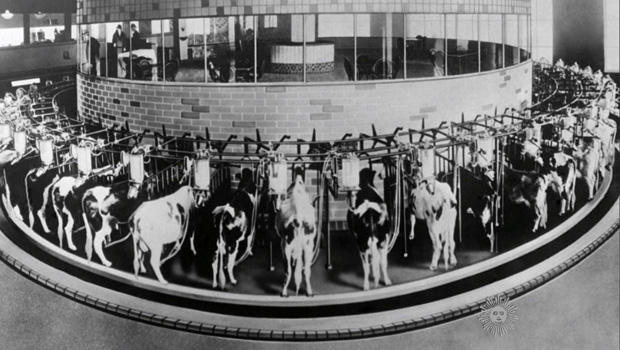
Also, to increase efficiency, people who are awaiting infection could be concentrated in camps, so that we can (1) keep them safer, and (2) take advantage of economies of scale while tending to their daily needs (like food and hygiene) in an infection-free environment.
In other words, we re-open New Hampshire (and the rest of the country), and keep them open in the future, by letting go of charming but outdated notions like freedom and personal responsibility, and embracing instead the central tenet of modern government: husbandry.
