

The committee tasked under Act 73 with coming up with a menu of consolidated school district maps for the legislature to consider in 2026… just didn’t do it. It was their whole job under the law, and after six months of hearings and consultants and cashing those taxpayer-funded per-diem checks and blowing through their $170,000 budget, they decided, no, we’d rather not.
Color me shocked!
Well, not entirely. Regular readers of this column might recollect that on occasions HERE, HERE, HERE, HERE, HERE, HERE, HERE, HERE, and HERE, going back to last February, I warned that for myriad reasons this scheme was doomed to failure. When Governor Scott unveiled it, he quipped that there was something in it for everyone to hate. This was – and is even more so now – true. The problem is there’s precisely nothing in it that anyone likes. Not taxpayers, not teachers, not parents, not anybody anywhere outside of a handful of cubicles on the Fifth Floor of the Pavilion Building.
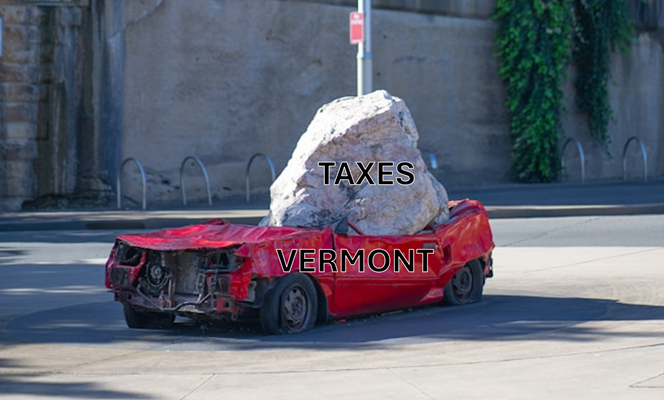
Act 73 was a political time bomb, maybe more like a depth charge, destined to explode at the pressure point when a majority of voters actually started paying attention and figured out what was in it. Why Republicans who won a historic victory in 2024, mainly by promising to do something about affordability/crushing property taxes, would sign on to a law that does nothing to reduce property taxes for years, if ever, was – and still is – baffling to me. But they did!
And ever since, I have been resigned to the inevitability of that bomb blowing up in their faces and gloomily speculating on what the political body count will be come November. But the way I saw things unfolding was sometime in the spring of 2026, when a vote on the Task Force’s maps would come to a head, Democrats would all vote NO with popular opinion firmly on their side. Republican legislators would be left in the politically fraught position of having to hang the governor out to dry by voting no, too, on his flagship law, or upsetting their constituents by voting yes for a law they despise. Either way, Republicans would have failed to come through for the property taxpayers who elected them. Not good.
But, HALLELUIAH!! for the incompetent, scofflaws beholden to special interests in the Redistricting Task Force!
By refusing to put forward a map – effectively killing Act 73 before the legislature has to take it up – in a scene from Hollywood snatching hope from the jaws of hopelessness, in the nick of time, they have snipped the map-wires and diffused the bomb. The digital clock ticking down to election season goes blank. The world is saved!
Okay, perhaps I’m overdramatizing a bit, but the long and the short of it is this gives Republicans both the excuse and the time to pivot away from the absolute mess that is Act 73 and back to the issue that got them elected: property tax relief.
Here’s my recommendation (again):
1) Put forward a bill that will freeze property taxes this year and lower them systematically over the next three years, clawing back the 14 percent increase of July 2024, during which time a full and thoughtful education funding and delivery reform package can be developed. But where will we make up the revenue?
2) The General Fund. Now, when the education fund is done raising revenue from the sales and use tax, purchase and use tax, rooms and meals tax, and lottery and it still isn’t enough to cover the combined school budgets from across the state, the property tax is tasked with making up the difference no matter how cripplingly high the number. End this. Make property taxes a fixed (and smaller) component of the overall funding formula and shift the burden of “last source covers the nut” to the General Fund. Essentially, this is a legally binding commitment to what is now called “buying down the property tax” every year for the next three years — and then perhaps forever as part of a more sustainable funding formula.
If Vermonters want to keep spending higher and higher amounts on public education, fine, but cuts will have to come from existing programs. Or the politicians can raise other taxes to cover the cost and explain it to their constituents. Either way, these are debates that should be had, transparently and with accountability, unlike today, where property taxes go up and everybody just shrugs their shoulders.
3) To discourage rampant spending by school districts, set the per pupil Foundation Formula spending number that will go into effect at the end of this three-year planning process now to give school districts a three-year glide path to smoothly adjust their spending to the meet the coming new normal.
That’s one option where I think a majority of voters would find something to like. The Democrats won’t like it because it saves money, increases transparency, and accountability – but those are all things Republicans should be eager to point out about their opponents in an election year!
The other option is to pick the broken Act 73 bomb up off the floor and try to reassemble it, resetting its ominous countdown clock of doom to campaign season 2026. Which option will Republican legislators pick?
