There has been considerable criticism surrounding the College Board’s changes to the SAT, with concerns that the revised test has been made less rigorous. This raises an important issue when evaluating student performance: if proficiency scores increase, does that mean students are learning more, or does it mean the test has simply become easier?
An increase in test scores does not automatically translate into improved academic achievement. If the assessment becomes less challenging, higher proficiency rates could give parents and taxpayers a misleading picture of how well students are actually performing.
I would encourage parents to send this article to their superintendents and school board members and ask them to notify families about the changes to the SAT, which is New Hampshire’s statewide high school assessment for 11th graders.
Parents deserve to know when the measuring stick changes. Any reported gains in high school proficiency should be viewed in the context of the revised assessment and should not automatically be interpreted as evidence that schools have improved their academic programs or that students are better prepared for college and careers.
We need transparency, consistent academic standards, and honest reporting so parents can determine whether our schools are actually improving.
SENT October 31, 2026
Dear Superintendent Nadeau and Members of the SAU 21 School Boards,
Please take the time to review the article from Thomas Aquinas College regarding recent changes to the SAT. The article discusses a study by Johns Hopkins University’s Institute for Education Policy, sponsored by Thomas Aquinas College, comparing earlier versions of the SAT with the test as it is currently administered.
The researchers concluded that “The College Board’s conception of college-ready reading has changed.”
And the changes deserve serious attention.
The study documented significant differences between earlier SAT exams and the current version. Reading passages have become substantially shorter, independent vocabulary questions have declined from 60 to 10, and the test has shifted away from longer argumentative and persuasive texts toward shorter expository passages that provide more contextual clues. This change eliminated many historically significant texts, including passages from U.S. founding documents and global literature, which were previously used to assess critical reading and analytical skills. The College Board argued that these passages are not essential for college readiness and that shorter content helps students who struggle to engage with longer texts.
The Math section has also been altered. Students now face fewer questions but retain the same total time, effectively giving them more time per question (1.6 minutes per question compared to 1.3 minutes previously) and allowing calculators for the entire section. It’s been argued that this change negatively impacts actual college readiness.
For college applicants, this has made for a dire combination. Little more than a third of 12th graders are proficient in reading, and 26% say they never read novels outside of school. By some accounts, many students now arrive on campus “functionally illiterate,” incapable of reading complex texts. The rampant use of artificial intelligence to complete assignments is unlikely to help.
Thomas Aquinas College Vice President and Dean Emeritus John J. Goyette expressed concern about what these changes mean for college preparation:
“The makers of the SAT seem to believe that the ability to tackle long and complex literary works isn’t an important skill for college students anymore.”
This raises an important question for school boards, administrators, teachers, and parents: Are standardized tests measuring genuine improvements in student achievement, or have the expectations being lowered?
The study demonstrates that the reading skills being assessed have changed and many have argued that this has lowered the academic expectations. If an assessment places less emphasis on sustained reading, vocabulary, and the ability to analyze complex texts, we must be careful about interpreting changes in scores. Higher scores do not automatically demonstrate that students have acquired stronger academic skills or are better prepared for college.
There is another important connection worth considering. College Board CEO David Coleman was the chief architect of the Common Core State Standards. After more than a decade of implementation, those standards have not delivered the academic improvements that were promised.
Key Findings from Major Sources
**No significant improvement in achievement: Brookings reports “no convincing evidence” that Common Core raised student performance. Why Common Core Failed
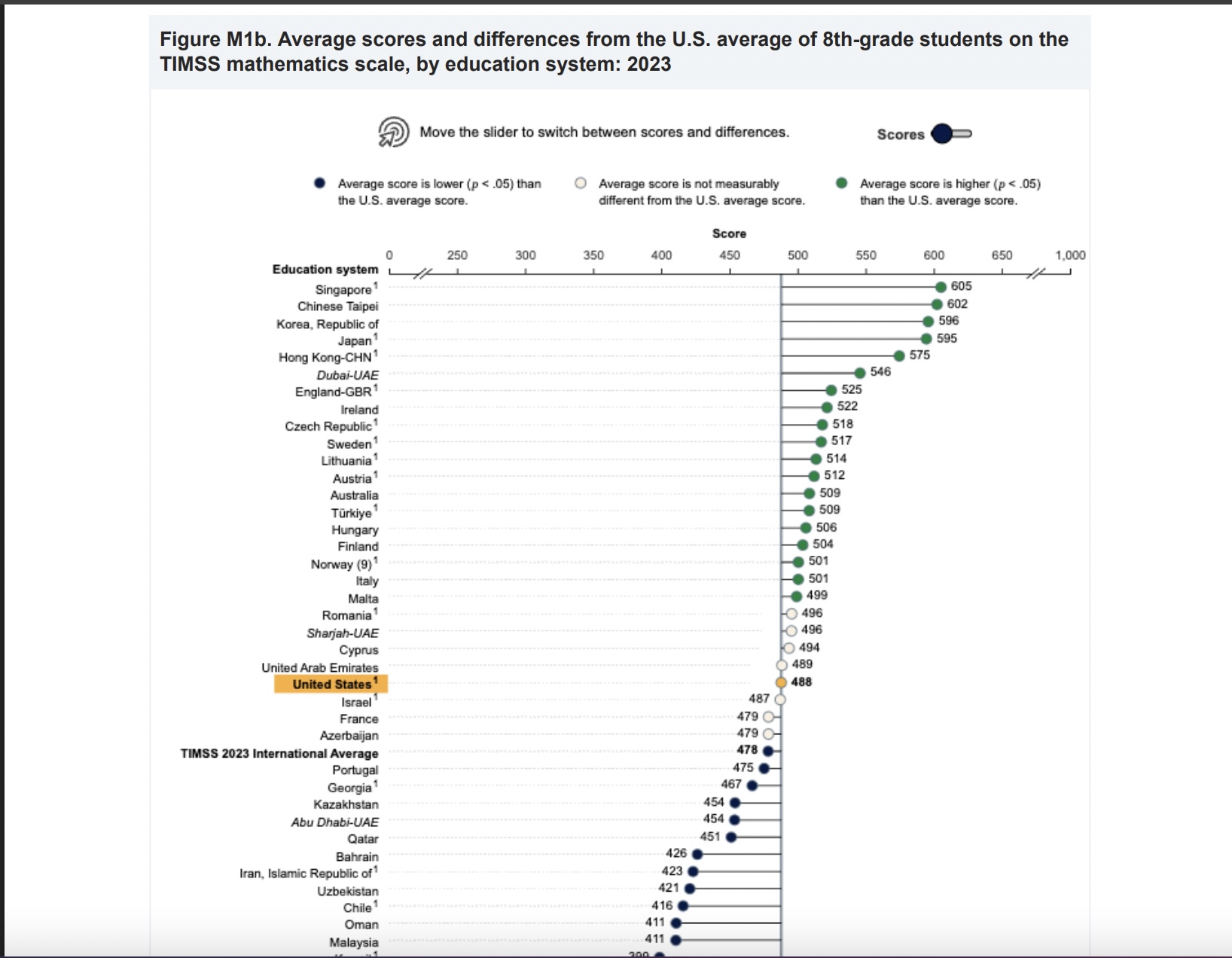
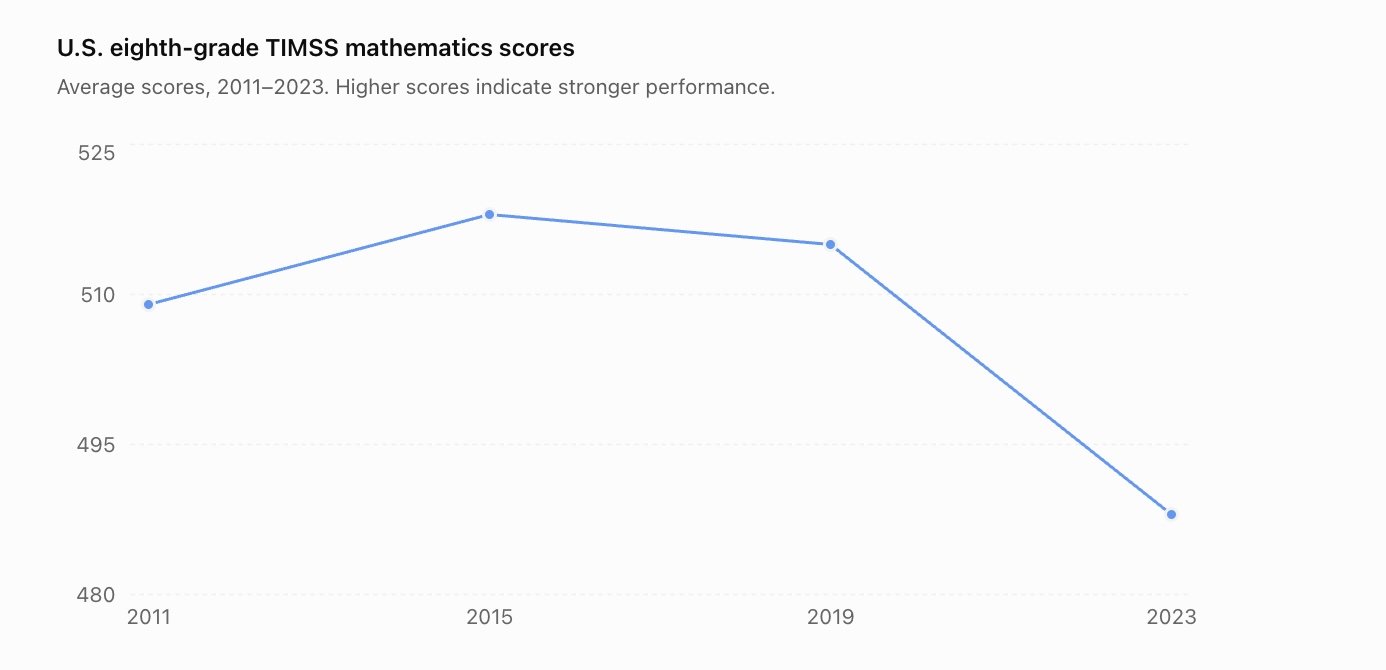
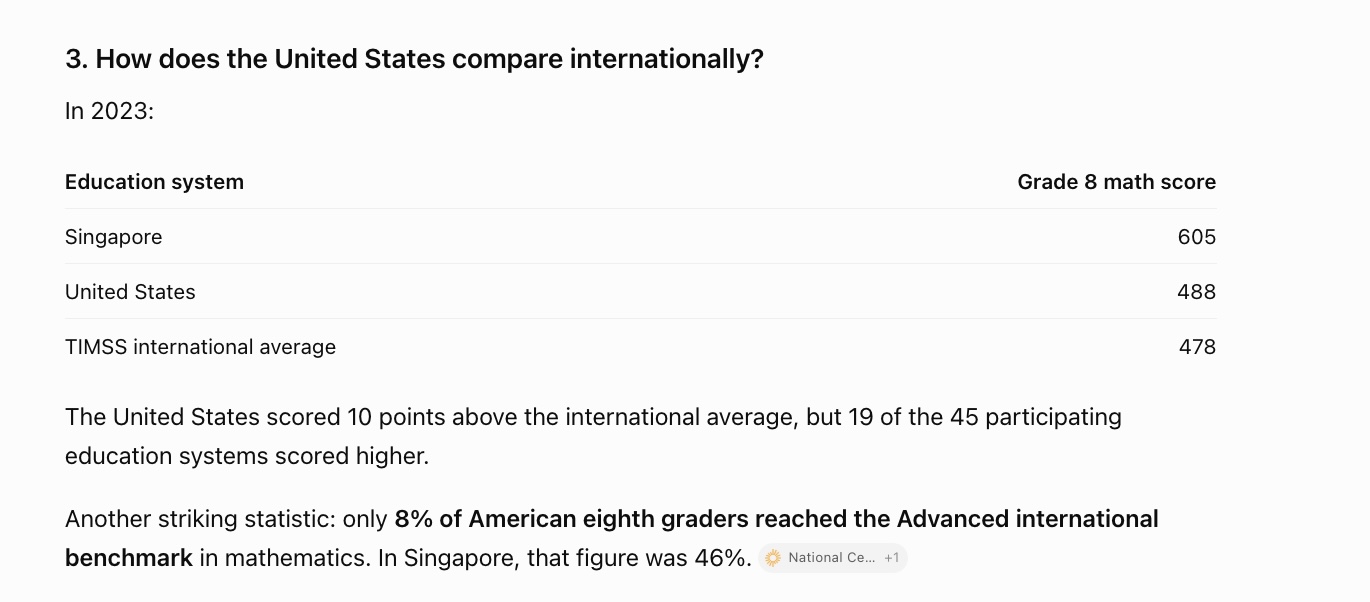
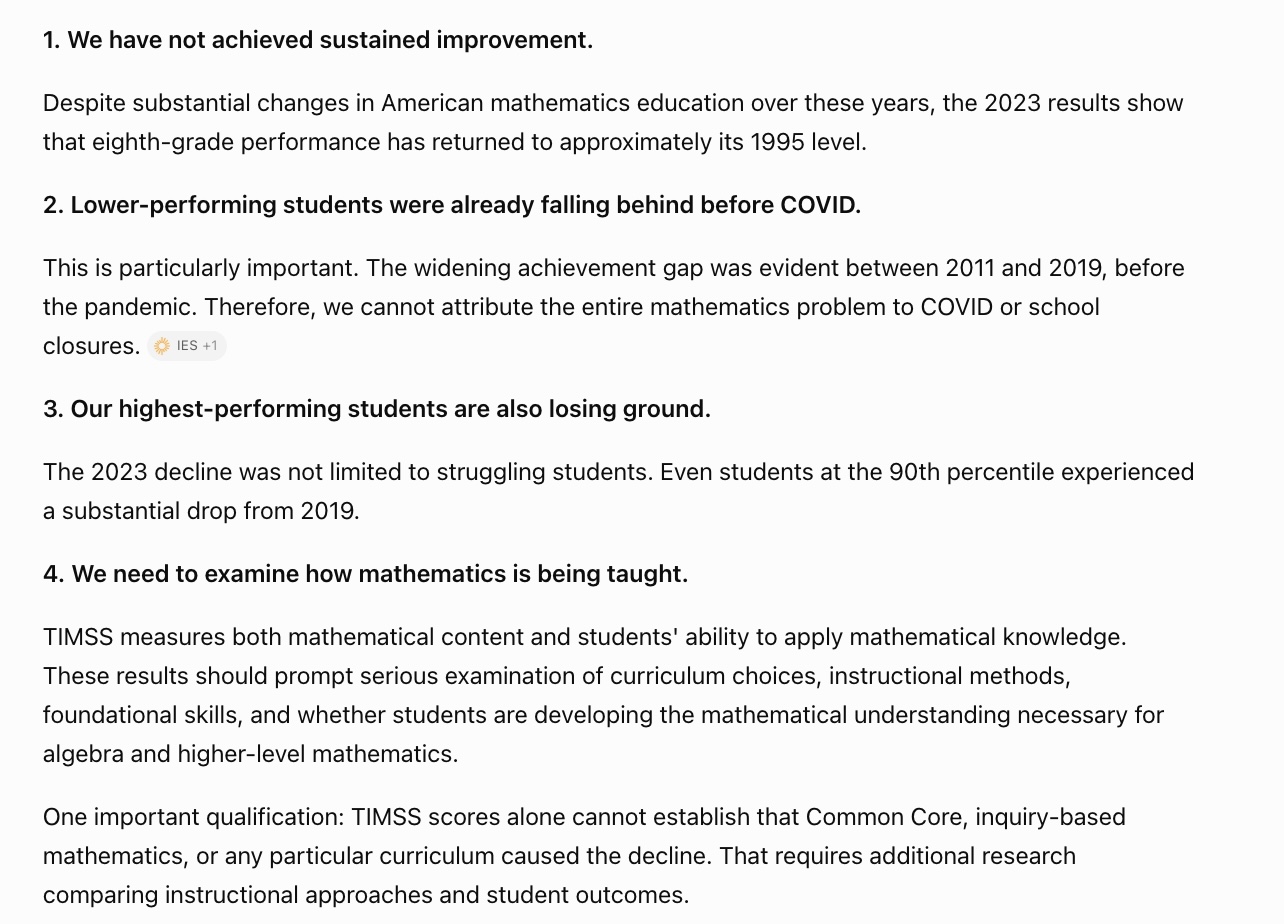
Our international standing on the TIMSS assessment (math and science) has not demonstrated the progress we should expect. Over the past 15 years, U.S. TIMSS scores have shown a long-term decline in mathematics, with science scores more stable but also showing some downward movement in recent cycles. Although the pandemic contributed to learning loss, it does not explain away the broader concerns about academic performance and the effectiveness of the standards that have guided public education for years.
Now we must consider whether changes to the SAT will make it even more difficult to determine whether students are truly college-ready. We should not confuse improved scores with improved knowledge, particularly when the skills being tested have changed.
I also continue to ask why New Hampshire does not participate as a TIMSS Benchmarking State for fourth- and eighth-grade mathematics and science. The United States participates in TIMSS nationally, but that does not give New Hampshire the same state-level international comparisons available to benchmarking participants. Massachusetts has used TIMSS to compare its students with those in high-performing countries around the world.
Why shouldn’t New Hampshire pursue the same opportunity?
TIMSS provides an important way to examine how our students perform in mathematics and science against international standards. If academic excellence is truly our goal, shouldn’t we want to know how our students compare with those in countries that consistently outperform us?
I urge you not to accept the status quo simply because it has become standard operating procedure. Look at proficiency numbers but in terms of how our students perform compared to countries like Singapore, or Japan. Examine the curriculum, the instructional methods, the academic expectations, and the actual knowledge students are acquiring.
Parents and taxpayers deserve an honest assessment of whether our schools are improving academically. Our goal should be genuine academic excellence, especially in light of the high school test that many now describe as being dumbed-down.
Sincerely,
Ann Marie Banfield
North Hampton, NH