

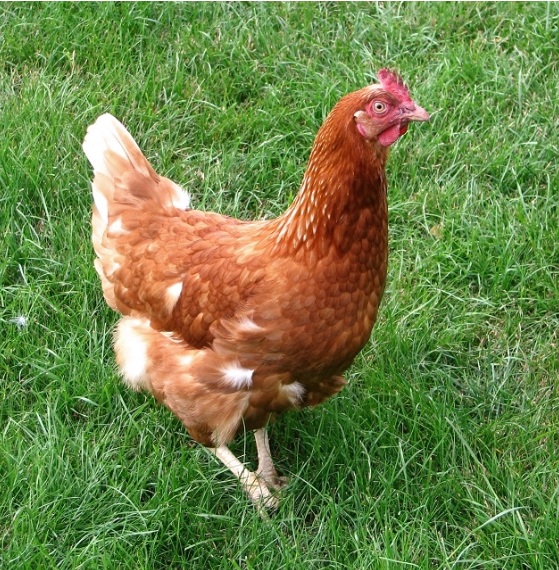
The Proposed Ordinance is an unnecessary intrusion.
Dear Councilors, fellow Merrimack residents, and interested members of the public.
Since my last letter, I’ve had more time to reflect on the proposed chicken ordinance. I stand behind every word of my last letter, and I’ve made it public for the sake of discussion. Still, I now see an additional significant issue that must be brought forward, which provides an even more important reason for this proposed ordinance to be thrown out, in its entirety, on its ear, never to return.
Bring on the pitchforks and torches.
Speaking of pitchforks, torches, and peasant (read: taxpayer) revolts, I have been told there will be a police presence at the public hearing on Thursday due to concerns about heated exchanges. I want to point out that perhaps the reason for the growing public anger is that this ordinance is an intrusive attempt at government overreach into our very backyards, nay, even into our chicken coops right down into the depths of our compost heaps.
Not only that, but many of us who found out about it happened to come across a social media post that alerted us. We have not been adequately informed. Many residents still don’t even know about this. That, and the fact that people find out there isn’t even an actual problem with chicken owners in Merrimack, is why people are angry. The injustice is clear. I urge people act and speak with civility and courtesy at the public hearing while also firmly making clear that this ordinance is entirely unacceptable.

This proposed ordinance goes far beyond noise concerns. Some particular points of concern are the prohibition on keeping chickens as a business (read: selling eggs to friends and neighbors who want to buy eggs). It is a historically regular human activity to raise chickens and to sell eggs to friends, family, and neighbors. The micromanagement is outrageous with the proposed distance from property lines, coop and run placement requirements, and coop construction material requirements. The micromanagement goes so far as to extend to the chicken manure, with proposed standards that backyard chicken keepers would have to read and adhere to. This level of control is not appropriate for private residents who keep chickens in their backyards.
For readers unfamiliar with the situation, here is a short recap. Merrimack resident Mike Malzone, a former town councilor, claims that his neighbor’s rooster was unreasonably loud and annoying. He went to the current town council, which then created this proposed ordinance. The recent Union Leader article mentions at least one resident who claims that Mr. Malzone is receiving special treatment because he is a former town councilor.
I have a question for the town council. Did anyone actually check whether chickens or roosters have caused a problem in the town? And if not, why not? How is it responsible to consider imposing an ordinance on the entire town to fix a problem that doesn’t exist? Does Merrimack actually have a chicken problem?
Merrimack resident Lisa Statchen obtained some reports from the Merrimack Police Department to answer this question. She found exactly three rooster complaints in 2024 and three in 2025. To put this in perspective, she also reviewed the police logs for October 2025. For just one month alone, there were 34 animal/dog barking/dog lost or found listings. She also reviewed the September logs and found similar numbers. Annualized to compare apples to apples, or in this case, chickens to dogs, dogs create over 400 complaints compared with 3 for chickens annually. Chicken complaints are less than 1% of total complaints compared with dogs, yet I don’t see anyone trying to ban or severely limit dogs. If there were a serious problem with the chickens of Merrimack, it would show up in the police logs. It’s not there. Objectively, there is no chicken problem in Merrimack.
The ordinance is based on some serious false assumptions and harmful stereotypes. One false assumption is that chicken owners or anyone engaged in farming in general is a stupid, uncultured country bumpkin. The stereotype that farmers are stupid is untrue, but it remains.

Why do people get chickens? While there are several reasons people get into micro-farming or chicken keeping, one is that they’ve done the research and found that home-grown, nutrient-dense food is worth the work, and believe me, it’s a lot of work. It’s way easier to drive to the local supermarket and pick up a box of Twinkies or pesticide-soaked produce. Some people have health problems and have found that producing and eating high-quality food at home is worth it for the sake of their health.
Some want to teach their children to love animals, care for them, and learn responsibility. Some want to be more connected to the land, learn traditional skills, or develop greater self-reliance. Others love watching chickens, the comedians of the bird world. There is a phrase among chicken keepers for this: chickenvision, as in, turn off the television and watch some chickenvision.
There is also the assumption that chicken owners are jerks who don’t care about their neighbors. The police report proves that this is false for the vast majority of chicken owners. There’s always going to be an exception in any population group. The exception should be addressed on an individual basis, ideally between the two neighbors themselves, rather than punishing a whole community that, on the whole, has proven courteous behavior.
Micro-farmers and chicken keepers often care quite a bit about their neighbors, and some go above and beyond, producing food for themselves and providing homegrown, fresh, nutrient-dense food for sale so that their neighbors might have access to it too. In fact, Merrimack has one Facebook group called the Fresh Egg Trail to connect those in Merrimack who produce eggs with those who want to buy them. They have 159 members. We don’t know how many people produce eggs in Merrimack, but we do know that there is a demand for fresh eggs in Merrimack. Residents regularly, happily, and freely choose to buy eggs from Merrimack residents who keep chickens and generously offer some for sale.
There is an assumption that farming is necessarily dirty, smelly, unfit to be seen in public, and somehow beneath the people of Merrimack. I want to remind the council that without farms, we don’t eat. Food must be grown or produced somewhere. Farming is not a dirty word.
Lastly, there is an assumption that micro-farming or chicken keeping is worse than factory farming and could lead to animal abuse if not heavily regulated. Actually, the animal abuse happens at the big factory farms. For example, chickens’ beaks are often clipped in factory farms because they are raised in such crowded, stressful conditions that they would attack each other otherwise. This procedure often causes acute and chronic pain and nerve damage for the poor chickens who must endure this treatment. People who raise chickens often do so because they want to do their part to stop this abusive behavior, give their chickens the best lives, and eat eggs from happy chickens rather than industrially tortured ones. Restricting the keeping of chickens in Merrimack actually leads to more animal abuse in our society.
So, there is no objective chicken problem in Merrimack. There is only the fear of what does not exist in a few people, and in fact, the chicken keepers in Merrimack provide a service to residents by supplying a source of fresh, delicious eggs that residents gladly buy. Chicken owners are actually a town asset.
Did Mr. Malzone actually try to work out his issue with his neighbor? According to his neighbor, he did not. He went to the town council instead.
Here is a statement by his neighbor, Chris Boisvert:
“He (Mr. Malzone) asked us over the summer if we had roosters since we had one that was a baby. We told him at that point (he was yelling to us over the fence from his yard, he didn’t come over) that we had one accidental rooster. We got four chicks, and it’s never 100% so unfortunately, one happened to be a rooster. We didn’t want one, but we also aren’t the type of people to get rid of an animal, it’s not their fault. We kept him, and he has turned into a sweetheart. This was the extent of our conversation, that one time. He has never complained, never come to us with any concerns, and never asked us to keep him quiet. Never.”
“We don’t hear him during the day and he’s in our backyard. If we go out, then he may crow to say hello, but he isn’t doing this all day long like it was made out to be. That is completely 100% inaccurate. He also has a very distinct crow, the tape that he put together doesn’t even sound like him, and sounds like about five different ones on a mixed tape.”
So, I’m concerned that the person who led to this proposed ordinance didn’t even complain to his neighbor, but went straight to town-wide action.
I’m concerned that the council hasn’t apparently vetted the request by interviewing the neighbor involved or by researching whether chickens are actually causing an issue in town.
I am also concerned by one response I got back from a member of the town council. One of the councilors argued that, since Merrimack has reached a certain population level, it may be time to impose restrictions like those in other towns of similar size.
According to whom?
Town councilors should be representing Merrimack, not any other towns or entities. Towns are made up of people, and the people in one town might be different from the people in another town. We are not obliged to join an amalgam of crushing uniformity so that all towns are alike. Who says? We all know that towns have different characters. Some are more rural. Some are more affluent. Some are university towns. Some are young. Some are old. Some are touristy. And that’s fine. Restrictions imposed on residents should not be based on arbitrary population benchmarks but on actual realities on the ground.
Again, there is no chicken problem in Merrimack.
This ordinance is discriminatory. Dogs create vastly more complaints than chickens. Why are only chickens in the crosshairs? What’s up with that? How about leaf blowers? They’re really loud and annoying. How about parties? Fireworks? Snowblowers? Dumptrucks? Roofers? Kids playing? Lawnmowers? Are we going to ban all those too?
Let’s be reasonable here. This ordinance is unreasonable and discriminatory. The amount of the fines shows this discrimination plainly. The fine for a dog at large is $25. The fine for a rooster under the proposed ordinance is $100 for a first offense, $250 for a second offense, and $500 for a third offense. That’s a big difference! $500 is 20 times $25.
The ordinance has some particularly concerning language. In the first draft I read, it forbade the selling of eggs, chicks, and composted manure. The current language on the town website appears to have changed this to forbidding the keeping of chickens as a “business.” What is business except the buying and selling of goods between people? If you don’t buy or sell, you are “out of business.” The language sounds a little nicer and more polite in the current draft, but it is just as bad as the original in meaning.
The other part that is very concerning is the redefining of chickens as not agriculture. “The keeping of chickens under this section shall not be considered ‘agriculture’, ‘farming’, or a ‘farm’ under RSA 21:34-a.” This is a problem. All 50 states have Right-to-Farm laws. States define what a farm is and regulate them as such.
The State of NH in RSA 21:34-a legally defines a farm as:
“21:34-a Farm, Agriculture, Farming. –
I. The word “farm” means any land, buildings, or structures on or in which agriculture and farming operations or activities are carried out or conducted and shall include the residence or residences of owners, occupants, or employees located on such land. Structures shall include all farm outbuildings used in the care of livestock; in the production and storage of fruit, vegetables, or nursery stock; in the production of maple syrup; greenhouses for the production of annual or perennial plants; and any other structures used in the operations or activities named in paragraph II(a) or (b) of this section or any combination of such individual operations or activities.
II. The words “agriculture” and “farming” mean all operations or activities of a farm, including:………..
(4) The husbandry of livestock which shall include but not be limited to all beef or dairy cattle, steer, oxen, goats, sheep, swine, horses, mules or other equidae, as well as domesticated strains of buffalo, bison, llamas, alpacas, emus, ostriches, poultry, rabbits, yaks, elk (Cervus canadensis), fallow deer (Dama dama), red deer (Cervus elephus), or reindeer (Rangifer tarandus)………..
(7) The husbandry of poultry or game birds or production of eggs.”
Nowhere in the statute is any mention of the size of the farm, meaning they can be quite small. In fact, micro-farming is increasingly popular and is a seedbed allowing future farmers to try things out and learn before committing to a large land purchase. So, everyone who keeps chickens under the current established New Hampshire state law is a farmer with a farm. By trying to redefine chickens as agricultural or farming, the proposed ordinance violates established NH state law. Does anyone else here see the potential for future lawsuits? Is this really what we want? Does this really lead to peace between neighbors?
New Hampshire’s Right to Farm law, from what I read, is contained in RSA 432:32-35.
The purpose of the Right to Farm laws is to protect farmers from nuisance complaints by unreasonable people and to prevent such people from destroying farms. They are also in place to prevent new populations from moving into an established area and interfering with farms and farmers. Of note, NH law already has some common-sense regulations for farmers, for the common good. The current law is sufficient. We don’t need any further regulation at the town level.
No longer considering chickens to be agriculture removes the protections of the Right to Farm laws. Since when is it the business of the town council to strip citizens of rights and protections of NH state law? I would also like to point out a general principle of regulations in general. Usually, the highest level of regulation is reserved for the largest businesses, while smaller operations face fewer regulations. This ordinance would invert this principle.
The character of Merrimack has traditionally been agricultural. I’ve lived here most of my life, for many decades. I grew up in Merrimack. I own a house in Merrimack with my husband. And yes, we have chickens. We have had roosters before, so we’re very familiar with them. Sometimes people move to Merrimack to have a level of freedom that has been forbidden in places like Nashua, for instance, which is much more regulated.
Merrimack is about freedom.
Sometimes neighbors will have disagreements. Usually, they work it out without involving the town. It’s a better way. For those who prefer a highly regulated environment, Nashua isn’t far away. I’m sure there are plenty of properties for sale. Massachusetts is pretty close. And even here, we have neighborhoods with highly restrictive HOAs for those who prefer to voluntarily give up their freedom. The rest of us don’t want Merrimack to become a giant overbearing HOA while we try to live everyday human lives.
In conclusion, I urge you to kill this ordinance, wholly and completely, and cast it into the dustbin of Merrimack infamy. Without apology. Without compromise. The current regulations are sufficient. Free the farmers!
Authors’ opinions are their own and may not represent those of Grok Media, LLC, GraniteGrok.com, its sponsors, readers, authors, or advertisers.
Got Something to Say, We Want to Hear It. Comment or submit Op-Eds to steve@granitegrok.com
