

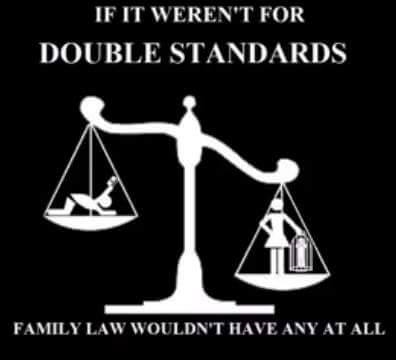
I am being illegally sentenced while my Mandatory appeal has been filed with the NH Supreme Court for the original criminal statutes protective orders issued without evidence in civil court otherwise known as family court, and the arrest warrant was signed by a magistrate judge who didn’t have an Oath and file and who was recently released from her job for misconduct.
I am scheduled to be sentenced on October 22, 0830am, Keene District Court. This is not a criminal court, and they have no lawful constitutional jurisdiction to enter orders. I have five pending criminal charges, all without victims or injuries or criminal intent.
On 12/13/12, I was served with a 5-page Domestic Violence Protective Order and removed from my family. Thirteen years later and nine appeals to date, I still have yet to receive Due Process and equal protection under the law. The judge wrote, “No threats or violence noted in the petition. He then found that I met the elements for criminal state protective orders, but lacked the actual evidence to support the allegations. Criminal Threatening without an actual threat, and Criminal harassment without the phone records to support her claims. I was never tried in any court for meeting any elements. This is known as MISPRISON. I am now facing five criminal charges, 2 for traveling in my private automobile, and three violations of a protective order for trying to talk to my son. Mother has stopped all communication against her own 14-page parenting plan years ago. I currently have 17 years of criminal statute protective orders issued through a non-criminal court without supporting evidence!
Executive Branch administrative tribunals are not judicial; there are financial rackets, private banks issuing bonds, and charges against your ALL CAPS NAME. These are corporate entities, and We The People have US Constitutional protections. BUT NOT HERE IN NEW HAMPSHIRE. HERE IS THE PROOF.
I tried for 9 years to change the parenting plan to no avail, and for the last 4 years, I tried to change the protective order to no avail. However, since there is no way to rebut the presumption of guilt in family court, you can’t argue facts and law without the actual evidence. This is the NH Supreme Court violating US Constitutional protections, guarantees, and liberties.
I have now had the criminal state protective order (issued without evidence and in a non-criminal court) extended 5 times. Twice extended for one year and 3 times extended for 5 years—17 years of protective order without evidence from the NH Family Court.
I was arrested twice and even arrested by a judge who recently got fired for misconduct. Come to find out from the NH Sec of State’s Office email, “ She’s a magistrate, she doesn’t need an Oath.” This fundamentally violates the NH Statute, the NH Constitution, the US Constitution, and the US Code.
A New Hampshire State trooper testified that no physical injuries were noted, and he did not take the alleged evidence to compare against the law he was sworn to uphold, known as the US Constitution. His reply was “ no.” I was found guilty of corporate statute violations, despite not being a corporation, and there has still been no reliable witness or victim to date. NO LAWFUL JURISIDICTION DEFINED BY THE COURT.
NH State Police Troop C Prosecutor is violating his Oath to Office by charging me with the wrong charging document, along with no evidence submitted of actual judicial protective orders issued due to actual crimes against another. He is also violating his Oath by trying to charge me against the US Code and the NH Supreme Court Precedence regarding traveling in my private capacity. He is directly going against the Rule of Law.
Authors’ opinions are their own and may not represent those of Grok Media, LLC, GraniteGrok.com, its sponsors, readers, authors, or advertisers.
See testimony below with definitions.
“Courts of Law” in the U.S.A. REQUIRE a proper conviction of an actual “crime” against a child’s individual Human rights by a parent before they may “Lawfully” interfere with a parents rights to raise their child as they see fit, at all! This is a “deprivation of rights under color of law” and a violation of “due process of law” and “parental rights”, the way these NH “Family Courts” are violating “due process of law”.
3) Procedural due process violations based upon the use of falsified information as a basis for the proceedings: The allegations used to infringe this Plaintiffs Parental Rights (with a “protective order” still active 12 years and counting, sole decision making, and sole custody in favor of the mother, effectively removing my ability to mutually raise our biological son), were based upon “hearsay” and not “probable cause” and there was no “trial by jury” in these NH “Family Courts”, or “proof beyond any reasonable doubt”, in a proper “criminal prosecution”, as required by “the supreme Law of the Land” and “common law”, before infringing on my Parental rights. Therefore all orders from this “Family Court” like this “protective order” and custody order were not legitimate or lawful to begin with, because the procedures of this NH “Family Court” are violating “fundamental principles” of “the supreme Law of the Land” and “common law” as described herein. These procedures fundamentally violate the Mission Statement to follow the NH and US Constitutions.
4) During the House Special Committee on the Family Division of the Circuit Court (05/02/23)”, https://www.youtube.com/watch?v=jVjJumYj6_w – “These Family Courts were created by statute”. See 2hrs and 2h17m, Randall Collier and Paula Werme speaking]), not by State Constitution as required to make them legitimate “courts of law”. Furthermore they are not “criminal courts” therefore they do not have “Lawful” “Authority” to conduct any “criminal prosecutions” or “searches and[/or] seizures” to begin with, making all of the court processes in these “Family Court” cases “unconstitutional” and “null and void”, “ab initio” (from the beginning). “making all their Orders and actions “in legal contemplation as inoperative as though it had never been passed” (US.Supr.Ct., Norton v. Shelby). . See “House Special Committee on the Family Division of the Circuit Court (05/02/23)”, https://www.youtube.com/watch?v=jVjJumYj6_w (see 2hrs and 2h17m, Randall Collier and Paula Werme speaking). : “…AN ACT establishing the New Hampshire circuit court to replace the current probate courts, district courts, and judicial branch family division. … Approved: May 16, 2011”, “Effective Date: July 1, 2011”, https://www.gencourt.state.nh.us/legislation/2011/HB0609.html;
See also, House Judiciary Committee meeting on 1/17/24. At the 5hr 21 minutes, NH State Rep Smith and Co-chair of the Judiciary Committee asks the General Counsel Erin Kregan, “Is the Supreme Court the only Constitutional Court in NH?” The General Counsel’s response was “Superior Court is also a constitutional created court”. Rep Smith then asked, “ What about Circuit Court?” The General Counsel’s response was “Circuit Courts were made by statute.” House Judiciary (01/17/2024): https://www.youtube.com/watch?v=bRBjoHcXrek See US Supreme Court Decision [self v. Rhay, 61 wn (2d) 261] “Statutes are not the Law”.
5) Negligence for using criminal statutes against litigants in civil court:
a) If there was probable evidence of an actual crime these ‘family courts’ are liable for not reporting to an actual criminal court;
b) Only criminal courts are supposed to be prosecuting criminal codes, not these “family courts” (which are not legit to start as explained in the prev. reason #4 herein);
c) A “civil sanction” is different from a “criminal code/law/statute”. Criminal law in NH is only Title 62 (Sections 625-651 only, not 173b) and in US Codes only Title 18;
d) So these “Family Courts” are not legitimate to begin with, and may only aid people in resolving disputes between them if they are both willing to VOLUNTARILY submit to the courts orders, but these “Family Courts” are not “Criminal Courts of Law” and therefore cannot “lawfully” force any orders upon anyone against their will (like “protective orders” which must come from a “criminal court” according to “due process of law” like “probable cause”, “trial by jury”, and “proof beyond any reasonable doubt”);
6) House Judiciary Committee meeting on 1/17/24, NH State Rep Kutab, stated, “The Judicial Conduct Commission was made by legislation. The Judicial Conduct Committee was established by the NH Supreme Court Rule. The NH Supreme Court found the Judicial Conduct Commission to be unconstitutional in 2011” Rep Kutab, stated “the Judicial Conduct Commission has been on the books for over 20 years, its not used, it has been confusing litigants because it has the same initials as the Judicial Conduct Committee, which is the process pro se litigants use when they have complaints against family court judges”.
House Judiciary (01/17/2024): https://www.youtube.com/watch?v=bRBjoHcXrek
I recently obtained a document from the Judicial Conduct Committee that notes they do not have jurisdiction to hear Administrative Court Judge complaints. Today, 3/25/25, at the Children and Family Law Committee, the State of NH again reiterated “litigants are referred to the NH JCC for complaints against family Court Judges”. The State of New Hampshire is still intentionally misleading litigants about complaints. This is intentional Treason against We The People!
7) House Judiciary and Family law Committee hearing on 3/28/23 Judge Michael Garner testified that Rules of Evidence do not apply in Family Court, what we hope to be is the gatekeeper of reliable information”. http://www.youtube.com/watch?v=vbFOdcRT Question of Law: If the Rules of Evidence did apply, the information would be reliable by definition. If Rules of Evidence do not apply, the information would then be unreliable by definition. It can’t be reliable and unreliable at the same time. Misleading testimony by Judge Garner to the Judiciary is in the best interest of my son T.C.?
8) We cannot ‘vindicate’ our ‘rights’ in “Family Court(s)” if “rules of evidence do not apply”: During the House Special Committee of Family Division of the Circuit Court: on 4/2/24 NH General Counsel Erin Kregan stated “civil court is for the plaintiff to vindicate their rights, and in criminal court the burden of proof is much higher, the rights of the defendant are protected”. “Civil sanctions are not meant to be punitive, they are intended for the plaintiff to vindicate their rights”. House Special Committee on the Family Division of the Circuit Court (04/02/2024): https://www.youtube.com/watch?v=WPPyUg3Ua3E
NH Criminal Statutes used as civil sanctions against pro se litigants: See NH RSA 173b, The Chairman of the House Judiciary recently stated on 3/12/25 “Preponderance of Evidence can only come from a legal proceeding in a court and not through civil litigation”.
9) Negligence for failing to lawfully allow evidence most favorable to [this Plaintiff] as required by law: Deprivations of rights to “due process of law”[A.5] for the judge denying access to video surveillance tapes from the court regarding meeting the elements of “criminal threatening”[117], for 2 years in a row. Also denied 2 Show Cause Motions.
This is my submitted Mandatory appeal to the NH Supreme Court that allows for unconstitutional acts of kidnapping our kids. Here is how… Circuit judges are actually appointed as referees to decide fact and law, but how can they do that if the rules of evidence do not apply? Unreliable evidence supports criminal statute protective orders in a non-criminal court.?
Questions presented for review: Question 3: How can the state have findings of fact if Rules of Evidence do not apply? See Order 2/24/25 page 1. And Order 4/29/25 page 2,5
Question 5: How is Due Process guaranteed if family court is not a court of law? See Order 2/24/25 page 1,4
Question 7: Why is the Superior Court granting unconstitutional immunity immunity when neither NH or US Constitution grants immunity? See Plaintiffs Objection to defendants immunity. Cheshire Superior Court 213-2025-CV-00077 on 7/01/2025 page 4-20
Question 8: How does NH RSA 458 supersede Article 1 sec 9 of the US Constitution? I am asking this court this question of law
Question 9: Article 1 Sec 10 under contract why does NH lessen the burden of proof? I am asking this court this question of law
Question 10: Article 15 Rights of the Accused, why deny motions for discovery? See: Writ of Habeas Corpus Jan 17th 2025 page 5,6
Question 14: Why did this NH Supreme Court deny a Writ of Certiorari when the 4th circuit Court decided to use unconstitutional criminal statute protective orders without supporting evidence in a non court of law or record?
I am asking this court this question of law
Question 17: If Rules of Evidence did not apply to the orders, what did apply? I am asking this court this question of law
Question 18: How can the standard of proof be a preponderance of evidence if evidence does not apply? I am asking this court this question of law. See also Cheshire Superior court case number 213-2025-CV00077 page 4 Question 19: How can there be preponderance in family court if Chairman of House Judiciary and Ret. NH Supreme Court Justice Lynn said this can only come from a criminal case? See: Cheshire Superior Court case 213-2025-CV-00077 page 4, see 4/28/25 Order page 3.
Question 20: If unreliable testimony was used and rules of evidence do not apply, how is due process guaranteed? See habeas 1/17/25 page 3,6-10,11
Question 22: Why did the 4th circuit family division ignore NH and US Constitutional protections by denying access to evidence to defend? pg4 See Objection to Motion to extend Protective Order 2/24/25 page 1,4,7,8,9
(c) The constitutional provisions, statutes, ordinances, rules, or regulations involved in the case, setting them out verbatim, and giving their citation.
Justia › U.S. Law › U.S. Codes and Statutes › New Hampshire Revised Statutes › 2023 New Hampshire Revised Statutes › Title LXII – Criminal Code › Chapter 644 – Breaches of the Peace and Related Offenses › Section 644:4 – Harassment. To meet the criteria for NH RSA 644.4. You first must first meet the criteria of NH RSA 633.4.
2023 New Hampshire Revised Statutes Title LXII – Criminal Code Chapter 644 – Breaches of the Peace and Related Offenses Section 644:4 – Harassment. Universal Citation: NH Rev Stat § 644:4 (2023) 644:4 Harassment. – I. A person is guilty of a misdemeanor, and subject to prosecution in the jurisdiction where the communication originated or was received, if such person: (a)Makes a telephone call, whether or not a conversation ensues, with no legitimate communicative purpose or without disclosing his or her identity and with a purpose to annoy, abuse, threaten, or alarm another; or (b) Makes repeated communications at extremely inconvenient hours or in offensively coarse language with a purpose to annoy or alarm another; or (c) Insults, taunts, or challenges another in a manner likely to provoke a violent or disorderly response; or (d) Knowingly communicates any matter of a character tending to incite murder, assault, or arson; or (e) With the purpose to annoy or alarm another, communicates any matter containing any threat to kidnap any person or to commit a violation of RSA 633:4; or a threat to the life or safety of another. (f) [Repealed.] II. As used in paragraph I, “communicates” means to impart a message by any method of transmission, including but not limited to telephoning or personally delivering or sending or having delivered any information or material by written or printed note or letter, package, mail, courier service or electronic transmission, including electronic transmissions generated or communicated via a computer. pg5 For purposes of this section, “computer” means a programmable, electronic device capable of accepting and processing data. III. [Repealed.] IV. A person shall be guilty of a class B felony if the person violates RSA 644:4, I(a) under circumstances involving making telephone calls to a telephone number that he or she knows is being used, at the time of the calls, to facilitate the transportation of voters to polling places or otherwise to support voting or registering to vote.Source. 1971, 518:1. 1994, 354:1. 1999, 141:1. 2005, 138:1. 2009, 320:1, eff. Aug. 7, 2009. 2016, 136:1, 2, I, II, eff. July 26, 2016.
2024 New Hampshire Revised Statutes Title LXII – Criminal Code Chapter 633 – Interference With Freedom Section 633:4 – Interference With Custody. Universal Citation: NH Rev Stat § 633:4 (2024)
633:4 Interference With Custody. – I. A person is guilty of a class B felony if such person knowingly takes from this state or entices away from this state any child under the age of 18, or causes any such child to be taken from this state or enticed away from this state, with the intent to detain or conceal such child from: (a) A parent, guardian or other person having lawful parental rights and responsibilities as described in RSA 461-A; or (b) An agency that has protective supervision or legal custody of the child under RSA 169-C or guardianship of the child under RSA 463. II. A person is guilty of a misdemeanor if such person knowingly takes, entices away, detains or conceals any child under the age of 18, or causes any such child to be taken, enticed away, detained or concealed, with the intent to detain or conceal such child from: (a) A parent, guardian or other person having lawful parental rights and responsibilities as described in RSA 461-A; or (b) An agency that has protective supervision or legal custody of the child under RSA 169-C or guardianship of the child under RSA 463. III. It shall be an affirmative defense to a charge under paragraph I or II that the person so charged was acting in good faith to protect the child from real and imminent physical danger. Evidence of good faith shall include but shall not be limited to the filing of a nonfrivolous petition documenting such danger and seeking to modify the custody decree in a court of competent jurisdiction within
this state. Such petition must be filed within 72 hours of termination of visitation rights. IV. The affirmative defense set forth in paragraph III shall not be available if the person charged with the offense has left this state with the child.Source. 1983, 390:1. 1998, 292:2. 2005, 273:16. 2014, 95:1, eff. Jan. 1, 2015.
Justia › U.S. Law › U.S. Codes and Statutes › New Hampshire Revised Statutes › 2024 New Hampshire Revised Statutes › Title LXII – Criminal Code › Chapter 631 – Assault and Related Offenses › Section 631:4 – Criminal Threatening. 2024 New Hampshire Revised Statutes Title LXII – Criminal Code Chapter 631 – Assault and Related Offenses Section 631:4 – Criminal Threatening. Universal Citation: NH Rev Stat § 631:4 (2024) 631:4 Criminal Threatening. – I. A person is guilty of criminal threatening when: (a) to (f) Source. 1971, 518:1. 1983, 338:1. 1994, 187:2. 1996, 92:1. 2002, 222:7. 2003, 69:1. 2010, 361:2, eff. Jan. 1, 2011.
Relevant New Hampshire Law and Corporate Statutes: In 1983, the New Hampshire Supreme Court created the Administrative Office of the Courts (AOC). The AOC provides operational support to New Hampshire’s unified court system in its constitutional responsibility to provide for the administration of justice.
New Hampshire Constitution: Art.] 72-a. [Supreme and Superior Courts.] The judicial power of the state shall be vested in the supreme court, a trial court of general jurisdiction known as the superior court, and such lower courts as the legislature may establish under Article 4th of Part 2. November 16, 1966
New Hampshire Constitution: [Art.] 73-a. [Supreme Court, Administration. The chief justice of the supreme court shall be the administrative head of all the courts. He shall, with the concurrence of a majority of the supreme court justices, make rules governing the administration of all courts in the state and the practice and procedure to be followed in all such courts. The rules so promulgated shall have the force and effect of law. November 22, 1978
Justia › U.S. Law › U.S. Codes and Statutes › New Hampshire Revised Statutes › 2024 New Hampshire Revised Statutes › Title LI – Courts › Chapter 490-F – Circuit Court › Section 490-F:15 – Referees. 2024 New Hampshire Revised StatutesTitle LI – Courts NH RSA 490-F:15 Referees. – The circuit court, with the consent of the parties shall, and without the consent of the parties may, commit to one or more referees any cause at law or in equity, or the determination of any question of fact pending in the court wherein the parties are not, as matter of right, entitled to a trial by jury; and with the consent of the parties shall in the same manner commit any other cause or the determination of any other question of fact.
Justia › U.S. Law › U.S. Codes and Statutes › New Hampshire Revised Statutes › 2024 New Hampshire Revised Statutes › Title XLIII – Domestic Relations › Chapter 461-A – Parental Rights and Responsibilities › Section 461-A:6 – Determination of Parental Rights and Responsibilities; Best Interest. 2024 New Hampshire Revised Statutes Title XLIII – Domestic Relations Chapter 461-A – Parental Rights and Responsibilities Section 461-A:6 – Determination of Parental Rights and Responsibilities; Best Interest. NH RSA 461-A:6 Determination of Parental Rights and Responsibilities; Best Interest. Any evidence of abuse, as defined in RSA 173-B:1, I or RSA 169-C:3, II, and the impact of the abuse on the child and on the relationship between the child and the abusing parent.
Title 42, The Public Health and Welfare, is a non-positive law title, Title 42 is comprised of many individually enacted Federal statutes such as the Public Health Service Act and the Social Security Act, that have been editorially compiled and organized into the title, but the title itself has not been enacted, is this court aware that title IV-D is a federal program promulgated thru federal guidelines and the state plans submitted to the secretary of the department of health and human services under the federal executive branch, and is that done under color of state law?
https://www.law.cornell.edu/uscode/text/42 U.S. Code: Title 42 — THE PUBLIC HEALTH AND WELFARE
2023 New Hampshire Revised StatutesTitle XII – Public Safety and Welfare Chapter 173-B – Protection of Persons From Domestic Violence Section 173-B:1 – Definitions.Universal Citation:NH Rev Stat § 173-B:1 (2023)Learn more Next 173-B:1 Definitions. –In this chapter:I. “Abuse” means the commission or attempted commission of one or more of the acts described in subparagraphs (a) through (h) by a family or household member or by a current or former sexual or intimate partner, where such conduct is determined to constitute a credible present threat to the petitioner’s safety. The court may consider evidence of such acts, regardless of their proximity in time to the filing of the petition, which, in combination with recent conduct, reflects an ongoing pattern of behavior which reasonably causes or has caused the petitioner to fear for his or her safety or well-being. A credible threat refers to a threat with the ability and capability to happen or be carried out possibly. Technically, it has the intent of harm and makes the target person afraid for their safety. Also, the threat aims to cause a significant injury to the targeted person or their life. (a) -(h) See: The Supreme Court has also made it clear that these actions have to be credible or true threats. This was first defined in Watts v. United States:Therefore, for a threat to be considered to fall outside of First Amendment protection, it must first be violent in nature and — critically — it must be credible. If the speaker has no ability or legitimate intent to carry out or incite another to carry out violent acts, then the speech cannot be considered a true threat and is therefore protected under the First Amendment.
https://www.law.cornell.edu/uscode/text/18 U.S. Code: Title 18 — CRIMES AND CRIMINAL PROCEDURE
House Judiciary and Family law Committee hearing on 3/28/23 Judge Michael Garner testified that Rules of Evidence do not apply in Family Court, what we hope to be is the gatekeeper of reliable information”. http://www.youtube.com/watch?v=vbFOdcRT
NH Circuit Court Family Division Rule 2.2 Rules of Evidence do not apply in Domestic Violence or Parenting Cases. Michael Garner’s testimony to the NH Legislators on 3/28/23 (See TIMELINE for link/URL), about not applying the Rules of Evidence in DV (Domestic Violence) or Family Cases due to no trial by jury in these N.H. “Family Division” “Circuit Courts”, “What we hope to be is the gatekeeper for reliable information”. This violates the Rule of law, which requires an “Independent Judiciary” (below), and NH Courts “Mission statement“ (above) to follow both US and NH Constitutions. This seems clearly “to the Contrary” of this Courts “Mission”! https://www.courts.nh.gov/rules-circuit-court-state-new-hampshire-family-division/rule-2 2-application-new-hampshire-rules ; American Bar Association Definitions: Rules of Evidence: Ignoring these rules makes evidence inadmissible. It must be admissible, reliable, complete, authentic, and believable. “Rules of evidence – Standards governing whether evidence in a civil or criminal case is admissible.” -“Consumers’ Guide to Legal HelpLegal Terms Glossary”: https://www.americanbar.org/groups/legal_services/flh-home/flh-glossary/#:~:text=Rules%20of%20evidence%20%2D %20Standards%20governing,or%20criminal%20case%20is%20admissible. ;
We cannot ‘vindicate’ our ‘rights’ in “Family Court(s)” if “rules of evidence do not apply”: During the House Special Committee of Family Division of the Circuit Court: on 4/2/24 NH General Counsel Erin Kregan stated “civil court is for the plaintiff to vindicate their rights, and in criminal court the burden of proof is much higher, the rights of the defendant are protected”. “Civil sanctions are not meant to be punitive, they are intended for the plaintiff to vindicate their rights”. House Special Committee on the Family Division of the Circuit Court (04/02/2024): https://www.youtube.com/watch?v=WPPyUg3Ua3E
Only Criminal Courts can have a Preponderance of Evidence. https://www.youtube.com/live/yT0oP8faRro?si=NJwXc5thH4xD0Mb_ The Chairman of the House Judiciary recently stated on 3/12/25 “Preponderance of Evidence can only come from a legal proceeding and not through civil litigation”.
Justia › U.S. Law › U.S. Codes and Statutes › New Hampshire Revised Statutes › 2024 New Hampshire Revised Statutes › Title LI – Courts › Chapter 490-D – Judicial Branch Family Division 2024 New Hampshire Revised Statutes Title LI – Courts Chapter 490-D – Judicial Branch Family Division NH RSA 490-D;1 which states in part “the assignment of all family matters of a single family to one family division justice or marital master.” The current custodial arrangement violates natural rights, both Federal and State Constitution fundamental liberties, a compelling state interest, without the strict scrutiny standard or proof of unfitness established through guaranteed due process and equal protections.
Article VI of the U.S. Constitution establishes the Supremacy Clause,Key Aspects of Article VI Supremacy Clause: This is the most significant part of Article VI. It establishes the hierarchy of laws:
● The U.S. Constitution itself.
● Federal laws made in accordance with the Constitution.
● Treaties made under the authority of the United States.
● When a state law conflicts with a federal law, the federal law is to be followed.
Oath of Office:
All state and federal officials, including legislators, executive officers, and judges, must take an oath or
affirmation to support the Constitution. Article I, Section 10, Clause 1: No State shall enter into any Treaty, Alliance, or Confederation; grant Letters of Marque and Reprisal; coin Money; emit Bills of Credit; make any Thing but gold and silver Coin a Tender in Payment of Debts; pass any Bill of Attainder, ex post facto Law, or Law impairing the Obligation of Contracts, or grant any Title of Nobility.
NH Constitution Art 2 sec 84 Part 2, Oaths and Subscriptions Exclusion from Offices[Art.] 84. [Oath of Civil Officers.] 28 U.S. Code § 453 – Oaths of justices and judges:Each justice or judge of the United States shall take the following oath or affirmation before performing the duties of his office: (June 25, 1948, ch. 646, 62 Stat. 907; Pub. L. 101–650, title IV, § 404, Dec. 1, 1990, 104 Stat. 5124.)
Justia › U.S. Law › U.S. Codes and Statutes › New Hampshire Revised Statutes › 2024 New Hampshire Revised Statutes › Title VI – Public Officers and Employees › Chapter 99-D – Defense and Indemnification of State Officers and Employees Go to Previous Versions of this Chapter 2024 New Hampshire Revised Statutes Title VI – Public Officers and Employees Chapter 99-D – Defense and Indemnification of State Officers and Employees Previous See NH RSA 92.2, https://law.justia.com/codes/new-hampshire/title-vi/chapter-99-d/section-99-d-1/Chapter 99-D – Defense and Indemnification of State Officers and EmployeesSection 99-D:1 – Statement of Policy. Universal Citation: NH Rev Stat § 99-D:1 (2024) 99-D:1 Statement of Policy. – It is the intent of this chapter to protect state officers, trustees, officials, employees, and members of the general court who are subject to claims and civil actions arising from acts committed within the scope of their official duty while in the course of their employment for the state and not in a wanton or reckless manner. It is not intended to create a new remedy for injured persons or to waive the state’s sovereign immunity which is extended by law to state officers, trustees, officials, and employees. The doctrine of sovereign immunity of the state, and by the extension of that doctrine, the official immunity.
2016 New Hampshire Revised StatutesTitle VI – PUBLIC OFFICERS AND EMPLOYEES Chapter 92 – TENURE AND OATH OF OFFICE IN CERTAIN CASESSection 92:2 – Oath Required.Universal Citation: NH Rev Stat § 92:2 (2016)Learn more 92:2 Oath Required. “Statutes apply only to created creatures known as corporations no matter whether[creatures of statute and offices of] state, local, or federal [government].” (Colonial Pipeline Co. v. Triangle, 421 US 100. (1975).” The common law is the real law, the Supreme Law of the land, the code, rules, regulations, policy, and statutes are “not the law.” Self v. Rhay, 61 Wn (2d) 261.
https://law.justia.com/codes/new-hampshire/title-vi/chapter-99-d/section-99-d-1/ Chapter 99-D – Defense and Indemnification of State Officers and Employees
Section 99-D:1 – Statement of Policy. Universal Citation: NH Rev Stat § 99-D:1 (2024) of officers, trustees, officials, or employees of the state or any agency thereof acting within the scope of official duty and not in a wanton or reckless manner, except as otherwise expressly provided by statute, is hereby adopted as the law of the state. The immunity of the state’s officers, trustees, officials, and employees as set forth herein shall be applicable to all claims and civil actions, which claims or actions arise against such officers, trustees, officials, and employees in their personal capacity or official capacity, or both such capacities, from acts or omissions within the scope of their official duty while in the course of their employment for the state and not in a wanton or reckless manner. Source. 1978, 43:1. 1985, 412:1, eff. July 3, 1985
Howlett v. Rose, 496 U.S. 356 (1990) Argued: March 20, 1990 Decided: June 11, 1990 Syllabus U.S. Supreme Court Howlett v. Rose, 496 U.S. 356 (1990) Howlett By and Through Howlett v. Rose No. 89-5383 State as well as federal courts have jurisdiction over suits brought pursuant to 42 U.S.C. § 1983, which creates a remedy for violations of federal rights committed by persons acting under color of state law. (b) Under the Supremacy Clause, state courts have a concurrent duty to enforce federal law according to their regular modes of procedure. See, e.g., Claflin v. Houseman, 93 U. S. 130, 93 U. S. 136-137. Such a court may not deny a federal right, when the parties and controversy are properly before it, in the absence of a “valid excuse.” Douglas v. New York, N.H. & H.R. Co., 279 U. S. 377, 279 U. S. 387-389.
“The jurisdiction of a court can be `lost’ when constitutional rights of the [habeas] plaintiff have been violated,” 124 N.H. at 807, 481 A.2d at 530,
Judgment is a void judgment if a court that rendered judgment lacked jurisdiction of the subject matter, or of the parties, or acted in a manner inconsistent with due process, Fed. Rules Civ. Proc., Rule 60(b)(4), 28 U.S.C.A., U.S.C.A. Const. Amend. 5 – Klugh v. U.S., 620 F.Supp. 892 (D.S.C. 1985).
The Stated Purpose of this “New Hampshire Judicial Branch”: “Our Mission: To preserve the rule of law and protect the rights and liberties guaranteed by the pg13 United States and New Hampshire Constitutions, the courts will provide accessible, prompt, and efficient forums for the fair and independent administration of justice, with respect for the dignity of all we serve.” https://www.courts.nh.gov/. New Hampshire Constitution: 1. Part 1, Bill of Rights, [Art.] 38. [Social Virtues Inculcated.]: https://www.nh.gov/glance/bill-of-rights.htm ;
NH Constitutional violations:
N.H. Constitution violations, Article 15, “Right of Accused”, in the following 6 of 8 “Rights of Accused” listed therein, www.nh.gov/glance/bill-of-rights.htm, (1)(3)(4)(5)(6)(8)
Judicial immunity Conflicts with the Constitution Article III & Separation of Powers: Nothing in the Constitution says judges are above the law. They were meant to interpret laws, not escape them. Due Process Clause (5th & 14th Amendments): If a judge can violate rights without consequence, it undermines due process. Equal Protection Clause: Judicial immunity can shield discriminatory acts, leaving victims without a remedy. Any claim of immunity is a fraud because, if valid, would prevent removal from office for crimes against the people, which removal is authorized or even mandated under US Constitution Article 2, Section IV; as well as 18 USC 241,242, USC 1983, 1985, 1986 Trump V. US 2024 Only official acts within the Constitutional duties of the office are protected. Title 5 US Code sec. 556(d), sec.557, sec.706 Courts lose Jurisdiction if they do not follow Due Process of Law.
Williams v. U.S., 341 U.S. 97, 101. Due process, fair trial in a court that adheres to legal standards.
(d) A concise statement of the case and a statement of facts material to the consideration of the questions presented, with appropriate references to the appendix or to the record. In 2013 The 4th CIrcuit Court Family Division issued Criminal Statute Protective Orders. They have been extended five (5) times to date. I currently have 17 years of protective order and have only spent 6 hours in 12.5 years with my boy. pg14 I tried for 9 years fighting the parenting plan with no remedy from sole custody to shared custody. I tried changing the protective order for four (4) years with no remedy. The other party has stopped all communication between father /son more than 3 years ago. I have 65 pages of Case Summary with no remedy to date. The Family Court can not make findings of fact with unreliable information. This violates the Rule of Law.
(e) A summary of argument, suitably paragraphed, which should be a succinct, but accurate and clear, condensation of the argument made in the body of the brief. It should not be a mere repetition of the headings under which the argument is arranged. ARGUMENT 1: If a preponderance of evidence does not apply because Rules of Evidence does not apply, then how is it in the best interest of the children to implement criminal statute protective orders in a non criminal court without supporting evidence?
Argument 2: How can the information be more than 50% true if it’s unreliable and incomplete? Judge Garner noted “ The Standard of Proof is a Preponderance of evidence”. But Chairman of House Judiciary Chairman Lynn said “preponderance can only come from a criminal case”. So now we have Judge Garner noting the Burden of Proof was changed, he wanted to use both reliable and unreliable information at the same time, and Chairman of House Judiciary and Ret. NH Supreme Court Justice said a preponderance can only come from a criminal case. Neither Judge can get his stories straight when it comes to the standard of proof in family court.
A preponderance of evidence can not be the standard in family court if rules of evidence do not apply. One can not make criminal statute protective orders in a non criminal court without supporting evidence. As you can see per the 2/4/13 Order, there was nothing specific I did to harm or injure or abuse the defendant. In Judge Carroll’s Findings of Fact, there was nothing specifically noted. See Order 1/27/13, page 3. I did not meet the criteria or elements to NH RSA 644.4. One must first meet the criteria of NH RSA 633.4.
Argument 3: If the NH State Gen. Counsel testified rights of citizens are not protected in civil court, why do our rights evaporate at all? If NH Judiciary changes the burden of proof, how is that not a violation of the Rule of Law? If Judge Garner noted he wanted to be a gatekeeper for reliable information during his NH House speech, How can it be reliable information if rules of evidence do pg15 not apply, making the information unreliable? It certainly can’t be both.
I was arrested for a violation of the protective order twice, and now found guilty of violation of protective order and breach of bail from the statutory created non criminal court. I was found guilty of a crime that had no evidence to support the original orders.
Argument 4: Judge Garner noted that Judge Carroll used unreliable evidence to support the Criminal Statue Protective Order in a non criminal court. The Judge who signed the arrest warrant Stephanie J Johnson was just fired for misconduct. The NH Sec of State’s Office through email stated” Stephanie J Johnson doesn’t need an Oath, She’s a magistrate”. This violates NH Statute, NH Constitution, US Code, and US Constitution.
Argument 5: Regarding unconstitutional “standards of evidence” used in this case, the N.H. Law for “protective orders” requires “a showing of abuse of the plaintiff by a preponderance of the evidence”, which by definition means “there is a greater than 50% chance that the claim is true.” [www.law.cornell.edu/wex/preponderance_of_the_evidence][135], which is obviously the same “standard of evidence” as “probable cause” which “the supreme Law of the Land” (Amend.4 and U.S.Supr.Ct. “Precedents”) requires for ALL “searches and seizures” and “In all criminal prosecutions”[1][US.Const.Amend.4&6], and because this State law requires evidence of “abuse”, in other words an actual “crime”, therefore the requirements for issuing one of these “protective orders” under this N.H. State law[105] must inherently be the same requirements for “criminal prosecutions” called “probable cause”, and furthermore if there is enough evidence of an actual “crime” and this court does not prosecute it than this court commits an actual “crime” such as “misprision” or “obstruction” or “miscarriage of justice”, possibly even “treason to the Constitution”, just like the US Supreme Court has stated in the past.
(f) The argument, exhibiting clearly the points of fact and of law being presented, citing the authorities relied upon.
My Argument is the non criminal 4th Circuit Court Family Division Court failed to support their
Criminal Statute Protective Order with complete reliable evidence of a crime or injured party. pg16
The State’s testimony at the NH State House Leg, Bldg. supports this conclusion. Rule of Law is always violated when rules of evidence do not apply to the orders or the hearings.This violates US Constitutional protections. See NH Constitution Article 1 Sec 15 Rights of the Accused, right to trial by jury and common law. See US Constitution 4th Amendment. 2 Motions for discovery of evidence and 2 Show Cause Motions were denied.
(g) A conclusion, specifying the relief sought by the party.
Conclusion: The State of New Hampshire’s continued conspiracy to violate Federally protected Constitutional RIghts. This is done through two different avenues. The First is through NH Constitution art 72a and 73a. Private rules with the force of law that supersede The US Constitutional Supremacy Clause. This is accomplished with the help of NH RSA 99-D:1, the immunity statute. However, Immunity is lost through reckless manner, consistent with the conflicting testimonies from both Judge Garner and Ret. Supreme Court Justice Lynn in regards to the standard of proof of evidence used in civil cases, the conflict between both NH Constitution Articles 72a and 73a with the US Constitutional Supremacy Clause, using Criminal Statute Protective Orders in a non criminal court, without supporting evidence of an actual crime against another, the conflict between Judge Garner’s testimony about the Rules of Evidence and being the gatekeeper of reliable information, which is the opposite of the definition Rules of Evidence. This apparently is the best interest of the minor child in the eyes of the NH Judiciary.
Specific Relief: I move this court to remove criminal statute protective order and return full custody of T.C., stop child support orders, return total amount paid in with interest and adjust for inflation. Trezavant v CITY OF TAMPA 11th cir 1984 unlawful detainment, $1,086/ min x 12.5 years
Statement: I request Oral Argument before the full panel [redacted]
Authors’ opinions are their own and may not represent those of Grok Media, LLC, GraniteGrok.com, its sponsors, readers, authors, or advertisers.
Got Something to Say, We Want to Hear It. Comment or submit Op-Eds to steve@granitegrok.com
