

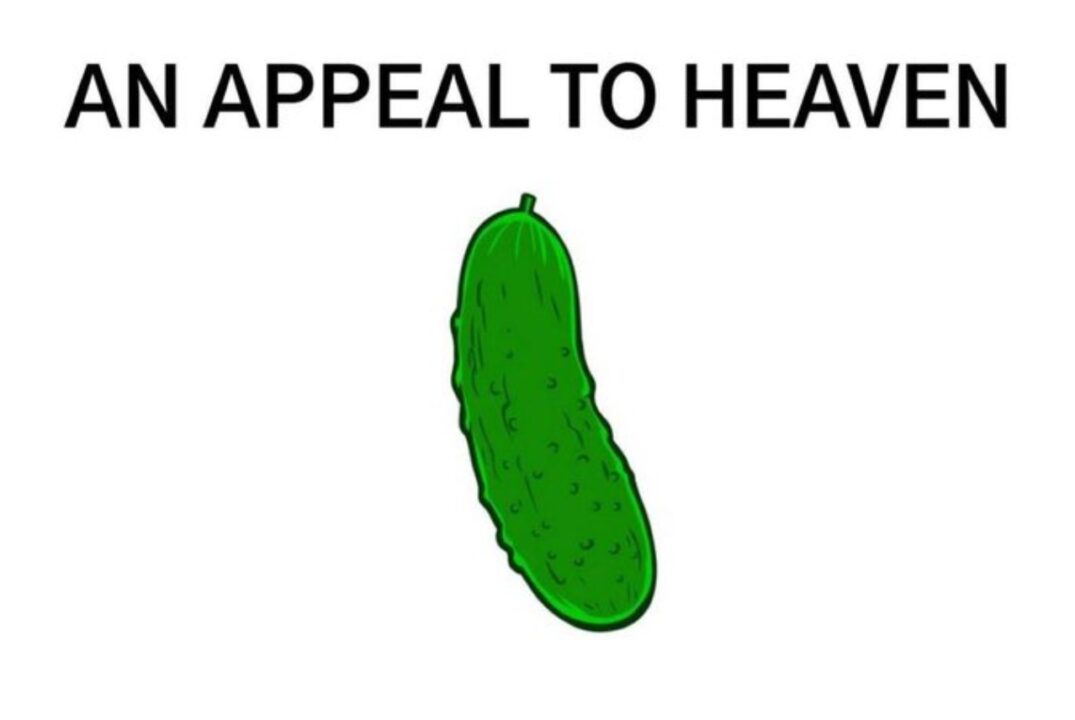
I have been hearing about nothing but Pickle-Gate. Even Joel Salatin wrote about it. So, please explain the Homestead Food Law and the Department of Human Health and Safety (DHHS) rules to me, from start to finish?
Here’s the thing. I live on a farm with four kids. We homeschool. We grow some of our food. For the three years since we moved to NH, we have been disappointed every single time we’ve investigated selling something from the farm for a few bucks that the kids make or raise themselves, because the regulatory framework is ridiculous for a small, ‘I sold a few extra pumpkins to pay for swimming lessons’ type of business. It has always seemed to me that the NH statutes at the state level were expressly crafted to prevent people from selling extras to neighbors, even at cost, or giving them away, for nearly everything. And by extension, to prevent small farms from actually getting started.
Because I have looked up the UNH extension office links and the DHHS description of the license-exempt homestead food law many times, I was struck by the whole Pickle-Gate scenario. It isn’t just a Manchester thing, so far as I can tell; even if Manchester officialdom were following state protocol, it seems to me they could reasonably interpret the published rules and statute to prohibit the pickles.
The law says exempt foods are supposed to be “non-hazardous.” Since NH is the only state in which I have ever lived where small amounts of things like honey and ordinary raw produce from your garden or fruit trees are considered “hazardous,” I cannot apply my own common sense to the interpretation of New Hampshire’s nanny-state definition of the word “hazardous.” Personally, I would eat anything from my farm and the cutovers where we pick wild blueberries and sundry other edibles long before eating the highly processed, commercially produced, factory-made food that has been duly designated as hazard-free by the proper government officials, thoroughly inspected, and lining the shelves of grocery stores. (Like colored dry cereal. And fake meat and milk. And don’t get me started on needing a permit to have a cookout over a campfire in my own backyard when some fool from the city, drunk as a skunk in a campground in the woods, doesn’t. What freedoms this state considers too unsafe to entrust to its own people is often beyond my comprehension.)
The DHHS listed pickles as an example of hazardous foods not exempt under the law at least as recently as 2023, and it is still mentioned further down the page in the FAQs. Scroll through the FAQs until you get to the question, “What are potentially hazardous foods?” You will see pickles listed with relish, salsa, etc. (Ergo, not exempt.) The law is also reported by (state) officials and their public go-betweens, such as ag extension people, to mean you cannot give your (potentially hazardous) food away without a license, as well as forbidding you from selling it. They say you may only use your non-hazardous, self-produced stuff (generally limited to baked goods) to sell from your farm or farm stand or some type of retail food store (which seems contradictory, so I have no idea what they mean by that), and you may not donate anything “potentially hazardous” (such as to food pantries). They report that you can only serve your hazardous stuff (like homemade pickles, currant jelly, self-processed game and meat, homegrown eggs, carrots, apples, and honey, to name a few) from your own house to your own guests. I am proud to say I have done this many times, with last Thanksgiving being nearly all comprised of self-grown, self-butchered, homemade “hazardous” foods.
Every time I ask someone what you can make under the homestead exemption, they say you can bake cookies. Occasionally someone mentions you can sell jams or jellies if you use only the official government-approved recipes and don’t alter a single solitary ingredient (so good luck with using European no-pectin or low-sugar recipes, red currant jelly, or adding any spice or flavor to anything, such as vanilla or cardamom.) As producing the same gross stuff they sell at the store is exactly what I am trying to avoid, that is a no-go. I have never died from any of my jams or jellies. No one else has either. Nor has anyone I know ever been poisoned by botulism. But hey, it lurks everywhere, apparently, and can be avoided by following high-sugar, low-fruit government-approved recipes. (Although somehow they survive without continual death-by-botulism in Europe with high-fruit, low-sugar recipes. And somehow we can import the same European products to our official stores by official means, and that means they are now free of danger of botulism, whereas we Americans may not make them for ourselves, as ours are still riddled with botulistic dangers. Think of it as American food exceptionalism.)
I don’t mind saying that my religion supersedes this interpretation, either way; it expressly says that if I have something better than my neighbor does (which in my opinion, I do, in my floral-fruit jams and jellies, fresh garden produce, and eggs etc., when many of my neighbors neither have nor make these things) I am obligated to share it. When it comes to giving things away that you make, I fall on the same side of the debate, both in belief and action, as the unfortunate Mr. Mowery (albeit it sounds like he makes more than I do). Whatever the statute does or does not say, I will continue to share what I have now and in the future. As I daresay will many other (good) people, like Mr. Mowery.
The thing is, given what I am reading from state reps about the homestead foods law now with this pickle debacle, I am totally confused. I would love to know what the heck the statute actually prohibits! (And by extension, what it allows, which is what I am really interested in.) Could someone in New Hampshire’s house or senate please take a page from Ian Underwood on how to craft clear, concise principles in English? If pickles are part of the homestead exemption and can be marketed under those rules around the state, what else can be? If I can’t tell if the law includes pickles as exempt non-hazardous food, and DHHS couldn’t tell me if the law includes pickles, shouldn’t the law be clearer?
New Hampshire is not my native state, but I love it here, warts and flaws and all. My family will continue to live here, whether or not we can sell pickles, home-butchered geese, or jelly. However, if the state reps are going to take this in hand, they need to do more than wrestle with Manchester. There are fifteen self-inspecting cities in New Hampshire, including all the major ones. And even the state department of health was sure the word “hazardous” included pickles and everything else, except perhaps cookies. Even when DHHS changed the wording to include pickles (which, according to the Wayback Machine, is an alteration within the last two years), that was all they did. Salsas and tomato sauces still remain proudly in the hazardous example category. Frankly, when I read food regs in NH, if I were going to sum it up in everyday language, I would say: “Everything healthy and delicious is considered dangerous.” That is what I get from it. If it means something else, someone please tell us. We want to make food. Real Food. Good Food. And we want to share.
Authors’ opinions are their own and may not represent those of Grok Media, LLC, GraniteGrok.com, its sponsors, readers, authors, or advertisers.
Got Something to Say, We Want to Hear It. Comment or submit Op-Eds to steve@granitegrok.com
