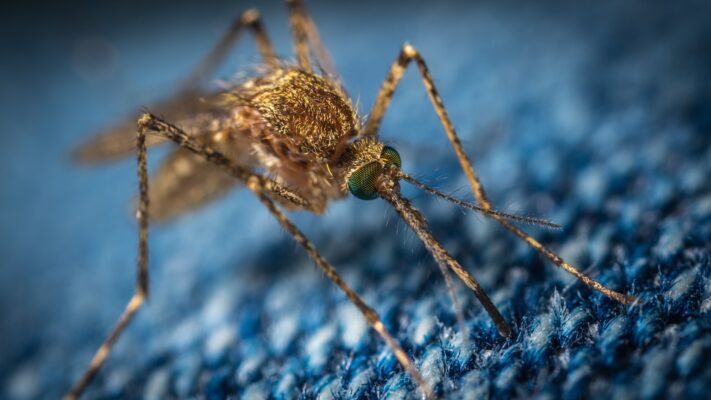
They said global warming would affect abroviruses, and they were right.
If you search “mosquito-borne viruses,” West Nile, Eastern Equine Encephalitis, or (the newest addition) Oropouche virus, you’ll get lots of hits with headlines. They include words like ‘rising’ or ‘spreading,’ as in ‘there’s more of it,’ and the subtext is climate cultish. Comfort today will lead to misery later, with a few asides about how pre-disposed psychopaths drawn to the power and influence of politics can fix it with more of your money.
They can’t, but fear is the thing. Hence, mosquito borne viruses are but another psalm in the cult’s holy book, a bit of Gregorian chant like, more severe storms, wildfires, flooding, drought, two degrees C, sea level rise, melting glaciers, and the any day now category six hurricane that can’t even manage to rise to the level of Nessy or Sasquatch, who’ve at least had “sightings.” Amen.
The mosquito headlines are all from 2024, by the way, which saw an uptick in cases compared to previous years, but nothing like record-setting years in the past.
And the AI results are simply tapping into them. However, upon examining the data, rates of “mosquito-borne illness” are not increasing. They appear to be in decline.
National Mosquito Virus Data
Charts are available from the CDC and the AbroNet Surveillance system.
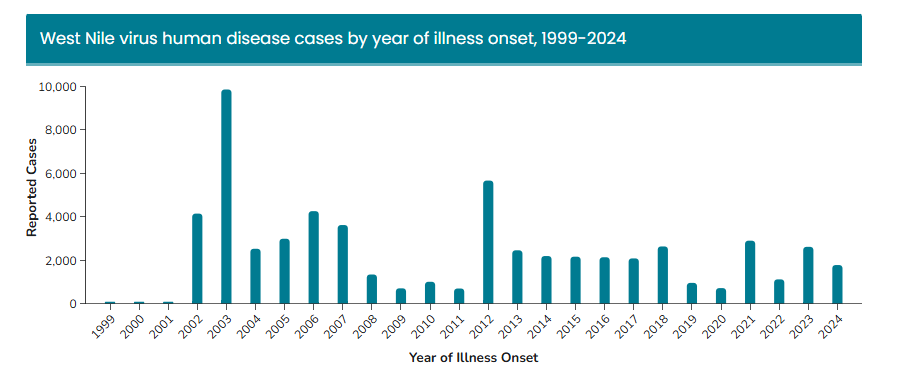
So far, in 2025, 433 human cases of West Nile virus have been reported in the US—none in NH.
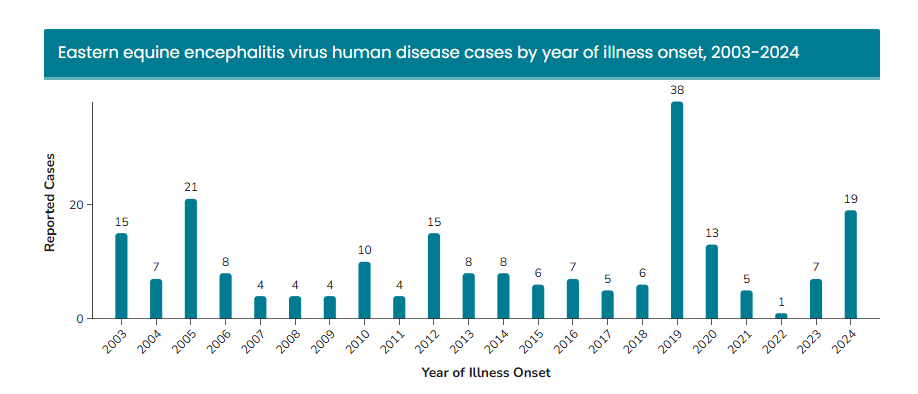
There have been zero reported human cases of EEE in the US in 2025.
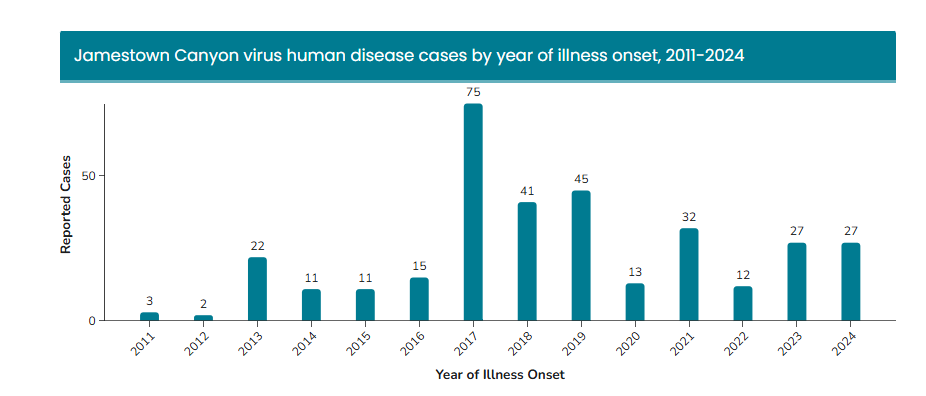
There have been three human cases of Jamsetown Canyon virus reported in 2025—none in NH.
There is no historical data available on the Oropouche virus, which was first reported in 2023-2024. There were 108 cases in 2024, and only one case has been reported so far in 2025
Local Mosquito Virus Data
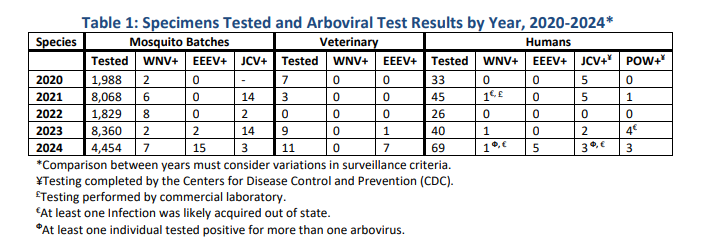
There are zero reported human cases of WNV or EEE in Massachusetts or New Hampshire at this time, which is odd if global warming is making abro viruses more common.
Mosquito Weather
As for warming, temperatures in northern New Hampshire approached freezing last night. It’s August 28th. I woke up to low forty-degree weather in Merrimack, as part of a trend that’s been ongoing and continues into early September.
It’s just weather, but when it’s colder in the mornings or evenings, it slows down the skeeters a bit. And while it was wetter overall nationally, it has been dry in late July and most of August, in New Hampshire.
When I’m out with the dog, I see few to no ‘squitos most mornings and late evenings, around these parts. That won’t grow narratives of rising mosquito-borne viruses, and neither does the data that the fearmongers are not reporting.
The same can be said for ticks. They freak out when the numbers look high (The end is near!), but can’t find their voice when there are few to none. We reported high counts in spring but haven’t seen any in months.
All subject to change, just like the weather.