
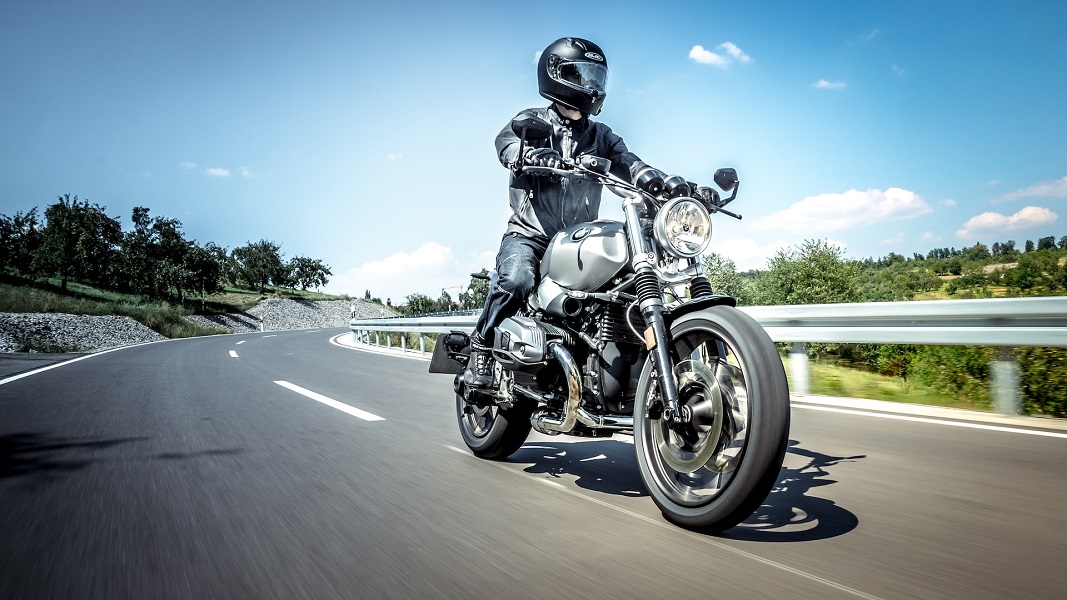
The rider’s own motorcycle is now the most detailed witness at the scene of the crash, and that changes how these cases get fought. For years, a motorcycle wreck was reconstructed from tire marks, gouges in the pavement, a bent fork, and whatever the car driver remembered. The bike itself had almost nothing to say.
Today, stability-control systems, lean-sensitive ABS, and the inertial sensors feeding them are turning the electronic control unit bolted to the frame into a running log of what the rider was doing in the last seconds before impact.
That log can exonerate a rider. It can also bury one. Which outcome you get depends on whether anyone knows the data is there, and who reaches it first.
Previous Reconstruction Relied on What the Pavement Remembered
Traditional motorcycle crash reconstruction was a physical exercise. An investigator measured skid length, estimated a coefficient of friction, worked backward through a momentum equation, and produced a speed range wide enough to drive a truck through. Witness statements filled in the rest, and witnesses are notoriously bad at judging a motorcycle’s speed.
That approach favored whichever side had the better expert and the louder story. A rider going the speed limit could be painted as reckless because the bike ended up eighty feet from the point of impact. A car driver who pulled left across a lane could shrug and say the bike came out of nowhere. Without onboard data, the pavement was the only neutral party, and the pavement forgets a lot.
The New Bike Logs Lean, Brake Pressure, and Wheel Speed
Modern stability-control hardware is a different animal. On a bike equipped with Bosch’s Motorcycle Stability Control, an inertial measurement unit and the wheel-speed sensors feed the ECU roughly a hundred times a second, and the MSC controller adjusts braking and traction in real time based on lean angle, pitch, and yaw. The bike knows how far over it was, how hard the front brake was squeezed, whether the rear wheel was still turning, and whether the ABS pump ever fired.
Any competent motorcycle injury attorney working a case in this window should be asking, on day one, whether the bike carried MSC or a lean-sensitive ABS variant, and whether the ECU can be read. A firm that handles motorcycle injury claims will know that the answer often decides whether the rider’s version of events can be proven or just asserted.
Stability Control Cuts Crashes, and Also Creates Evidence
The safety case for this technology is settled. An IIHS analysis of sixty-five motorcycle models found that ABS-equipped bikes had a statistically significant 22% reduction in fatal crash involvements per 10,000 registered vehicle years. Fewer riders die. That’s the point of the hardware, and it’s why regulators overseas have been pushing mandates.
The side effect nobody advertised at the dealership is that the same sensors generating those safety gains are generating an evidentiary record. The bike that saved you from a low-side in the rain also remembers, in fine grain, what you were doing when the car turned left in front of you.
Which Record Wins Depends on Who Preserves It First
The car’s EDR is easy to preserve. Tow yards store the vehicle, insurers know to image the module, and a crash data retrieval tool pulls the file in an afternoon. The motorcycle side is messier.
- Salvage timelines. Damaged bikes get sold, parted out, or crushed on a schedule set by the insurer, and the ECU goes with them. Once the module is gone, the log is gone.
- Proprietary tools. Reading a motorcycle ECU is not a universal process. Different manufacturers use different diagnostic protocols, and a shop that can flash a tune is not necessarily a shop that can pull a forensic snapshot.
- Power loss and overwrite. Some systems hold a limited event buffer that can be overwritten by later ignition cycles, or lost when the battery is disconnected during recovery.
The practical takeaway for a rider or a family after a serious crash is unglamorous. Do not authorize the release of the bike to salvage. Get a written preservation demand to the insurer and the tow yard.
Photograph the ECU location before anyone touches the wiring. The hardware that logged the last three seconds of the ride is a physical object, and physical objects disappear.
When the Old Way Still Wins, and When the New Way Does
Pavement evidence has not gone away. On an older bike without MSC, or when the ECU was destroyed on impact, skid analysis and scene measurements still carry the case. A good reconstructionist working from gouge marks and final rest positions can still produce a defensible speed estimate.
On a late-model bike with stability control, the electronic record wins on almost every disputed fact that matters: how hard the rider braked, whether the front wheel was locked, how far the bike was leaned, whether throttle was on or off at impact. Those are the questions insurers used to answer by inference. They can now be answered by a file, and the side that reads the file first tends to set the terms of the argument.