

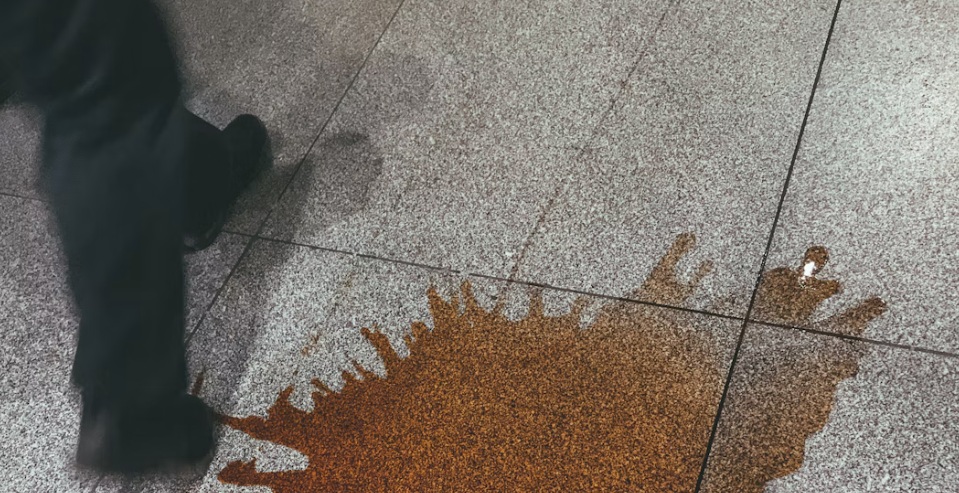
A fall in a big-box aisle can cost a shopper a broken hip, months of rehab, and a five-figure medical tab before the insurance letters even start. The robot humming past the produce section a dozen times a day may have seen the wet spot that caused it. It may have logged the exact minute, mapped the puddle, and uploaded the whole record to the cloud. And if nobody preserves that record fast, it is very likely gone before the demand letter ever arrives.
The autonomous floor scrubber has become a badly misunderstood piece of evidence in premises liability. Here are some of the assumptions people keep getting wrong.
- The Robot Is Just Cleaning the Floor
The scrubber gliding past the cereal aisle is a rolling sensor platform. According to The Robot Report, the BrainOS-powered machines that big-box retailers deployed use cameras, sensors, and LiDAR to navigate, and stream operational data to a cloud-based reporting system that lets managers monitor every run.
So the machine is generating a timestamped map of where it went, where it stopped, what it saw, and what a human operator flagged. A slip-and-fall lawyer asking “who knew what, and when” is asking a question the robot already answered, in structured data, the moment it rolled through.
- If There’s a Log, It Will Still Be There Later
People assume digital records live forever. Retail evidence rarely does. Commercial video systems commonly overwrite footage on a rolling window of a week to a month, and once that window closes, the objective proof is usually gone for good. Sensor logs from cleaning fleets tend to follow the same short-fuse logic: retained long enough to run this quarter’s reports and then aged out or overwritten.
For an injured shopper, that clock starts the second they hit the floor. A demand letter that takes six weeks to draft is a demand letter that arrives after the most useful evidence has already cycled out. Anyone weighing a claim should talk to a premises liability attorney early, precisely because the preservation letter is what freezes the log before it disappears.
- A Cleaning Report Only Helps the Store
Retailers pitch these systems as proof-of-work, evidence the floors got cleaned. The same data cuts the other direction just as easily. A log that shows the machine passed through the aisle ninety minutes before the fall, flagged nothing, and never triggered a human check is not a defense exhibit. It’s a record of the store’s own sensor watching a hazard develop unaddressed.
- A Generic Cleaning Policy Is Enough for the Store to Win
Courts have been sharpening this point. To prove the store should have known about a hazard, an injured shopper generally needs to show the condition existed long enough for reasonable inspection to catch it. A written policy that says “we sweep every hour” is not the same as evidence that anyone actually swept.
That distinction is doing real work in appellate rulings. A recent Texas decision reaffirmed that constructive notice requires actual temporal evidence, proof the hazard was there long enough to be discovered, and that generalized inspection policies without duration evidence do not suffice. The robot’s log is exactly the temporal evidence courts are asking for. When the store cannot produce it, the store loses the argument it wanted to make.
- Deleting the Data Is a Neutral Choice
Routine deletion feels like housekeeping. Once a claim is on the horizon, it stops being routine. A retailer that keeps rich sensor logs for its own dashboards, then quietly lets those logs age out after an incident report has been filed, is inviting a spoliation fight, and in many jurisdictions, an adverse inference the jury gets to hear about.
There’s a policy layer here too. Companies that collect connected-device data are increasingly expected to think through the full life cycle of that data, including how and when it gets deleted. “We only kept it for seven days” reads very differently when the seven-day window happens to close on day eight of an injury claim.
- A Shopper Can Sort This Out Later
The window to lock down a robot’s log is short, and nobody at the store is going to volunteer it. A few concrete moves matter more than any of the legal theory.
- Photograph the scene immediately. Capture the spill, the surrounding aisle, any warning signs (or the absence of them), and any robot or cleaning equipment visible nearby, before staff has a chance to reset the area.
- Get an incident report on paper that day. Ask the manager on duty to document the fall in writing and request a copy. A store-generated record dated the day of the injury is much harder to explain away later.
- Identify witnesses before they scatter. Collect names and phone numbers from any shoppers or employees who saw the fall or the condition of the floor, since store surveillance alone may not survive long enough to fill in the picture.
- Send a preservation letter fast. A lawyer’s written demand to preserve video, sensor logs, cleaning-robot data, and inspection records puts the retailer on notice before the routine deletion window closes.
The robot saw the spill. Whether that observation ends up in a courtroom or in a deleted-files folder depends on how quickly someone asks for it.
