

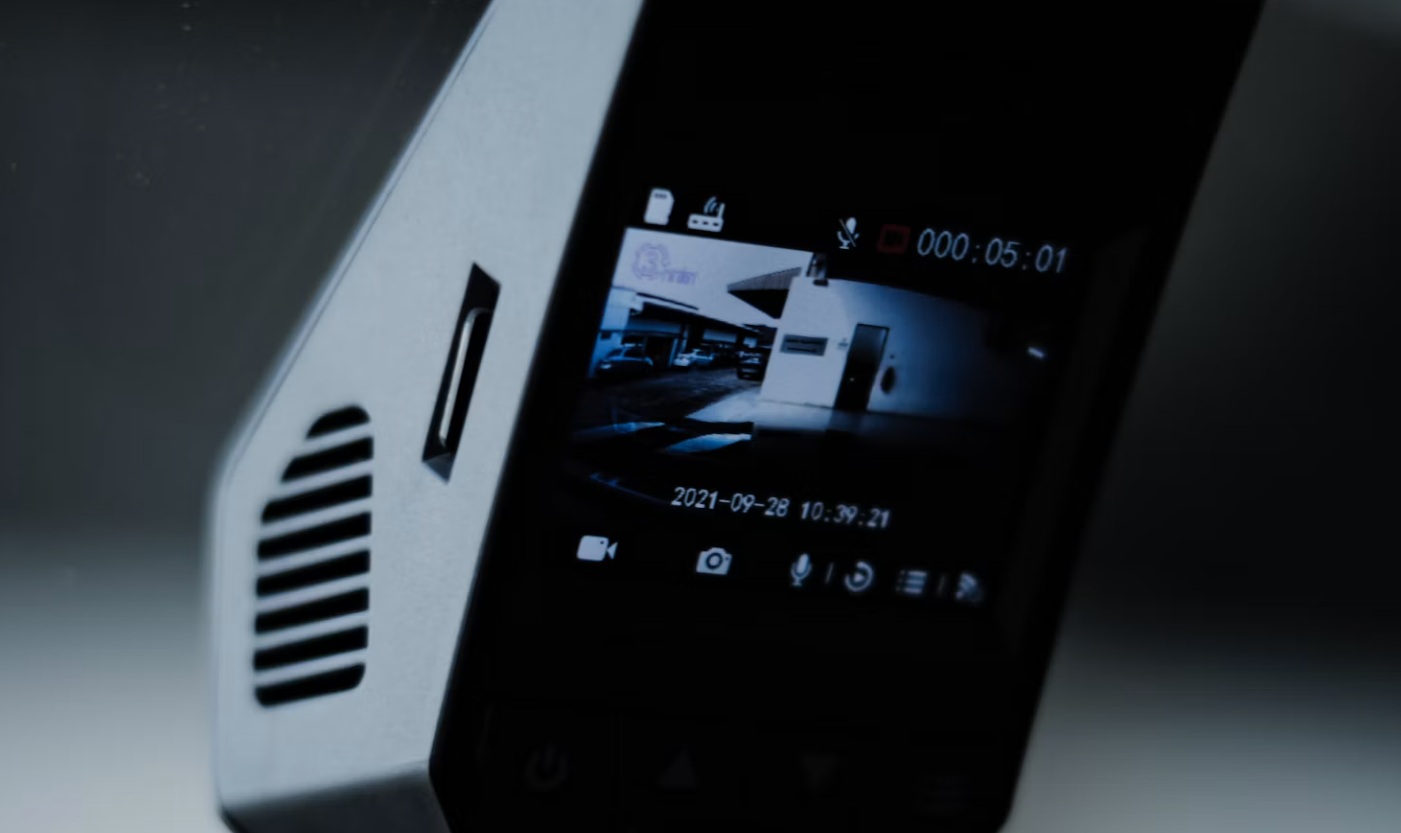
A traffic stop is now a multi-camera production, and the driver is holding one of the cameras. The officer has a body cam and a cruiser cam. The dashboard has a forward camera, an in-cabin lens, and often a rear-facing one.
A parked car down the block may be running sentry mode. By the time anyone signs a citation, the same 90 seconds exist in four or five files sitting on four or five different servers, and every one of them is discoverable.
That changes what a case looks like from the moment the lights come on to the moment a judge rules on a motion to suppress. It also changes what a careful driver should do before, during, and after the stop.
Before the Stop: The Camera Was Already Recording
Adoption is what makes any of this matter. Dash cams have gone mainstream, and they pass through a serious number of stops in a given year. The camera isn’t on because the driver expects trouble; it runs continuously, in a loop, overwriting itself every few hours unless something triggers a save.
That baseline matters legally. Footage the driver captured before there was any reason to capture it tends to be treated as a contemporaneous record rather than a self-serving reconstruction. Speed at the moment of the light change, whether the turn signal was on, whether the lane was actually crossed. The video predates the officer’s decision to pull the car over, which is exactly why it carries weight.
Audio is where drivers get themselves into trouble without meaning to. Rules vary sharply by jurisdiction, and a state-by-state look at dash cam audio rules shows that in-cabin recording without notice can trigger wiretap exposure in all-party-consent states. Video is broadly legal. The microphone is the part that needs a heads-up to passengers.
During the Stop: Multiple Cameras, One Ninety-Second Window
The stop itself is where the angles start to matter. The officer’s body camera captures the driver’s hands and face while the cruiser cam covers the approach and the field sobriety tests from behind. The driver’s forward dash cam watches the officer walk up, and the in-cabin lens picks up the exchange from the driver’s shoulder. Each perspective captures something the others miss, and the discrepancies are the whole ballgame.
A few things routinely turn up when the files are laid side by side:
- Timing of the alleged violation. Forward dash cam frames often contradict the stated reason for the stop, or confirm it in a way the officer’s narrative cannot.
- Field sobriety test conditions. Slope of the shoulder, passing headlights, wind, and footwear are visible on video and invisible in a report.
- Tone and sequence of commands. How the first minute of the encounter unfolds shapes everything after it, and the audio decides who is remembering it accurately.
- What was in plain view. A dash cam pointed at the cabin can undercut, or support, an officer’s account of what was visible through the window.
None of this replaces judgment in the moment. Be polite, keep hands visible, and don’t argue the case on the shoulder. The footage will be there whether the driver performs for it or not.
After the Stop: Who Actually Gets the Video
Getting the footage into a case file is a procedural exercise, and it runs on a clock. Agency retention windows for body and dashboard cameras are often measured in a few months, not years, and once a file rolls off the server, it’s gone.
Defense counsel has to move fast to preserve it, usually through a written preservation demand and a formal discovery request tied to the specific incident, unit, and time window. Those requests spell out the retention rules that apply and the format the video must be produced in.
The driver’s own footage runs on a shorter clock. Loop recording will overwrite it, sometimes within a day. Any clip worth keeping needs to be pulled off the card, hashed if possible, and stored somewhere the original file is not touched again.
An officer at the scene generally cannot compel a driver to hand over dash cam video without a subpoena, but that protection evaporates if the file is gone by the time anyone asks. Preserve first, decide what to do with it later, and talk to a criminal defense attorney before turning anything over voluntarily.
Later: The Same Clip Cuts Both Ways
Prosecutors are as eager to pull dash cam footage as defense lawyers, and they have gotten aggressive about parked cars near a scene. Sentry-mode video from vehicles that were nowhere near the stop has become a routine investigative target, and reporting on how police pursue Tesla footage documents departments towing cars specifically to get at the recordings inside them. What the driver captured to protect themselves in a fender-bender can end up sitting on a detective’s desk in an unrelated case.
The clip also cuts both ways on admissibility. Video that undercuts an officer’s account can support a motion to suppress the stop or the arrest. Video that undercuts the driver’s account can lock in an admission the driver forgot they made out loud.
Whichever way it runs, the rule of thumb is the same: assume the recording exists, assume both sides will see it, and act accordingly from the first moment the lights come up in the mirror.
