

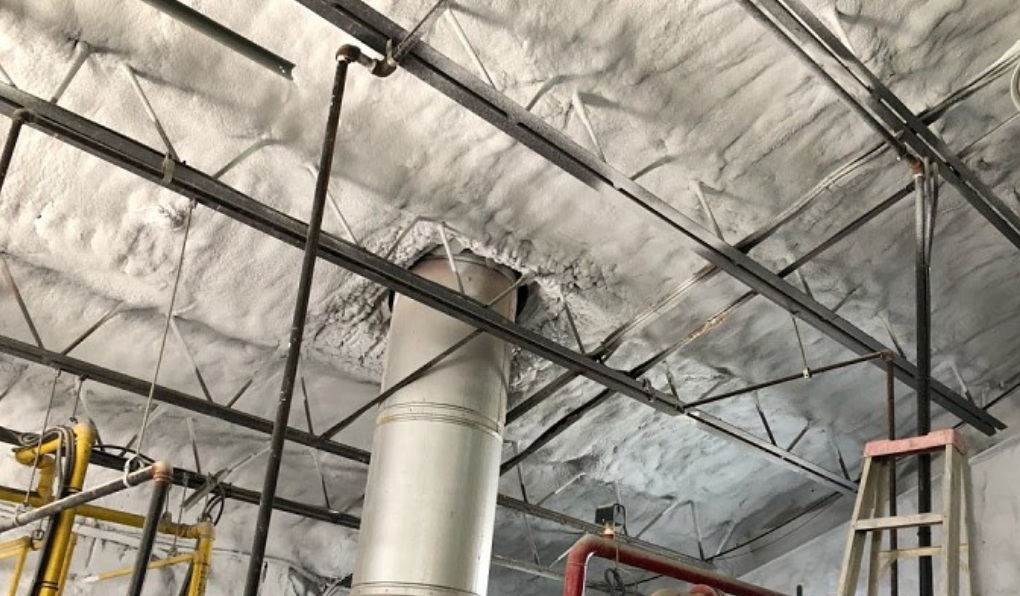
Commercial building owners often choose spray foam insulation because it helps improve energy efficiency, reduce air leakage, and control heating and cooling costs. In Mississauga and across the GTA, this matters because commercial buildings deal with cold winters, humid summers, high utility costs, and strict building requirements. But a common question comes up during commercial upgrades: does spray foam replace the need for fire protection? The answer is no. When planning spray foam insulation mississauga projects, property owners still need to consider commercial fireproofing, qualified fireproofing contractors, and how spray foam insulation costs may change when code-required protection is included.
Spray Foam Insulation and Fireproofing Do Different Jobs
Spray foam insulation is used to improve thermal performance and air sealing. It helps reduce heat loss, limit drafts, and support better energy efficiency in commercial and industrial buildings. For warehouses, offices, retail spaces, mechanical rooms, and industrial units, this can make a noticeable difference in comfort and operating costs.
Commercial fireproofing has a different purpose. It is used to help protect building materials, slow heat transfer, support fire safety, and meet code requirements. Fireproofing does not replace insulation, and insulation does not replace fireproofing. In many commercial spaces, they work together.
This is especially important with foam plastic insulation. Spray foam is a strong insulation material, but in many applications, it cannot simply be left exposed. Depending on the building, occupancy, location, and assembly, it may require an approved protective layer.
Why Spray Foam May Need a Thermal Barrier
In commercial settings, spray foam insulation often needs to be protected from occupied spaces or areas where it could be exposed to fire. This is where thermal barriers and fireproofing applications come in.
A thermal barrier is designed to help separate foam plastic insulation from the interior space. It gives the building assembly added protection and helps delay the foam’s exposure to high heat during a fire. The exact requirements depend on the project, but the important point is simple: spray foam is not automatically considered fireproof just because it improves the building envelope.
For commercial property owners, this is where planning matters. If the insulation is installed first and fire protection is treated as an afterthought, the project can run into inspection problems, delays, or added costs. The better approach is to plan insulation and commercial fireproofing together from the start.
How This Affects Spray Foam Insulation Costs
Many property owners ask about spray foam insulation costs before starting a project. The base cost usually depends on the area being insulated, the type of spray foam used, the depth of application, and how accessible the space is. Commercial buildings can also have more complex layouts, including high ceilings, mechanical systems, beams, ductwork, pipes, service penetrations, and uneven surfaces.
When fire protection is required, that also needs to be included in the project budget. Fireproofing may involve intumescent coatings, cementitious coatings, gypsum board, or another approved protective assembly. The right option depends on the application and the finish the property owner needs.
It is helpful to get a line-item quote that separates insulation, preparation, access requirements, fireproofing, and finishing needs. It gives building owners a clearer picture of the total project cost instead of only looking at the insulation price.
Why Mississauga Building Owners Should Work With Qualified Contractors
Commercial projects need more than basic installation. They need proper planning, documentation, and code awareness. This is why choosing experienced fireproofing contractors is important.
A qualified team should be able to explain:
- What type of spray foam is being installed
- Whether a thermal barrier or fireproofing application is required
- Which fireproofing option fits the project
- How the work will be prepared and applied
- What documentation may be needed for inspections
- How the quote is broken down
For spray foam insulation mississauga projects, local experience also matters. Commercial buildings in Mississauga range from older industrial units and warehouses to office spaces, retail plazas, and mixed-use properties. Each building has different access needs, insulation goals, and fire protection requirements.
Working with the right team helps reduce the risk of failed inspections, project delays, rework, and budget surprises.
Spray Foam and Fireproofing Each Have a Place
Before starting your next commercial insulation project, speak with experienced fireproofing contractors who understand both insulation performance and fire protection requirements. A proper plan will help you understand the full scope, compare spray foam insulation costs, and make sure your building is protected the right way from the start.
