


The loss of a beloved family member or a cherished friend initiates a profoundly emotional journey, one that is inevitably intertwined with the heavy responsibility of making enduring, practical decisions. Among the most significant and permanent choices a family must make during the bereavement process is the selection of a final tribute—a memorial monument. A headstone is not merely a piece of carved rock or cast metal; it is a sacred, enduring symbol of a human life, a physical anchor for grief, and a historical record that will stand for generations to come. When families begin the daunting process of navigating the memorialization industry, they are immediately confronted with a vast array of architectural styles, materials, and artistic finishes. However, before delving into the nuances of granite colors or laser-etched portraits, one foundational decision must be made: choosing between the two primary categories of cemetery memorials. These are the traditional upright headstones and the modern flat markers.
The decision between an upright monument and a flat grave marker extends far beyond simple aesthetic preference or financial constraints. It is a highly complex choice dictated by strict cemetery regulations, historical shifts in landscape architecture, long-term maintenance realities, and the deeply personal ways in which a family wishes to interact with the resting place of their loved one. To make a truly informed and confident decision, it is essential to conduct a comprehensive, side-by-side analysis of both styles. This exhaustive guide will dissect every critical aspect of upright headstones and flat markers, providing you with the ultimate resource to navigate this monumental choice with clarity and peace of mind.

1. The Historical and Architectural Evolution of Cemeteries
To fully grasp the core differences between these two types of memorials, one must first understand the historical evolution of cemetery design. For centuries, the standard for memorializing the dead was the upright monument. During the Victorian era, the “rural cemetery” movement popularized sprawling, garden-like graveyards filled with towering obelisks, elaborate crosses, and massive carved angels. These upright monuments were designed to dominate the landscape, reflecting the social status, religious devotion, and wealth of the deceased’s family. The cemetery was a visual forest of stone, where each family competed to create the most prominent and enduring vertical legacy.
However, in the mid-twentieth century, a radical shift occurred in cemetery landscape architecture with the advent of the “memorial park.” The memorial park concept was born out of a desire for a more serene, uniform, and egalitarian environment. Instead of a chaotic skyline of varying stone heights, memorial parks championed sweeping, unobstructed lawns of meticulously manicured green grass. To achieve this uninterrupted visual harmony, these modern cemeteries mandated the exclusive use of flat markers installed perfectly flush with the ground. This transition was also heavily driven by economics and practicality; flat markers allow heavy industrial lawnmowers and landscaping equipment to pass directly over the graves without obstruction, drastically reducing the cemetery’s long-term groundskeeping costs. Today, the choice between upright and flat is frequently dictated entirely by which section of the cemetery you have purchased a plot in.
2. Deep Dive: The Upright Headstone
The upright headstone remains the quintessential, globally recognized symbol of memorialization. It represents the pinnacle of traditional monumental masonry, offering a commanding physical presence that is impossible to ignore.
Structural Anatomy and Design
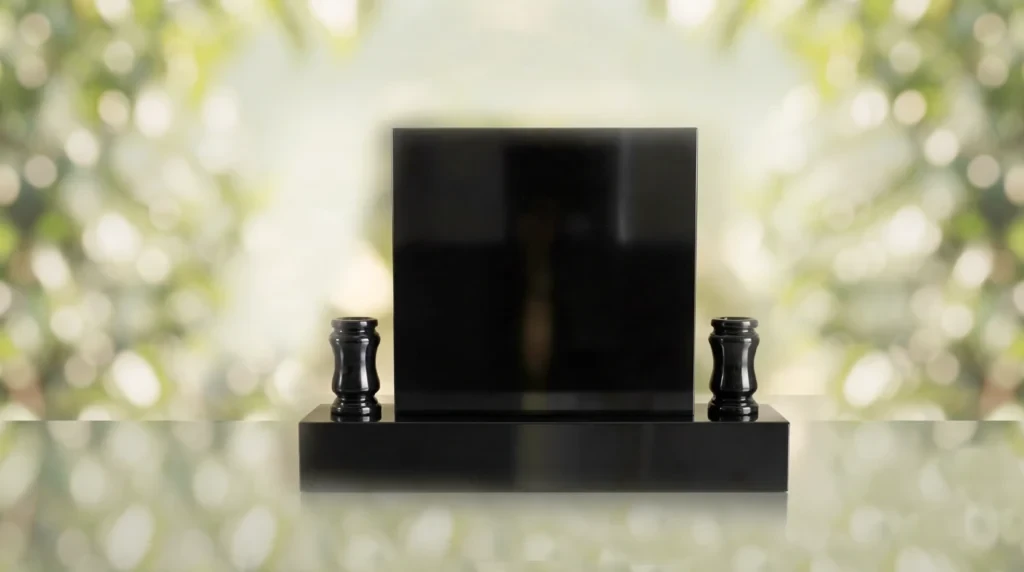
A standard upright headstone is a substantial architectural construct consisting of two primary components. The foundation of the structure is the “base,” a massive, thick block of granite that is secured to a deeply poured subterranean concrete footing. Resting atop this base is the “die” or “tablet”—the vertical stone slab that contains the actual engravings, names, dates, and artwork. Because they are constructed from incredibly thick, heavyweight granite, upright monuments are virtually impervious to the elements when installed correctly. They offer an unmatched canvas for artistic expression. The top of the die can be cut into traditional serpentine curves, modern sharp angles, or elaborate custom shapes like hearts, open books, or weeping willows.
Advantages of Upright Monuments
- Unrivaled Visibility and Presence: An upright headstone towers above the grass, making it incredibly easy for visiting family members and future genealogists to locate the grave from a distance, even in massive, sprawling cemeteries or during heavy winter snowfalls.
- Maximum Surface Area for Personalization: The large vertical faces (both front and back) provide immense space for lengthy, meaningful epitaphs, detailed family histories, extensive religious verses, and complex, laser-etched scenic murals or highly detailed photographic portraits.
- Protection from Ground-Level Damage: Because the text and artwork are elevated far above the soil, they are safely protected from the abrasive damage of lawnmower blades, acidic fertilizers, weed trimmers, and standing floodwaters.
Disadvantages and Limitations
- Premium Cost: Upright monuments are significantly more expensive than flat markers. The sheer volume of raw granite required, the complex freight shipping for thousands of pounds of stone, and the highly skilled labor needed for carving and installation all contribute to a premium price tag.
- Complex Installation Requirements: These monuments cannot simply be placed on the dirt. They require a deeply dug, heavily reinforced concrete foundation that extends below the frost line to prevent the massive stone from leaning, sinking, or toppling over as the ground freezes and thaws over the decades.
- Strict Cemetery Restrictions: A vast number of modern cemeteries simply do not permit upright headstones, or they restrict them exclusively to premium, high-cost “monumental sections” or larger multi-grave family estate plots.
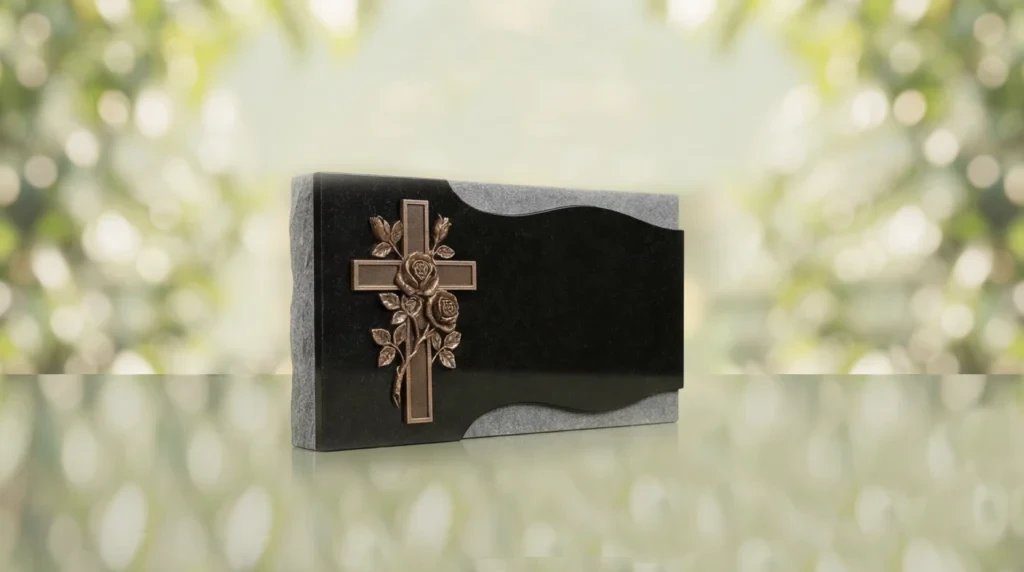
3. Deep Dive: The Flat Marker
Flat markers—frequently referred to in the industry as flush markers, grass markers, or lawn-level memorials—represent the modern, minimalist approach to cemetery architecture. They are designed to blend seamlessly into the natural environment, offering a subtle, understated, and elegant tribute.
Structural Anatomy and Materials
Unlike the multi-piece upright monument, a flat marker is typically a single, solid piece of material. They are most commonly crafted from a thick rectangular block of polished granite. Another highly popular variation is the bronze marker, where a deeply cast, oxidized architectural bronze plaque is permanently bolted to a flat granite base. As their name suggests, these memorials are installed directly into the earth so that the uppermost polished surface sits completely flush with the surrounding grass, creating a perfectly level landscape.
Advantages of Flat Markers
- Universal Cemetery Compliance: Because they do not disrupt the landscape or interfere with commercial landscaping equipment, flat markers are universally accepted. If you purchase a plot in a “memorial park,” a flat marker will be your mandatory, exclusive option.
- Economic Accessibility: Utilizing significantly less raw material and requiring far simpler, less labor-intensive installation procedures, flat markers are the most budget-friendly option in the memorial industry. This allows families to provide a beautiful, permanent tribute without suffering immense financial strain.
- Minimalist Aesthetic: For families who prefer an understated, peaceful, and highly natural aesthetic, the flat marker provides a quiet dignity that does not seek to aggressively dominate the surrounding environment.
Disadvantages and Limitations
- Vulnerability to Overgrowth and Elements: Because they lie directly on the earth, flat markers are highly susceptible to being quickly overgrown by aggressive cemetery grass, buried under autumn leaves, or completely hidden beneath winter snow accumulation. Finding a specific flat marker in a massive cemetery during the winter can be an incredibly difficult task.
- Exposure to Mechanical Damage: Despite being flush, they are still at risk of being inadvertently scratched, chipped, or stained by heavy riding lawnmowers, landscaping chemicals, and the tires of cemetery maintenance vehicles driving over the plots.
- Severely Limited Personalization Space: The physical dimensions of a flat marker strictly limit the amount of text and artwork that can be applied. Families must often ruthlessly edit their chosen epitaphs, reducing them to only the most essential information: names, birth dates, and death dates.
4. Comprehensive Feature Comparison Table
To facilitate a clearer understanding of how these two memorial styles stack up against one another across various critical metrics, please review the detailed comparative analysis table below.
| Feature / Attribute | Upright Headstones (Tablets/Dies) | Flat Markers (Flush/Lawn-Level) |
| Visual Prominence | Highly visible from long distances; stands out in the landscape; remains easily visible during heavy snow. | Low visibility; blends into the grass; can be completely obscured by snow, mud, or fallen leaves. |
| Initial Cost & Budget | High to Very High. Pricing is driven by massive stone volume, complex custom carving, and heavy freight logistics. | Low to Moderate. The most economical choice due to smaller material volume and simplified production. |
| Personalization Space | Massive. Allows for extensive epitaphs, front and back engraving, and large-scale laser-etched murals. | Severely Limited. Generally restricted to basic names, dates, and one or two very small, simple emblems. |
| Cemetery Acceptance | Restricted. Usually only permitted in older, traditional cemeteries or specific, highly priced premium sections. | Universal. Accepted by almost all cemeteries, and strictly mandated in modern “memorial park” environments. |
| Installation Complexity | Highly Complex. Requires a deeply poured, reinforced concrete foundation to support massive weight safely. | Simple. Usually set directly into a shallow dug-out space on a bed of crushed gravel or a minimal concrete pad. |
| Maintenance & Cleaning | Easy to wipe down; vertical faces naturally shed rain and dirt; less prone to holding standing water. | Requires frequent edging of grass; susceptible to hard water stains from sprinklers and mud accumulation. |
5. Crucial Factors to Consider Before Making a Purchase
Before signing a contract or authorizing the manufacturing process for a memorial, families must conduct thorough due diligence. Making assumptions about what is allowed can lead to thousands of dollars in wasted funds if a cemetery rejects the finished stone. Here is a definitive list of the crucial steps you must take:
- Request the Written Cemetery Bylaws: Never rely on verbal confirmation. Demand a physical, written copy of the cemetery’s rules regarding memorial dimensions, approved materials, and zoning restrictions for your specific plot.
- Verify Monument Installation Fees: Cemeteries often charge hidden “setting fees” or “endowment care fees” for the right to install a stone on their property. Upright monuments usually carry drastically higher setting fees due to the need for deep foundations.
- Assess Long-Term Maintenance Capabilities: Consider who will care for the stone in 20 or 50 years. If your family cannot frequently visit to trim grass and edge around a flat marker, it may become buried over time.
- Evaluate Climate and Weather Patterns: If the cemetery is located in a region with heavy, sustained winter snowfall, a flat marker will be entirely invisible for several months of the year, whereas an upright stone will remain a prominent beacon.
- Review Family Estate Plans: If you have purchased a double-depth companion plot or a large family estate, an upright monument provides the necessary space to engrave multiple names and dates over the coming decades, whereas a flat marker may run out of space entirely.
Conclusion and Final Verdict
Choosing between an upright headstone and a flat marker is a profound decision that sits squarely at the intersection of emotional desire, financial reality, and strict bureaucratic regulation. The upright monument remains the gold standard for families seeking a prominent, towering tribute that commands attention and offers vast, sweeping canvases for storytelling, artistic expression, and long family histories. Conversely, the flat marker represents the modern ideal of serene, egalitarian, and uninterrupted landscapes, providing a highly dignified, economically accessible, and universally compliant tribute.
Ultimately, the “right” choice is entirely subjective, heavily dependent upon the specific regulations of the final resting place and the unique legacy you wish to construct. It is imperative that you take your time, communicate openly with the cemetery administration, carefully weigh your budget against your artistic desires, and partner with a highly reputable monumental masonry team.
Final Decision Summary Table
| Decision Criteria | Choose an Upright Headstone IF: | Choose a Flat Marker IF: |
| Cemetery Rules | You are in a traditional section that permits high-profile stones. | You are in a “memorial park” that strictly mandates flush lawns. |
| Budget | You have a substantial budget allocated for custom masonry and deep foundations. | You require a beautiful, permanent tribute that remains highly economical. |
| Design Needs | You wish to engrave extensive poetry, multiple family names, or large portraits. | You prefer a minimalist, clean aesthetic with only essential information. |
By thoroughly educating yourself on the mechanical differences, the historical context, and the long-term realities of cemetery maintenance, you ensure that the memorial you select will stand as a flawless, enduring tribute. When you are ready to begin the design process and bring your vision to life, working with seasoned experts like Memory Headstones will guarantee that your family’s legacy is crafted with the highest quality materials, unwavering precision, and profound respect.
