


Lighting on industrial premises has long ceased to be just a technical detail of infrastructure. In 2026, it is considered an important factor in productivity, staff safety, and energy efficiency of the enterprise.
Modern production facilities – from factory workshops to logistics warehouses – operate in challenging conditions: high dust levels, temperature fluctuations, vibrations, and high humidity. For this reason, industrial lighting systems are subject to significantly higher requirements than residential or office lighting fixtures.
In 2026, the key criteria will be compliance with safety standards, optimal lighting levels in work areas, energy efficiency, and long-term stability of equipment operation. Industrial lighting is regulated by a few national and international standards that define minimum illuminance levels, light uniformity, and acceptable operating parameters.
The main requirements include:
- Standardized lighting of work areas, depending on the type of production and the precision of the operations performed;
- Uniform lighting to prevent sharp contrasts and shadows;
- Limitation of glare, which can reduce visibility and create risks for workers;
- Stability of light flux over a long period of operation.
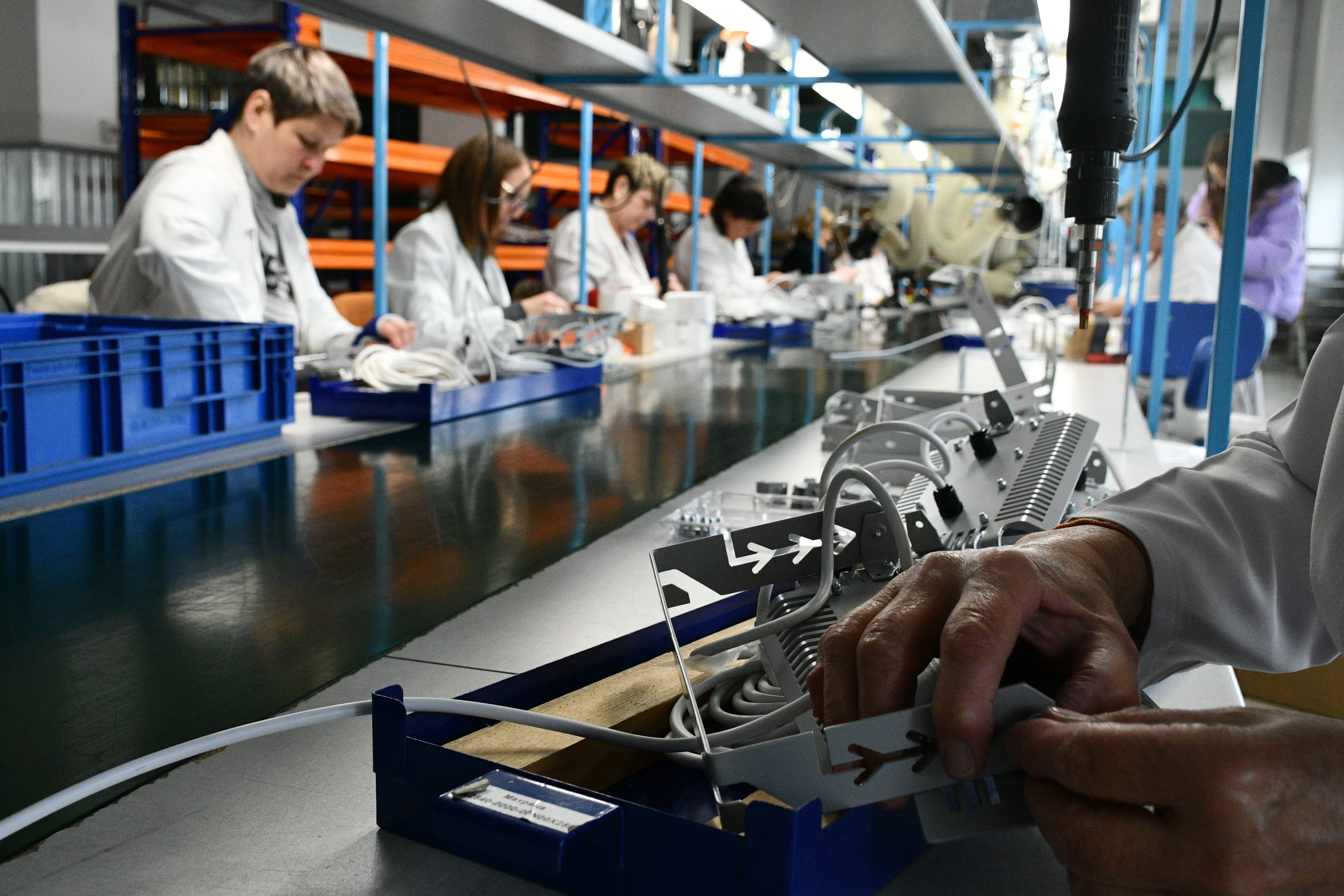
For example, assembly production facilities or laboratories require significantly higher lighting levels than warehouses or technical areas. RadiyLED smart lighting systems are properly designed lighting systems that help preventing operational errors and improve the precision of manufacturing processes.
Safety Standards in Industrial Environments
Safety is one of the key factors in designing lighting for industrial facilities. Luminaires are required to withstand harsh operating conditions and meet the requirements of industrial standards.
Key safety features include:
Ingress Protection Rating (IP)
Luminaires with a higher level of protection against dust and moisture are often used in industrial facilities, ensuring reliable operation in challenging conditions.
Resistance to Mechanical Stresses
Equipment in production facilities may be subject to vibrations or impacts, so the luminaire housings are required to be mechanically robust.
Thermal Stability
Luminaires shall effectively dissipate heat to prevent overheating and premature failure.
Electrical Safety
High-quality power supplies, surge protection, and reliable insulation are essential components of a safe lighting system.
Energy Efficiency as Economic Factor
In 2026, companies are focusing on energy-efficient lighting. Electricity costs account for a significant portion of operating expenses at industrial facilities, especially when production runs 24/7.
Key ways to boost efficiency:
- Using LED luminaires with high luminous efficiency;
- Implementing lighting control systems;
- Lighting zoning based on work processes;
- Using motion and light sensors.
LED technology can reduce electricity consumption by 40–70% compared to traditional lighting sources. In addition, LEDs have a significantly longer service life, which reduces maintenance and replacement costs.
Reliability and Service Life
Long-term lighting stability is a key requirement for industrial facilities. Frequent production stoppages due to equipment replacement can result in significant financial losses. For this reason, today’s industrial luminaires are expected to provide:
- Extended service life (tens of thousands of hours);
- Consistent light output without rapid degradation;
- Reliable electronic components;
- Minimal maintenance requirements.
Manufacturers are increasingly adopting a modular design for luminaries, which allows quick replacement of individual components without having to replace the entire piece of equipment.
Smart Lighting Systems
Another trend for 2026 is the integration of lighting into enterprise management systems.
These solutions are designed to:
- Automatically adjust lighting levels;
- Monitor energy consumption;
- Schedule maintenance;
- Improve the efficiency of production space utilization.
Smart lighting systems are becoming an integral part of the digital manufacturing concept and help companies optimize their workflows.
Contemporary industrial lighting is a comprehensive engineering solution that combines safety, energy efficiency, and reliability.
In 2026, companies are increasingly focusing on a systematic approach: from accurate lighting calculations to the use of smart control systems. This approach not only ensures compliance with regulatory requirements but also improves production efficiency, reduces energy costs, and creates a comfortable working environment for employees.
