

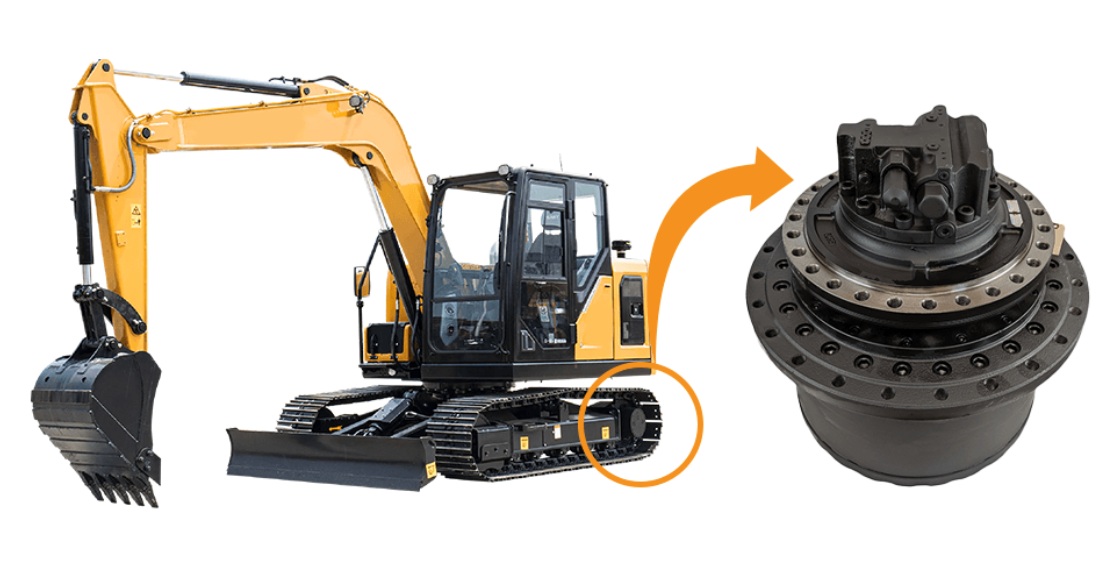
The final drive unit (also called a travel motor or track motor) is the power source of an excavator. It is the key component that converts hydraulic energy into the high torque needed to drive the tracks and let the machine travel over any terrain. This guide will detail the key components of an excavator’s final drive unit and outline the early warning signs of malfunctions.
What Are Final Drives?
An excavator final drive — also called a travel motor or track motor — is a tough gearbox part. It’s what connects the machine’s hydraulic system to its tracks. Its main job is super straightforward: it takes the fast, low-power force from the hydraulic motor and turns it into a slow, high-power force. That’s the force needed to spin the tracks and move the whole excavator. If both of your final drives aren’t working right, your excavator is just a big, heavy hunk of metal sitting there doing nothing. Since it’s so important, keep it as one of your excavator spare parts for timely repairs.
Key Components of the Excavator Final Drive
The final drive is a set of parts that work together as a team. This is where hydraulic power gets turned into the strong spinning force the machine needs.
The Hydraulic Motor
The excavator’s main pump sends pressurized hydraulic fluid to this motor. The motor (usually a small axial piston or orbital type) turns that fluid pressure into fast-spinning motion. But this spinning is way too fast, and not nearly strong enough to move the tracks by itself.
The Planetary Gear System
This is the real heart of the final drive. It’s a gear setup that trades speed for raw power. It’s usually made up of three key parts:
- A Sun Gear: The central gear that’s driven straight by the hydraulic motor.
- Planet Gears: A few smaller gears that circle around the sun gear.
- A Ring Gear: A stationary outer gear with teeth on the inside, which the planet gears lock into.
When the sun gear spins, it turns the planet gears. Since the planet gears are also locked into the fixed ring gear, they have to “walk” around its inner teeth. This makes their carrier spin way slower, but with way more torque. A lot of final drives use a two-stage or even three-stage planetary system to get the exact gear reduction they need.
The Gearbox Housing and Bearings
This tough outer case holds all the parts together. It also holds the important gear oil that keeps the planetary system running smoothly. Inside, there are heavy-duty bearings that support the huge loads put on the drive shaft and sprocket.
Signs of Excavator Final Drive Failure
If you notice any of the following, it’s time to stop and check the final drive:
- Strange noises: grinding, popping, or clicking. There may be a problem with the gears or bearings.
- Oil leak: Gear oil or hydraulic oil drips out, indicating a broken seal. Lubricating oil is lost, which may also allow dust and water to enter.
- Power drop: One track is slower than the other. Or turning and climbing hills are more laborious than before. It may be caused by a hydraulic motor or gear or bearing wear.
- Excessive vibration: There is a lot of shaking or vibration when driving, which indicates a problem with bearing or gear meshing.
Common Causes of Final Drive Failure
Dirt and grime getting into the system can cause serious damage. Poor maintenance — like not changing the lubricating oil regularly — can also lead to problems. Besides that, heavy use and harsh working conditions will speed up wear and tear. Catching and fixing these issues early on can save you from costly repairs down the road.
Final Drive vs Travel Motor
Technically, a travel motor is just the hydraulic motor part, and a final drive is the planetary gearbox part. But in the heavy equipment business, these two parts are almost always sold and installed as one single unit.
So when a mechanic or operator talks about a final drive or a travel motor, they’re talking about the whole assembly, including the bolts onto the excavator frame and turning the track sprocket. Both words mean the same component.
Summary
Know its basic parts, and more importantly, the red flags and causes of breakdowns. The best move you can make is to stick to regular maintenance, especially checking and changing the gear oil. This simple step is your best shot at avoiding early breakdowns.
