

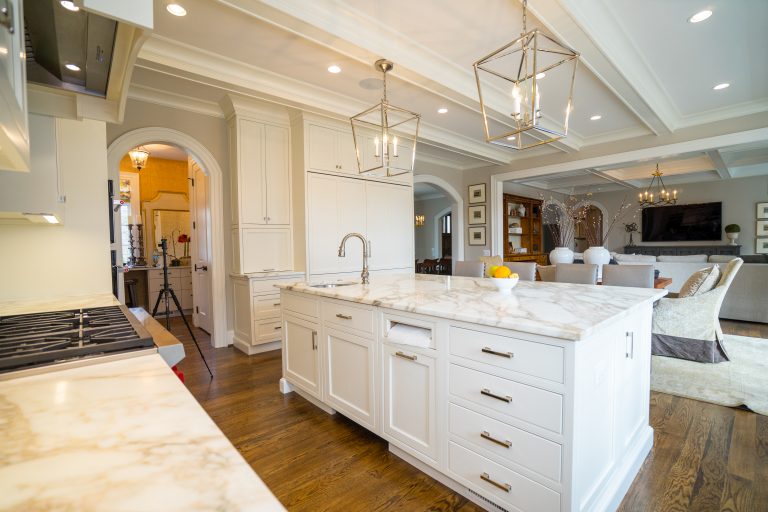
Granite has been a popular countertop choice for decades, but many people still associate it with outdated brown speckled surfaces from kitchens past. We talked to the countertop shop with biggest inventory in Central Ohio and found out that this perception doesn’t reflect the wide variety of granite options available today. Understanding what granite offers helps you decide if this natural stone fits your kitchen renovation plans.
What Granite Actually Is
Granite is an igneous rock made up primarily of quartz, feldspar, micas, and a mixture of other trace minerals. These minerals give granite its large variation in colors and textures.
Granite forms as an intrusive igneous rock, which means it develops in place during the cooling of molten rock deep beneath the earth’s surface. The slower the cooling process, the larger the crystals that form. This all happens where temperatures are hot enough and pressure is sufficient to melt rock.
At some point in geological history, this rock gets uplifted to where it becomes accessible to mine and quarry. The result is an incredibly hard rock that works well for countertops.
How Durable Granite Really Is
The Mohs scale measures mineral hardness from 1 to 10. Quartz sits at roughly 7 on this scale. Granite, which is made primarily of quartz and feldspar, sits slightly lower at around 6 to 6.5.
This still makes granite incredibly hard and durable. Granite holds up well to natural wear and tear from kitchen use. Like quartz and quartzite, granite resists scratching effectively. It even resists stains when sealed properly.
Granite can be chipped, nicked, or cracked if you drop a heavy object on it. This is common among all natural stones except soapstone. As long as your fabricator takes time to identify weak spots in your particular slab, you should enjoy these countertops for many years.
The Benefits of Granite Countertops
Granite Offers Unique Appearance Options
The perception that granite only comes in speckled brown is outdated. Nowadays, hundreds if not thousands of unique granite options exist. You can find granite in unexpected colors like turquoise for a basement bar or dramatic veining patterns that rival marble.
Each granite slab is different, giving your kitchen a one-of-a-kind look that manufactured materials cannot duplicate.
Granite Handles Heat
Heat resistance has been one of the most commonly discussed selling features for granite countertops over the last several decades. You don’t need to worry about hot pans or pots coming off your stove or cooktop damaging the surface.
However, heat resistance seems less prioritized now as quartz has risen in popularity despite not being heat resistant. Still, if you frequently cook and want to place hot items directly on your counters, granite delivers this capability.
One note of caution from fabricators: use hot plates or trivets anyway. You cannot be completely sure how all the minerals in natural stone will react to extreme heat. Soapstone is really the only natural stone where you can be 100 percent certain it will withstand hot pots and pans.
Granite Is Durable and Low Maintenance
Granite resists scratching and everyday wear and tear. Once sealed, it’s also stain resistant. The sealing prevents the stone from becoming a home for microbes or bacteria, making it easy to clean and keep sanitary.
You can consider granite a relatively low maintenance option for kitchen countertops, similar to quartzite.
Granite Can Add Value to Your Home
This applies to all natural stones and engineered stones like quartz. However, granite is easily recognizable, and many buyers still consider it a high-end material. This can translate into extra dollars when you sell your house or might sway a buyer sitting on the fence between properties.
The Downsides of Granite Countertops
Each Slab Is Different
This benefit is also a drawback. If you want completely uniform countertops, granite might not be the right option. Even relatively uniform slabs have some differentiation from piece to piece.
Granite Requires Some Maintenance
Granite needs sealing. If you want a true no-maintenance, set-it-and-forget-it countertop, granite isn’t the best choice.
Granite Can Develop Cracks or Fissures
Granite is natural rock, and it can develop cracks or fissures. Occasionally, granite slabs split shortly after installation, probably due to missed imperfections during fabrication. This sets projects back and causes headaches. This issue doesn’t occur with soapstone or engineered quartz countertops.
Repairs Can Be Difficult and Expensive
Thankfully, granite is hard and durable because granite repairs can be challenging. Cracks, fissures, chips, or nicks can sometimes be repaired with epoxies or resins, but the fix is usually quite evident.
Many big box stores sell DIY repair kits, and you can find them online. However, this is probably a task to farm out to a professional. Pros have the proper tools and knowledge to fix your countertops properly.
Cost Can Be High
Granite falls in the middle to upper end of the budget spectrum. It can go even further into the hundreds per square foot if you want rare or exotic colors.
After reviewing these lists, the negatives might seem to outweigh the positives. However, many downsides aren’t big pitfalls. They’re just features you should be aware of before making a major investment. Countertops often ring up as one of the most expensive portions of kitchen renovations.
Maintaining Your Granite Countertops
Caring for granite countertops really isn’t difficult with a little knowledge.
Daily and Weekly Cleaning
Clean up spills relatively quickly. Acidic substances like wine, coffee, or tomato sauce won’t etch the stone, but they can stain it if left too long or if a section of your countertop is no longer sealed.
Some cooking oils can also stain granite countertops depending on the slab you choose and its mineral makeup.
Using a granite cleaner is typically the best choice. These cleaners clean the stone while protecting the sealer from degradation. A quick wipe with soap and hot water occasionally isn’t a problem, but be careful. Residue can build up on the surface over time and dull the finish of your granite countertops.
Yearly Sealing Maintenance
You don’t actually need to seal your countertops every year, but you should test them with either the lemon or water drop test.
Pour a little water on your countertop or squeeze a little lemon juice and leave it for 15 or 30 minutes. Come back and check it. If the water or lemon juice has stayed in a tight pool and hasn’t absorbed into the stone or darkened it, you have a strong seal. You don’t need to reseal yet.
If you see darkening of the stone or a mark left behind when you wipe it away, it’s time to reseal your countertops.
That’s it. A relatively simple maintenance routine keeps your granite countertops clean and sealed.
Is Granite Environmentally Friendly
Granite has some positive environmental aspects and some negative ones.
The Positives
Granite is a natural stone. It’s hard and durable, and granite lasts for decades. You’re not replacing it often. When you finally do replace it, probably not because it’s worn out but because you want a different look, granite is recyclable.
Granite requires sealing, but once sealed it doesn’t harbor bacteria. It’s a sanitary choice for your kitchen, meaning you don’t need harsh chemicals to keep it clean. It doesn’t need sealing nearly as often as some other natural stones, making it a pretty good environmental choice in this department.
The Negatives
Granite quarries are not gentle on the environment. Mining requires serious topsoil removal, chemicals, and explosive materials. Quarrying is also a high energy and water intensive process, which many consider wasteful.
Although you can reduce your overall carbon footprint by choosing material from domestic quarries, many exotic colors and slabs travel long distances from places like Brazil or Iran. This transportation significantly increases fuel use and environmental impact.
Is Granite Right for Your Columbus Kitchen
Granite has many positive features without much downside. A bonus is that it typically falls on the cheaper end of the budget spectrum when it comes to natural stone options.
If you’re in a kitchen renovation with a tighter budget but still want natural stone countertops, granite might be a good option. You get the beauty and prestige of natural stone at a more accessible price point than quartzite or marble.
The variety available today goes far beyond the outdated brown speckled granite from decades past. Modern granite slabs offer dramatic veining, unique colors, and patterns that fit contemporary kitchen designs.
Consider your priorities. If heat resistance matters because you cook frequently, granite delivers. If you want low maintenance with occasional sealing, granite works. If you want natural stone character with each slab being unique, granite provides that quality.
Visit Columbus Granite to see the current selection of granite slabs. Seeing materials in person helps you understand the variety available and how different granite looks compared to your preconceptions. The team can discuss which granite works best for your kitchen style, budget, and how you use your space.
Granite remains a solid choice for kitchen countertops. Understanding what it offers and what it requires helps you make an informed decision for your renovation.
