

Rise of the Digital Culture in 2025 Pop Culture Predictions
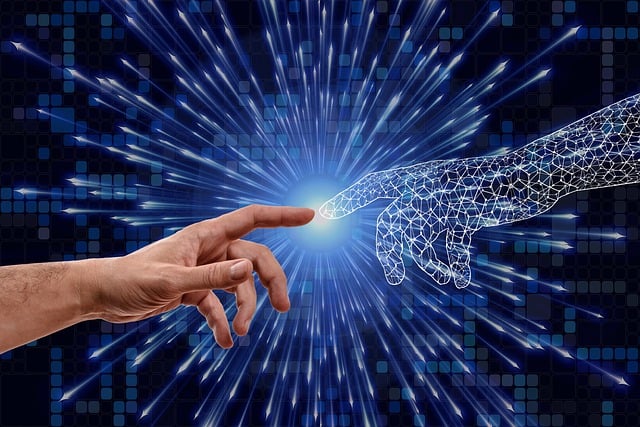
The world of entertainment and creation is changing faster than ever, with the 2025 pop culture predictions drawing a picture of the future where technology, individuality, and global interconnectedness stand tall. The lines blurring more today between the digital and physical worlds are becoming the basis of that one interactive ecosystem they talk about in music, film, fashion, gaming, and social media trends. AI, virtual influencers, and immersive content experiences are the very canvas with which audiences paint their engagements with culture, rendering 2025 a year of change for both creators and viewers.
Content Generated by AI
In the limelight of the most immensely talked-about 2025 pop culture predictions lies the so-called rise of AI-generated media. Artificial intelligence is increasingly taking the role of a creative partner instead of simply a tool. Most musicians use artificial intelligence to create songs, while visual artists work alongside machine learning systems to develop new aesthetics, and filmmakers are experimenting with AI-assisted editing and storytelling methods. By 2025, not only will AI assist in the production of content, but it will actually start shaping cultural trends. Entertainment will actually become a co-creative act now, with AI algorithms allowing people to vector in their own cultural experiences: custom playlists, AI-directed short films, or even interactive fashion collections generated in real time.
The Future of Music and Virtual Concerts
One of the core pillars of global culture is still music, and in 2025 pop culture predictions, digital decentralization, and immersion form the three legs of an increasingly severe triangle. Enabled by metaverse platforms, virtual concerts will hit the mainstream, where fans attend concerts as avatars. Artists are probing the use of AR and VR as the potential next frontier in audience IP engagement. Simultaneously, blockchain will serve as a redefinition of ownership and royalties through NFTs (non-fungible tokens). These empower the indie artist to sell their works directly while giving collectors verifiable digital assets that carry the name of their favorite artists.
Phygital Fashion
For the year 2025, the American pop culture profile has predicted a profusion of physical-digital fusions to come into being. The fashion houses will set up the digital clothing lines that exist only in virtual worlds or gaming worlds or social platforms, while the digital dress will turn into a new form of self-identification: a marriage of creativity and technology. Influencers will flaunt AI-created clothing on digital avatars; henceforth, limited-edition virtual clothes will be bought by consumers and validated through blockchain.
Sustainable fashion will also go a long way toward the incorporation of circular design concepts and environmentally conscious methods of production by brands for a new generation of socially conscious consumers.
Film, TV, and the Streaming Revolution.
2025 pop culture futures for entertainment outlets are under a significant transformation in consumer trends for visual content. Indeed, while traditional streaming platforms will continue their growth path, the soon-after revolution will be in interactive storytelling, whereby viewers will not just be witnesses but participants in shaping narratives increasingly driven by real-time decisions, thus creating a mostly hybrid experience between gaming and cinema. AI will generate adaptive scripts so that creators can dynamically react to audience feedback. Independent creators will come into their own provided decentralized streaming platforms bring fairer revenue distribution that defies the traditional Hollywood models.
Social Media and the Era of Virtual Influencers
Social networking sites continue to offer great opportunities to shape and reshape contemporary culture. Considering the pop culture trends for 2025, virtual influencers, AI-created characters with digital avatars, will take over the world of online spaces. These would entertain audiences around the clock, adapting to trends in an almost instant manner, and represent brands on a truly global level without the confines of human capabilities. The masses will be inundated with AI-created content on platforms like TikTok or Instagram and even newer decentralized social networks where this content seems to have some sort of preferential algorithm. Being good in a traditional sense will probably not align with being fashionable in this new world, and human influencers will need to choose hybrid identities that give expression to their own authenticity and some extent of digital artistry.
Gaming and the Expansion of Digital Worlds
With the gaming industry growing at an exponential rate, it is becoming a key pillar of pop culture. As regards pop culture for the year 2025, gaming will evolve into fully immersive cross-environment platforms where players compete, create, trade, and socialize. Player-driven economies will be maintained through blockchain-based assets, while AI will customize the entire gaming experience in real time. Games will serve as cultural hubs, where music is premiered, and there will even be fashion collaborations and movie crossovers. Esports will have established itself as a form of mainstream entertainment, with tournaments rivalling traditional sports when it comes to scale and viewership.
The Influence of Data and Predictive Analytics
Data and analytics hold significance concerning the pop culture predictions of 2025. Companies such as Zephyr Digital act as leaders in trend and audience behavior analysis using artificial intelligence and predictive modeling. Zephyr forecasts rising pop entertainment, fashion, and technology movements by analyzing social sentiment, digital engagement, and media consumption patterns. By combining human creativity with machine intelligence, Zephyr serves to aid brands and creators in anticipating what is going to take their attention. Thus, rather than forecasting trends alone, it fosters an environment for real-time adjustments, ensuring that culture vectors stay ahead of cultural evolution.
Role of Ethics and Digital Identity
While technology becomes the center of all cultures, ethical considerations aim to shape pop culture predictions for the year 2025. Who owns the content generated by AI? How do the creators of works maintain their copyright in a decentralized world? What constitutes identity when the avatars are allowed to look and behave more real than humans? These debates may get heated as the human interface in digital environments deepens. Society shall need to draw the line, separating virtual personality from real-world accountability, weighing integrity against innovation.
Globalization and Cultural Fusion
Pop culture has been global since time immemorial. Yet, 2025 shall experience an acceleration of culture clashes. Music, fashion, and media from the non-West will rule the stages globally—a reference to Asia, Africa, and Latin America. The forecast for 2025 pop culture is that cultural exchange shall no longer flow in one direction. Rather, it shall be decentralized and multi-nodal, with audiences from across the world collaborating to create hybrid cultural products. Hence, entertainment shall become more inclusive and diverse.
Final Thoughts
According to these 2025 pop culture predictions, the world will be one in which creativity, technology, and humanity intersect. Artificial intelligence will not contradict human beings in their imaginative capabilities; rather, it will elevate these aspects, providing the latter with new opportunities to interact with culture. With Zephyr Digital pioneering data intelligence and predictive analysis, pop culture will be more personalized, more participative, and more interconnected globally. By 2025, the barrier dividing creator from consumer will cease to exist, resulting in a dynamic and collaborative universe of innovation and imagination that will itself define membership in culture.
