

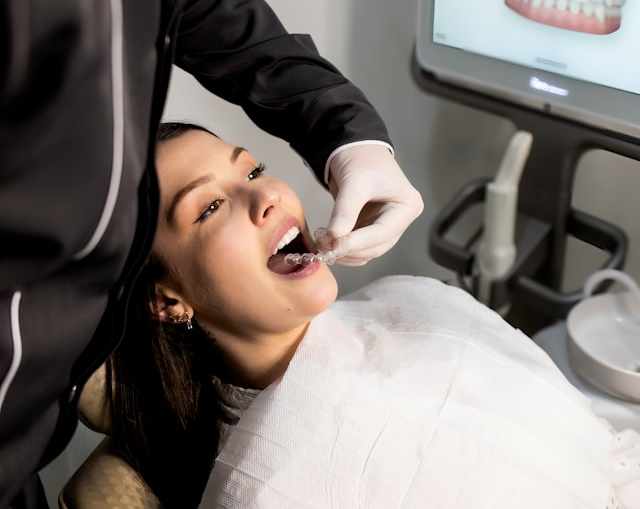
In the rapidly evolving world of dental care, technology is playing a pivotal role in transforming traditional workflows. One of the most groundbreaking innovations in the field is the rise of the dental designer — a specialist who blends digital tools with dental expertise to craft precise, customized restorations, implants, and orthodontic solutions. These professionals are changing the game for both dental labs and clinics, delivering faster, more accurate results that enhance patient outcomes.
What Is a Dental Designer?
A dental designer is a trained expert who uses CAD (Computer-Aided Design) software to create digital models of dental restorations, such as crowns, bridges, veneers, and aligners. These models are then manufactured using CAM (Computer-Aided Manufacturing) processes, ensuring high precision and consistency. Unlike traditional dental technicians who rely on manual crafting, dental designers work in a fully digital environment, enabling real-time adjustments, quicker revisions, and enhanced accuracy.
Their role is essential in modern dentistry, especially in cosmetic and prosthetic procedures, where millimeter-level precision is non-negotiable. From the initial scan of a patient’s mouth to the final design ready for milling or 3D printing, the dental designer ensures that every step is streamlined and optimized for results.
Benefits of Using Dental Designers
The rise of digital dental design services has brought numerous advantages:
- Speed and Efficiency: Dental designers significantly reduce turnaround time by eliminating manual labor and streamlining the design-to-production pipeline.
- Customization: Digital tools allow for more personalized solutions based on patient anatomy and preferences.
- Accuracy: 3D modeling ensures a precise fit, which minimizes the need for adjustments and remakes.
- Remote Collaboration: Dentists and labs can now collaborate with designers across the globe, accessing talent without geographic limitations.
Platforms like Dentaldesigners make this process seamless by connecting dental professionals with experienced freelance designers who can deliver top-quality digital work on demand. Whether you’re a solo practitioner or a large clinic, outsourcing your design needs to Dentaldesigners can help you scale operations while maintaining exceptional quality.
How to Get Started with Digital Dental Design
Transitioning to digital design is easier than ever. Most workflows begin with a digital impression taken from an intraoral scanner. This scan is then uploaded to a platform such as Dentaldesigners, where a certified designer takes over. The designer crafts the necessary restoration based on your specifications and delivers a production-ready file compatible with your in-house or partner lab’s CAM equipment.
Many platforms also offer support and revisions, so you can collaborate closely to get the perfect result — even on complex cases. Additionally, services are often available on a pay-per-project basis, making it cost-effective for practices of all sizes.
Conclusion
The role of the dental designer is at the heart of digital dentistry’s transformation. As technology continues to evolve, these professionals will be instrumental in helping clinics deliver faster, more accurate, and more personalized treatments. Services like Dentaldesigners not only simplify the process of accessing high-quality design work but also empower dental practices to meet the modern demands of efficiency and precision. If you haven’t yet embraced digital dental design, now is the perfect time to explore its potential.
