

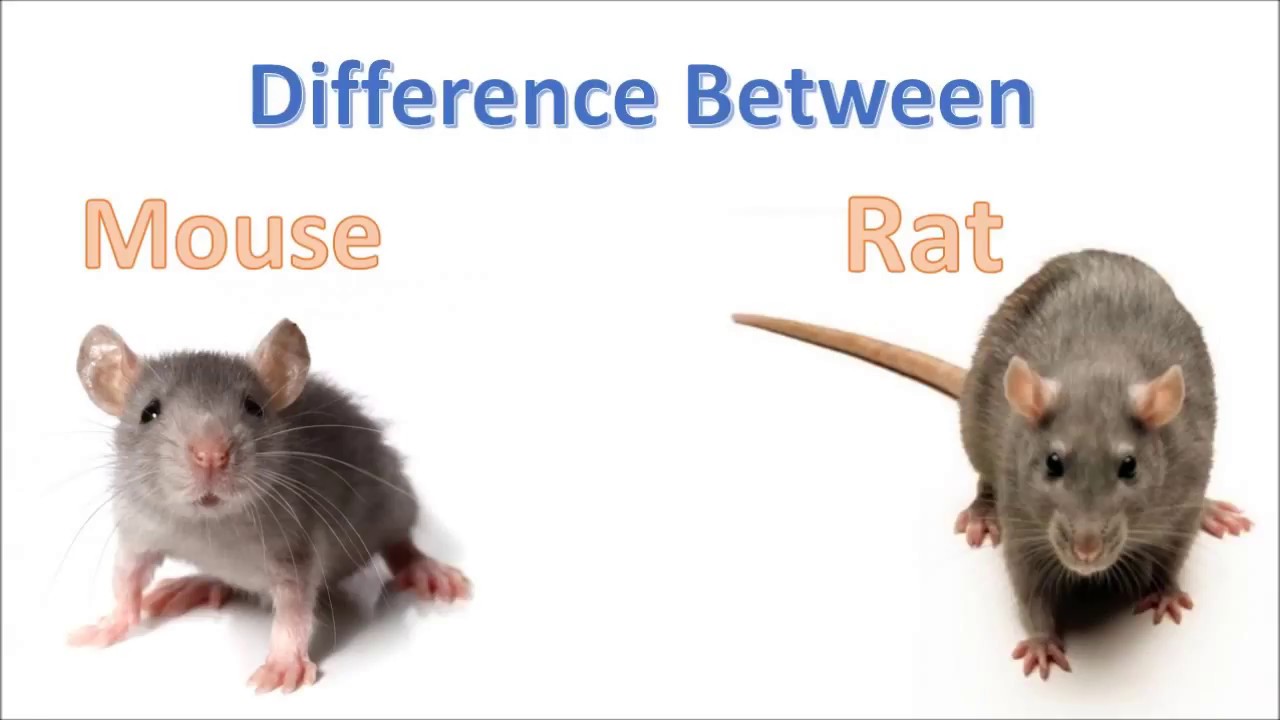
Rats and mice are mostly known for how much of a nuisance-they can be especially if they are in your home. Typically, when you see one in your home, your first thought would be to find a way to get rid of rats and fast! As a matter of fact, all of these are mainly what is focused on – the negative, they are notable for carrying disease-causing pathogens and can cause a lot of property damage when they infest the home. They are also known for being very unsanitary and are mainly found in dirty places and stay in dark and damp locations. However, in spite of all these negatives, there is a positive that you probably have no idea of – the fact that they are intelligent. The level of their intelligence might just surprise you so much because you really haven’t considered it. Well, here is a look into this.
The Rodent Brain
That the rodent brain is a lot smaller than that of the average human doesn’t come as a surprise at all. In fact, if the opposite were the case, that would be some very shocking discovery. However, in spite of this small size, research has shown that the rat brain is a lot similar to that of humans in terms of function and structure. For a very long time, there was a general assumption that rats are blind but in recent times, new discoveries have rendered that assumption obsolete. Researchers from Harvard have been able to prove that they have vision and processing abilities that are developed enough to enable them to identify and recognize 3-D objects despite whatever changes in orientation or size that such objects may undergo. What’s more, they even have the ability to tell when they are seeing a movie that features rats!
Observed Behavior
Various rodent behaviors suggest that they actually exhibit a measure of intelligence. For instance, it has been observed that mice have various communication methods which they make use of with each other. Via their characteristic squeaks and chirps, they actually talk. There are also certain vocalizations that are too high pitched to be heard by humans and these are referred to as ultrasonic vocalizations (USVs). Furthermore, researchers have discovered that mice sing!
Mice also communicate in order ways such as via their urine which composes of pheromones that can be used to transmit important messages. Other mediums such as body language can be used as well, for instance, tail drumming could be an indication of aggression in mice.
Certain species of mice also surprisingly practice various acts such as monogamy as well as a display of parental care and responsibility towards their litter. Deer mice have also been known to create structures known as burrows to prevent predator attacks. The type of burrow created specifically depends on the species of mice, geography of the land, as well as the soil type.
Rodents are also generally social creatures and rats are known for living as a group or a community. A group of rats is known as a “mischief.” They exhibit traits characteristic of social behavior such as playing, sleeping together, as well as grooming one another. They have also been known to be quite hostile to stranger rats in their midst.
Now, Which of the Two Is Actually Smarter?
For more than one hundred years, rats have been used in various experiments, especially psychology experiments, mainly due to the fact that they’re brain structure is similar to that of humans as well as their ability to make decisions. Researchers found that rats can discover certain patterns and stick to them if they are good, they also do less of second-guessing themselves than humans. For this reason, it was thought that rats were a lot more intelligent than mice.
However, new findings have shown that this may, in fact, be a false assumption. That rats are more intelligent than mice may just be a myth after all. This is because recent studies have shown that mice actually possess a significant number of the same decision-making abilities that rats boast of. This implies that mice, just like rats, can be trained in the laboratory and be used for carrying out various studies to understand human behavior.
This research concludes that judging by most of the psychology experiments that have been carried out, all rodents might just have been created equal in intelligence.
So Why This Assumption In the First Place?
Now, this is definitely one of the questions on your mind and the answer might be simpler than you expected – a historical bias. When psychology experiments began, the researchers started out with rats. This implies that the experiments were designed for rats, and putting a mouse in an experiment designed for rats might just be a recipe for failure. Doing this might bring you to the same conclusion that they made; that rats are just a lot smarter than mice. Therefore the researchers settled for mice being dumb instead of the poor experiment design.
Similarly, researchers have had over a 100-year worth of knowledge gained from the effort put into training rats. And when mice were treated the exact same way that the rats were handled without any modifications, the mice were categorized as less intelligent. While scientists have had over a hundred years to understand rats, mice have not been given that much attention.
Since mice are not rats, it would, therefore, be wrong to assume that rats are not as smart.
*****
From time to time, GraniteGrok accepts content from third parties (posts, or additional links after initial publication) from which we may or may not receive compensation.
