

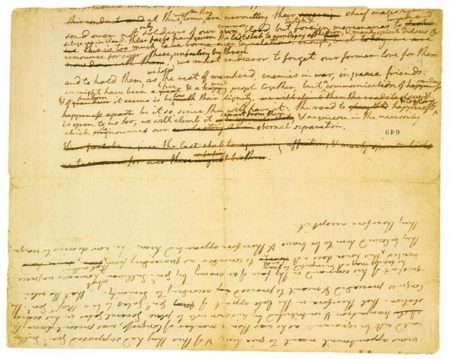
On June 7, 1776, Richard Henry Lee of Virginia first proposed that the Continental Congress compose a document declaring that the Colonies were united, free and independent of the British Crown. It is the earliest form and draft of a Declaration of Independence.
The text of the Resolution stated: “Resolved, That these United Colonies are, and of right to be, free and independent States, that they are absolved from all allegiance to the British Crown, and that all political connection between them and the State of Great Britain is, and ought to be, totally dissolved. That it is expedient forthwith to take the most effectual measures for forming foreign Alliances. That a plan of confederation be prepared and transmitted to the respective Colonies for their consideration and approbation.”
The players …
Amid heated debate, Congress postponed the vote on Lee’s resolution and called a recess for several weeks. Four days later, before departing for the break, the Continental Congress delegates appointed the “Committee of Five.” It was formed to draft a formal statement justifying the break with Great Britain. What they composed today stands as the American Declaration of independence. The committee members were John Adams of Massachusetts, Roger Sherman of Connecticut, Benjamin Franklin of Pennsylvania and Robert R. Livingston of New York, Thomas Jefferson of Virginia.
Originally, the delegates pushed for Richard Henry Lee, author of the Lee Resolution, to write the Declaration of Independence, not Jefferson. However, circumstances intervened. Lee had been appointed to the Committee of Confederation for the writing of the Articles of Confederation. Lee thought being part of both committees would be too great an effort. Then his wife became gravely ill forcing him to return home prematurely.
His replacement was a young delegate, also from Virginia. His name was Thomas Jefferson. He had shown promise and had a reputation as an eloquent voice for the patriotic cause. In 1774 he published “A Summary View of the Rights of British America.” He was given the task of producing a draft, a working document from which would come the Declaration of Independence.
Who will do the work?
Most people don’t know that, at first, Jefferson had no interest in penning the Declaration. He wanted John Adams to do it instead. Adams writes in his account of the episode in a letter to Timothy Pickering, a politician from Massachusetts and a good friend of Adams:
“Jefferson proposed to me to make the draft. I said, ‘I will not,’ ‘You should do it.’ ‘Oh! no.’ ‘Why will you not? You ought to do it.’ ‘I will not.’ ‘Why?’ ‘Reasons enough.’ ‘What can be your reasons?’ ‘Reason first, you are a Virginian, and a Virginian ought to appear at the head of this business. Reason second, I am obnoxious, suspected, and unpopular. You are very much otherwise. Reason third, you can write ten times better than I can.’ ‘Well,’ said Jefferson, ‘if you are decided, I will do as well as I can.’ ‘Very well. When you have drawn it up, we will have a meeting.’”
This Declaration committee operated from June 11, 1776 until July 5, 1776, the day on which the Declaration was published. Over the course of seventeen days, in between meetings and other governmental affairs, Jefferson penned the Declaration of Independence. He wrote and the rest of the committee edited. The majority of the edits are attributed to Franklin and Adams. It was an act that secured Jefferson’s name in history forever. The Committee of Five first presented the document to the Continental Congress on June 28, 1776.
Approvals process…
The Continental Congress made its own adjustments. It edited about 20% of the document, mainly in the body of the document, the list of grievances to the King. After working on it, the final draft was submitted on July 2nd. From it all the edits and changes were finally agreed. The Continental Congress approved the final wording of the Declaration of Independence on July 4, 1776.
About a month after the Lee Resolution the Declaration of Independence was proposed to the States. John Hancock, the first signatory. He was the only person to sign on July 4. Many of the other delegates would sign the completed Document on August 2 of that same year. The last person to sign was the New Hampshire delegate Matthew Thornton, who endorsed the document on November 4, 1776.