On government in general, and education in particular, too many activists and politicians view efficiency as an enemy. To them, the total budget of any government program is the only measure of how highly it is valued by citizens.
Any effort to restrain the growth of a government program is viewed as an attack on the program itself. Though it might sound absurd, this is the most common framing used in opposition to any and all proposed spending cuts, or even efforts to slow the rate of growth of government spending.
Efficiency, though, is not a vice. Ensuring that government services are provided as inexpensively as possible, and only to those who really need them, keeps the government from wasting people’s money. Because government is not subject to competition, it doesn’t have built-in incentives to pursue efficiency. Taxpayers have to impose those.
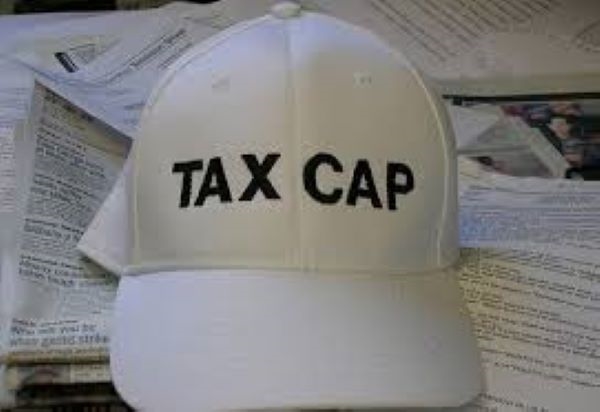
That’s what tax caps do, which is why 43 U.S. states have some form of state restraint on local government spending. New Hampshire is not one of those states. The school district tax cap on Tuesday’s ballot was the first effort to provide some semblance of a restraint, though the temporary cap is extremely weak when compared to those used in other states.
Possibly the most valuable outcome of Tuesday’s tax cap vote was that it exposed as false the lazy political framing that says those who want more efficient school spending don’t support public schools.
Granite Staters supported the school district tax cap by huge margins in almost every town. House Republicans compiled the town-by-town results that were reported to the Secretary of State and found that the cap drew majority support in 201 towns, falling short of 50% in only 35.
To be adopted, the cap had to receive 60% of the vote. It fell just shy of that in many municipalities, including Manchester, Bedford, Hollis, Litchfield and New Boston.
Typically, progressive activists would denounce voters who approved limiting the growth of school spending, which is what this cap would do. They would accuse them of wanting to destroy or defund public schools. In fact, such accusations were heard throughout this election.
Tuesday embarrassed those who spew that simplistic and baseless rhetoric. Voters elected Democrats to huge majorities in the Legislature while also supporting the tax cap. That could happen only if a lot of Democrats and independent voters also supported limiting the growth of school spending. That doesn’t fit the narrative.
Media interviews with voters revealed a more complex picture than the one portrayed by advocates of ever higher government spending. People told reporters that they support their public schools, but they just can’t afford more tax increases.
That’s a perfectly normal set of beliefs to hold at the same time. Supporting public education is not synonymous with supporting unlimited spending on public education.
The tax cap vote clarified that wanting to control public education spending is not a radical position held only by voters progressives routinely portray as selfish people who “hate public schools.” In New Hampshire, it’s the dominant position held by a large majority of voters.
..
Authors’ and Speakers’ opinions are their own and may not represent those of Grok Media, LLC, GraniteGrok.com, its sponsors, readers, authors, or advertisers.
Disagree, agree, Got Something to say? We Want to Hear It. Comment or submit Op-Eds to steve@granitegrok.com