

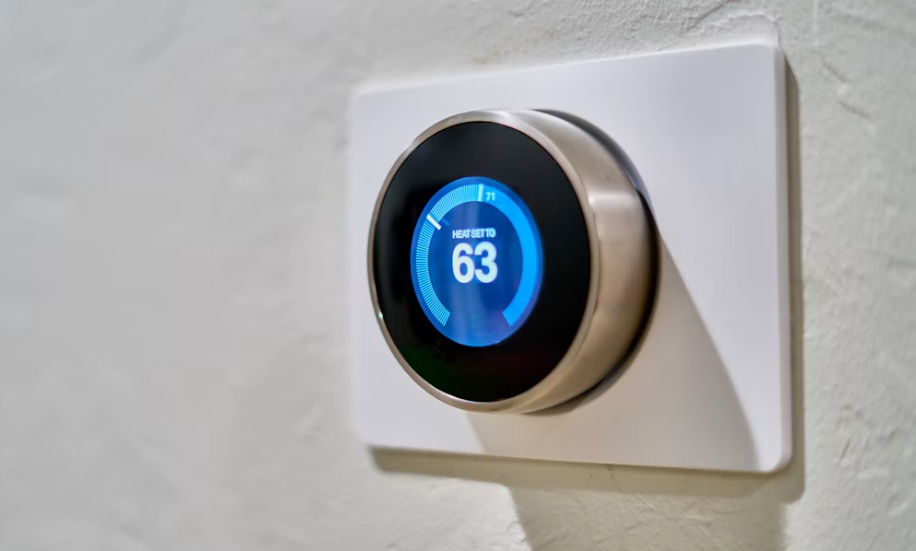
It’s 6 p.m. and the living room reads 74, which is what the thermostat was told to deliver back in July. Outside it’s 62 and dropping. The compressor kicks on, runs a short cycle, shuts off, and the homeowner opens the app wondering why the bill keeps climbing. The schedule the thermostat learned over a long summer is describing a house that no longer exists.
Smart thermostats are good at pattern matching. They’re less good at noticing the pattern changed. When the weather turns, a model built on months of hot afternoons keeps giving the same answer to a different question.
The failures that follow aren’t dramatic. They show up as odd runtimes, rooms that feel off, and a utility statement that doesn’t line up with the weather. Here’s where that drift tends to appear, and what to do about each piece.
The Schedule Still Thinks It’s August
A learning thermostat spends the summer working out when the house warms up, when people come home, and how hard it needs to pre-cool to hit a setpoint by six. By October it has a confident model built on data that no longer applies. The outdoor baseline has moved. So has the solar gain through those west-facing windows.
The schedule hasn’t budged. Machine-learning researchers have a name for this: concept drift — the world the model was trained on has shifted under it. The fix on a thermostat is simpler than on a research paper. Force a refresh.
Delete the learned schedule, or switch the device out of auto-learn for two weeks while the house settles into a new rhythm. A good HVAC technician will handle this during a seasonal visit, since walking a homeowner through the thermostat is faster than driving back for a comfort call three weeks later.
The Setpoints Flipped Signs and Nobody Noticed
Summer and winter setpoints don’t just differ in number. They differ in direction. In cooling season, the setback goes up when the house is empty. In heating season, the setback goes down.
A thermostat happily running a 78 away-mode in August will keep running 78 in October, which is now a heating call instead of a cooling one. The system may oblige by firing the furnace to hold a temperature the homeowner never meant as a heating target.
Guidance from ENERGY STAR is to set the thermostat about 8°F lower in winter when the house is asleep or empty, and 7°F higher in summer when it’s empty. Opposite moves. If your fall schedule still carries the summer numbers, you’re paying to heat an empty house to a temperature that made sense when the goal was to avoid cooling it.
The Shoulder Season Confuses the Changeover
October mornings run cool. October afternoons can still call for cooling. A smart thermostat in auto-changeover mode has to decide, hour by hour, which system to run.
Deadband settings — the number of degrees between the heat setpoint and the cool setpoint — are the quiet referee. If the deadband is too tight, the thermostat will toggle between heating and cooling in a single day, sometimes within hours. The equipment short-cycles. The house feels unsettled.
A few checks keep this from turning into a running fight with the equipment:
- Widen the deadband. A 3°F to 5°F spread between heat and cool setpoints lets the house drift through the mild part of the day without the system picking a side.
- Lock out one mode when you can. If overnight lows are consistently in the 50s, disable cooling for the week. Most smart thermostats will let you do this from the app.
- Watch the first warm afternoon. When the house asks for cooling at 3 p.m. after a 55-degree morning, make sure the system transitions cleanly instead of locking into one mode.
The Savings Math Only Works If the Schedule Is Right
A properly configured setback is where the real money sits. Pulling the house a few degrees away from comfort while nobody’s home produces meaningful savings, but only if the setback is pointed in the right direction for the season you’re actually in.
A learned schedule carrying summer logic into fall doesn’t deliver that. It can give the savings back entirely, and in short-cycling cases, it can run up a higher bill than a dumb thermostat would have.
The fix isn’t fancy. Reset the schedule at the equinox, confirm the setpoints point the right direction for the season, widen the deadband, and give the learning model a couple of weeks of fresh data before trusting it again. The thermostat is a useful tool. It still needs someone to tell it the season changed.
