

People have always needed to move messages and goods over long distances, and ingenuity has filled the gaps where roads or railways did not exist. Long before our digital age, homing pigeons were a lifeline. In ancient Asia and the Middle East, flocks carried short notes tucked into tiny containers attached to their legs. During the Franco‑Prussian War in 1870, besieged Parisians sent microfilm copies of newspapers strapped to pigeons to keep the outside world informed. The birds flew over enemy lines at speeds close to a modern car, and later the same technology was adapted to deliver high‑resolution photographs. This simple but effective method shows how creative people can be when faced with disrupted communication.
Animals were enlisted in even larger roles as global trade expanded. In arid regions, merchants used camel caravans to carry letters and parcels across deserts. Reindeer postal routes connected remote Scandinavian villages for centuries, and in Alaska dogsled teams delivered mail and medicine across frozen tundra. In 1925, these teams famously raced antitoxin serum to Nome, covering hundreds of miles in a few days to stop a diphtheria outbreak. In Arizona’s Grand Canyon, mules still deliver mail to the village of Supai, a community accessible only on foot, horseback or helicopter. The U.S. Postal Service notes that it takes a pack train of up to 50 mules about three hours to carry mail down the steep canyon trails, and each animal can haul up to 200 pounds of parcels and food. Visitors are often surprised to see a long line of animals laden with Amazon boxes snaking toward the remote settlement, a reminder that sometimes the old ways still work best.
Pneumatic Tubes and Rocket Dreams: When Imagination Took Over
By the late 1800s, cities were experimenting with technologies that seem almost fanciful today. London and Paris built miles of underground pneumatic tubes that propelled sealed canisters of letters through the city at up to 30 mph. These systems weren’t just for envelopes – in New York City, postal workers tested the network by sending odd packages such as a crate of eggs, a bottle of champagne, and even a live cat through the pipes. A 1901 report claimed the tubes could move 360,000 letters per hour, and early 20th‑century engineers proposed enlarging them to transport passengers!
Other inventors looked to the sky. In the early 1900s, scientists experimented with “rocket mail,” hoping to use explosive‑powered projectiles to leapfrog difficult terrain. One Austrian engineer, Friedrich Schmidl, fired small rockets loaded with postcards from mountain peaks. In 1959, the U.S. Navy conducted a one‑off “Missile Mail” experiment by launching a cruise missile stuffed with 3,000 letters toward a Florida naval base. The flight lasted only a few minutes and proved that the idea was technically feasible, but cost and safety concerns ended the concept. These quirky projects show how imaginative people have been in pursuit of faster service, even if practical considerations ultimately kept their delivery dreams grounded.
Drones, Robots and Crowd Power: Today’s Offbeat Deliveries
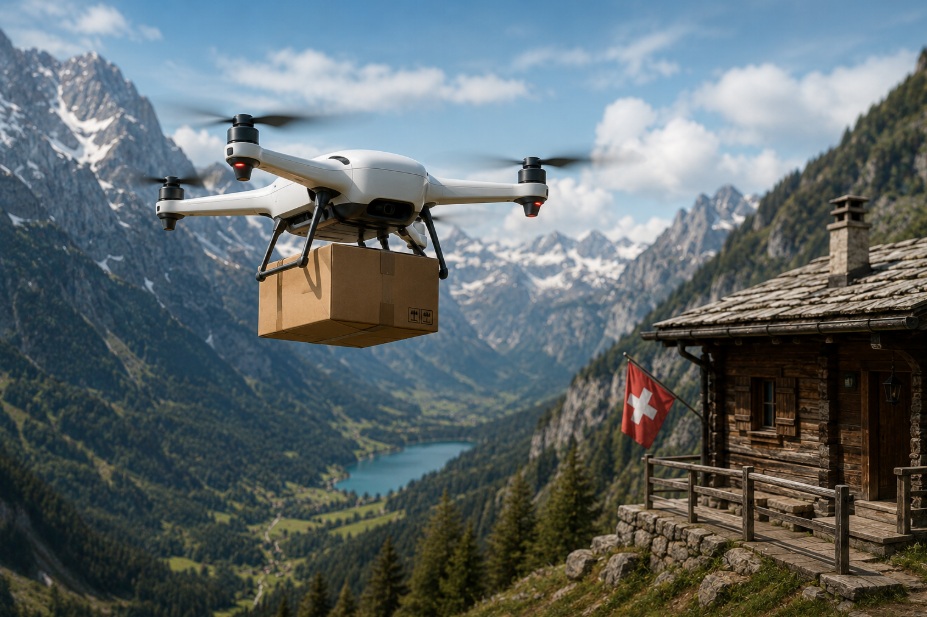
Modern logistics firms continue to explore unusual ways to get packages to your door. In remote or disaster‑stricken areas, small drones have carried medicine and blood samples across rivers and mountain ranges where roads are unreliable. Electric cargo bikes and autonomous sidewalk robots are popping up in European and Asian cities to ferry small orders along crowded streets. In the U.S., some neighborhoods see small rovers trundling along at walking speed with insulated compartments full of groceries.
Even crowdsourcing has entered the picture. When traditional couriers struggle, online communities sometimes band together to ferry goods. A traveler might volunteer to bring a forgotten passport to the airport for a stranger or deliver a favourite snack across a city using a combination of public transport and bicycle. These ad‑hoc networks reveal a social side of logistics: people helping people when time is critical. While none of these methods match the scale of mainstream shipping, they highlight an ongoing willingness to try new tools and revive old ones to solve logistical puzzles.
Navigating the Strangeness: Tips for Everyday Senders
Hearing about rocket mail and camel trains is entertaining, but what does it mean for someone simply waiting for a birthday present to arrive? The main lesson is that logistics networks are complex and adaptable. Packages often travel through multiple legs, carriers and countries. A single order might start its journey with a small factory in China, move by truck to a port, cross an ocean on a container ship, fly across a continent and then be handed to a neighbourhood postal worker for final delivery. Each transfer introduces a chance for delay or confusion.
For peace of mind, make use of tracking numbers and status updates. Modern carriers scan parcels at key points, allowing you to see when they leave the warehouse, clear customs or arrive at a local depot. Status messages such as “arrival at inward office of exchange” simply mean the parcel is waiting for customs inspection, while “out for delivery” indicates the courier is on their way. If an update seems odd, give it time – mules, boats or trucks may have limited connectivity in remote areas. And if you’re unsure which company is currently handling your parcel, try entering the code into a shipment tracking platform that recognises multiple carriers. For example, you can track the progress of a FedEx parcel or dozens of other networks through a single dashboard that automatically identifies the right courier based on the number format. This is especially useful when an international shipment switches carriers mid‑route or passes through customs in another country.
Celebrating Delivery Ingenuity
From messenger pigeons and reindeer caravans to pneumatic tubes and drones, the history of delivery is full of creativity. Each unusual method reflects a moment in time when people sought to bridge distance with whatever tools were available. While most of us will never receive a letter via rocket or watch a mule carrying our online order, knowing these stories can make the experience of waiting for a package more interesting. As technology continues to evolve, there’s no telling what future couriers might look like. Perhaps underwater drones will ferry parcels along canals or reusable gliders will ride high‑altitude winds. Whatever the innovation, you can be sure that someone, somewhere, is already dreaming up the next weird and wonderful way to get your purchase from “Add to cart” to your doorstep.
