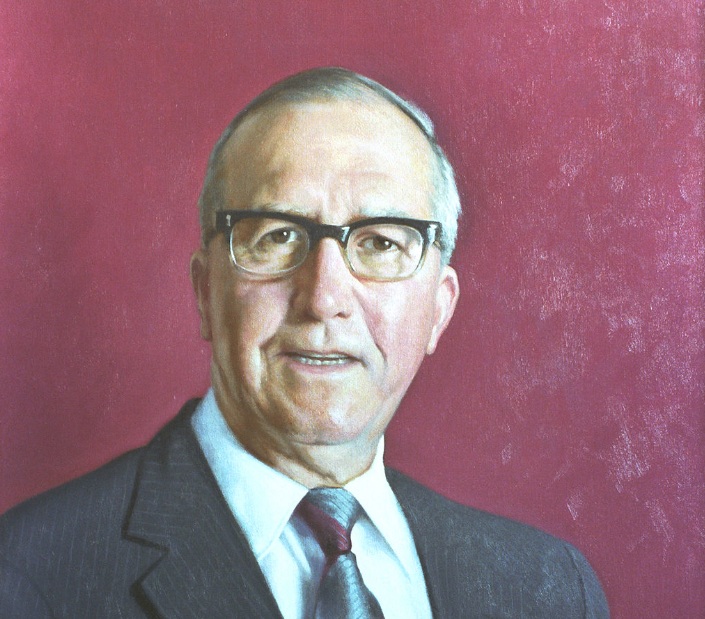
The First Democrat Governor in Decades and His Role in Ushering Judicial Monopoly
In the preceding installments of this series, we’ve traced the deliberate erosion of New Hampshire’s constitutional safeguards over the judiciary and legal profession. From the voluntary foundations of the Bar Association in 1873 (Part IV and earlier), through the “quiet coup” of 1967-1968 that mandated membership and dues (Parts V and VI), to the entrenchment of this system as a revenue-generating machine akin to RICO operations for the elite lawyer class (Part IV), we’ve seen how power shifted from the people’s elected representatives to an unaccountable judicial branch. Part VII posed the critical question: Was this a natural evolution or a calculated scheme?
Today, in Part VIII, we not only examine Governor John W. King’s pivotal role but also bolster our analysis with direct constitutional texts, judicial dissents, and modern critiques to underscore the profound violations at play—violations that strike at the heart of Granite State liberty. [Related: MURRAY: Notice of Constitutional Text Error in Part II Article 83…]
The Historical Context: Breaking the Republican Grip
To understand King’s significance, we must first set the stage with New Hampshire’s political landscape in the mid-20th century. Since Fred Herbert Brown, a Democrat who served from 1923 to 1925, the Granite State had been a Republican bastion. Governors like Styles Bridges (1935-1937), Francis P. Murphy (1937-1941), and a succession of others-maintained GOP dominance, reflecting the state’s conservative, small-government ethos rooted in our Constitution’s emphasis on limited powers and individual liberties.
This ethos is explicitly enshrined in Part I, Article 10: “[W]henever the ends of government are perverted, and public liberty manifestly endangered, and all other means of redress are ineffectual, the people may, and of right ought to reform the old, or establish a new government. The doctrine of nonresistance against arbitrary power, and oppression, is absurd, slavish, and destructive of the good and happiness of mankind.” Here, the Founders empowered the people—not unelected judges—to resist overreach, a principle flagrantly ignored in the bar unification saga.
Part II, Article 5 further vests “full power and authority… in the senate and house of representatives… to make, ordain, and establish, all manner of wholesome and reasonable orders, laws, statutes, ordinances, directions, and instructions,” including over corporations like the Bar Association, which was chartered under RSA 292 in 1873. This legislative supremacy was jealously guarded until the 1960s, when national progressive winds began to erode it.
Enter John W. King, born on October 10, 1916, in Manchester, New Hampshire. A product of the state’s industrial heart, King came from humble beginnings but pursued elite education: an A.B. from Harvard College in 1938, followed by service in the U.S. Navy during World War II. Post-war, he earned his law degree from Columbia Law School in 1948, honing his skills in the corridors of power that would later define his career. King practiced law in New York and New Hampshire, building a reputation as a sharp litigator before entering politics.
King’s political ascent began in the New Hampshire House of Representatives, where he served from 1957 to 1962. In 1962, he capitalized on shifting voter sentiments—perhaps weary of one-party rule and enticed by promises of modernization—to win the governorship. Defeating Republican incumbent Wesley Powell, King became the 71st Governor on January 3, 1963, ending 38 years of uninterrupted Republican control. His victory margin was narrow, but it signaled a seismic shift: Democrats, long sidelined, now held the executive reins. King was reelected in 1964 and 1966, serving three two-year terms until January 2, 1969—a period marked by ambitious reforms that expanded state government in ways that would have made our Founders shudder.
King’s Governorship: Modernization or the Seeds of Overreach?
As governor, King positioned himself as a progressive reformer, touting initiatives that aligned with the era’s big-government trends. Most famously, he championed and signed legislation in 1963 creating the New Hampshire Sweepstakes, the first state-run lottery in the U.S. since the 19th century. Sold as a revenue booster for education without raising taxes, it funneled millions into state coffers but also normalized government monopolies on gambling—echoing the very antitrust concerns embedded in our Constitution’s Part II, Article 83: “Free and fair competition in the trades and industries is an inherent and essential right of the people and ought to be protected against all monopolies and conspiracies which tend to hinder or destroy it.” This article explicitly prohibits monopolies to protect free enterprise, yet the unified bar creates a mandatory monopoly over legal practice, coercing dues and stifling competition among attorneys.mm.nh.gov
King’s administration also pushed for economic development, infrastructure improvements, and education reforms, including increased funding for public schools and the establishment of the New Hampshire Technical Institutes. On the surface, these were popular moves, but they expanded executive and bureaucratic influence, setting precedents for centralized control. Critically, as a lawyer himself, King was deeply intertwined with the legal establishment. His terms overlapped with growing agitation within the Bar Association for “unification”—a euphemism for making membership compulsory, thereby creating a captive revenue stream and consolidating power over attorneys.
Direct Involvement in the Judiciary’s Power Grab
Here’s where King’s legacy intersects directly with the “quiet coup” we’ve dissected in prior parts. Under our Constitution (Part II, Article 46), the governor appoints Supreme Court justices, subject to Executive Council approval: “All judicial officers… shall be nominated and appointed by the governor and council.” During his tenure, King appointed three key justices who would play instrumental roles in the 1968 unification order:mm.nh.gov
- Edward J. Lampron (appointed 1965): Served until 1985. Lampron authored the majority opinion in In Re Unification of the New Hampshire Bar (109 N.H. 260, decided December 31, 1968), asserting the court’s “inherent authority” to mandate Bar membership despite no constitutional basis for such a move. This bypassed the legislature, which had rejected unification in 1961 via House Bill 458 (as noted in Part VI). Lampron’s opinion claimed unification improved justice administration but dismissed constitutional concerns, citing out-of-state precedents while ignoring NH’s strict separation of powers in Part I, Article 37: “[I]n order to preserve the independence of the three branches of government, the legislative, executive, and judicial powers ought to be kept as separate from, and independent of, each other as the nature of a free government will admit.”law.justia.commm.nh.gov
- William A. Grimes (appointed 1966): Served until 1986. Grimes dissented vigorously in the 1968 case, arguing that forced association violated attorneys’ liberties under Part I, Articles 22 (“Free speech and liberty of the press are essential to the security of freedom in a state”) and a right not to associate, emphasizing that “if the personal freedom of even one lawyer is to be curtailed… that necessity should be clearly established by demonstrating that less drastic means will not meet the need.” He noted the court could impose ethics and fees without mandatory membership, highlighting the lack of necessity—a critique that echoes Part I, Article 12: “Every member of the community has a right to be protected by it… and is therefore bound to contribute his share in the expense of such protection.” But coerced dues for ideological activities exceed mere “expense,” veering into compelled speech.law.justia.commm.nh.gov
- Robert F. Griffith (appointed 1967): Served until 1975. Part of the court that issued the unification order, Griffith’s presence helped tip the scales toward judicial supremacy.”
These appointments weren’t coincidental. The Bar Association, facing declining voluntary membership (only about 41% participation by 1968), petitioned the Supreme Court for unification in 1967-1968—a period when King’s appointees formed a critical bloc. The court’s order, effective for a “trial” starting July 1, 1969 (made permanent in 1972), ignored the legislature’s exclusive power to charter corporations (Part II, Article 5) and violated separation of powers (Part I, Article 37). By stocking the bench with like-minded jurists, King effectively enabled the judiciary to seize control of the legal profession, transforming the voluntary NHBA into a mandatory monopoly that funds itself through coerced dues—revenue that supports ideological activities without accountability, contravening Part I, Article 14: “Every subject of this state is entitled to a certain remedy, by having recourse to the laws, for all injuries he may receive in his person, property, or reputation
Moreover, King’s own post-governorship trajectory underscores his entrenchment in this system. After serving three terms as New Hampshire Governor, King was appointed to the New Hampshire Superior Court by his Republican successor, Walter Peterson, in 1969, and later elevated to the State Supreme Court (Chief Justice in 1981) by Governor Hugh Gallen, becoming the only person in state history to serve as both Governor and Chief Justice before retiring in 1986. As Chief, King presided over a court that had already solidified the unification he helped facilitate, further insulating the “deep state” judiciary from reform.
The Effect on the Aforesaid Stories: Catalyst for Corruption and Modern Critiques
King’s role wasn’t that of a puppet master but a willing enabler. His breaking of the Republican monopoly opened the door for progressive judicial activism, aligning with national trends toward centralized authority. The 1968 unification, occurring on his watch and via his appointees, directly fueled the “RICO for Revenue” scheme (Part IV), where mandatory dues create a slush fund for the lawyer class, violating attorneys’ rights (Part I, Articles 4: “Among the natural rights, some are, in their very nature unalienable”) and entrenching corruption.mm.nh.gov
Modern critiques amplify these concerns. Post-Janus v. AFSCME (2018), mandatory bars face First Amendment scrutiny for compelled speech and association, as lawyers are forced to subsidize advocacy they may oppose. In NH, where unification persists, this equates to a constitutional violation under the U.S. framework, mirroring state prohibitions on forced contributions without consent (Part I, Article 12). Dissenting Justice Duncan in 1968 echoed this: “Compulsion seems to me a doubtful expedient… the possibility of comparable achievement by voluntary effort has not been exhausted.” Indeed, voluntary bars in other states achieve regulation without coercion, proving less restrictive alternatives exist.
Without King’s governorship, the court might not have had the composition to defy legislative will, and the Bar might have remained voluntary, preserving the constitutional balance our Founders intended (as explored in Part V). In the next installment, we’ll examine how this unification rippled into broader “deep state” controls over other professions and why reclaiming legislative authority is essential to restoring Granite State liberty.