

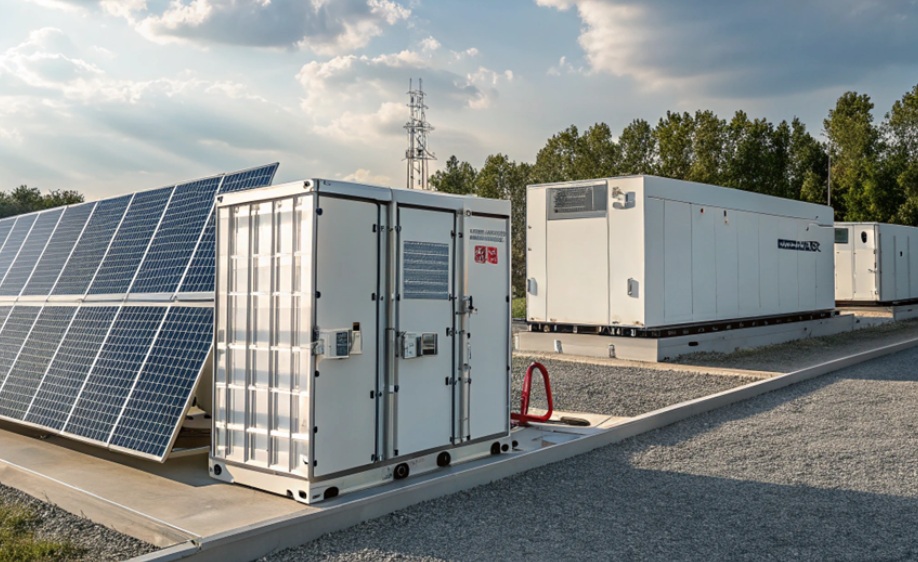
The modern power grid is experiencing its most significant transformation since electrification began over a century ago. As renewable energy sources proliferate and energy demands become increasingly complex, traditional grid infrastructure is struggling to maintain stability and reliability. Energy Storage Systems (ESS) have emerged as the critical solution to these challenges, evolving from supplementary technology to the foundational backbone of next-generation power grids. At HIITIO, we recognize that this shift represents not just an incremental improvement but a fundamental reimagining of how electrical infrastructure operates in the 21st century.
The integration of renewable energy has created an urgent need for sophisticated storage capabilities. Unlike conventional power plants that generate electricity on demand, solar and wind resources produce power intermittently based on weather conditions. Commercial and industrial energy storage systems bridge this critical gap by capturing excess renewable generation during peak production periods and releasing it when demand exceeds supply. This load-balancing capability has become indispensable as countries worldwide commit to ambitious decarbonization targets that require high percentages of renewable energy penetration.
The competitive landscape in energy storage technology has intensified dramatically, particularly in markets where renewable integration is most advanced. Innovation among China’s top commercial and industrial energy storage suppliers has driven rapid improvements in system efficiency, safety protocols, and cost-effectiveness. These advancements are making ESS deployment economically viable at unprecedented scales, accelerating the global transition toward storage-dependent grid architectures that can accommodate variable renewable resources while maintaining the reliability consumers expect.
The Fundamental Challenge: Grid Stability in the Renewable Era
Traditional power grids were engineered around the predictable output of fossil fuel and nuclear plants. Grid operators could dispatch these resources precisely to match consumption patterns throughout the day. Renewable energy fundamentally disrupts this model. Solar generation peaks midday regardless of demand patterns, while wind output varies unpredictably based on atmospheric conditions. This mismatch between generation timing and consumption creates several critical challenges:
- Frequency regulation: Grid frequency must remain within narrow tolerances, but variable renewables cannot provide the consistent output needed for frequency stability
- Voltage control: Sudden changes in renewable generation can cause voltage fluctuations that damage equipment and destabilize the grid
- Ramp rate limitations: Conventional plants cannot increase or decrease output quickly enough to compensate for rapid renewable fluctuations
- Duck curve phenomenon: High midday solar production suppresses prices and strains conventional generators, followed by steep evening ramps when solar drops off but demand remains high
Energy Storage Systems address all these challenges simultaneously, providing the flexibility and responsiveness that renewable-heavy grids require.
How ESS Provides Critical Grid Services
Modern energy storage installations function as multi-purpose grid assets that deliver services previously requiring multiple specialized facilities. The speed and precision with which battery systems can charge and discharge enables them to perform roles that thermal generators cannot match.
Frequency regulation represents one of the most valuable services ESS provides. Grid frequency drops when demand exceeds supply and rises when supply exceeds demand. Battery systems can detect frequency deviations within milliseconds and inject or absorb power almost instantaneously to restore balance. This response time is orders of magnitude faster than traditional generators, allowing smaller storage installations to provide equivalent or superior frequency regulation compared to much larger conventional plants.
Voltage support is equally critical. ESS installations can inject reactive power to maintain proper voltage levels across transmission and distribution networks. This capability becomes increasingly important as more distributed renewable resources connect to grid edges, creating voltage management challenges that centralized generation cannot address effectively.
Peak shaving and load shifting demonstrate how storage transforms grid economics. By charging during periods of low demand and high renewable output, then discharging during peak demand periods, ESS reduces the need for expensive peaker plants that operate only a few hours per day. This arbitrage capability generates revenue while improving grid efficiency and reducing overall system costs.
Enabling Renewable Integration at Scale
Perhaps the most transformative role of energy storage is enabling renewable energy penetration levels that would otherwise destabilize grids. Research indicates that without adequate storage, most grids become unstable when renewable sources exceed 30-40% of total generation. With sufficient storage capacity, this threshold increases dramatically, with some systems successfully operating at 70-80% renewable penetration.
This capability is essential for achieving climate targets. The International Energy Agency projects that meeting global climate goals requires renewable energy to provide 90% of electricity generation by 2050. This transition is impossible without massive storage deployment to manage the inherent variability of wind and solar resources.
Storage also addresses the seasonal and weather-dependent nature of renewable generation. While daily variations can be managed with relatively modest storage capacity, longer-duration storage will become necessary as renewable penetration increases further. Emerging technologies like flow batteries and compressed air energy storage complement lithium-ion systems by providing storage durations measured in days or weeks rather than hours.
Economic Drivers Accelerating ESS Adoption
The economics of energy storage have improved dramatically over the past decade. Lithium-ion battery costs have declined approximately 90% since 2010, falling from over $1,100 per kilowatt-hour to around $140 per kilowatt-hour currently. This cost reduction has reached the point where storage-plus-renewable installations frequently undercut new fossil fuel generation on pure economic grounds.
Additional revenue streams enhance the financial case for ESS deployment:
- Capacity payments: Grid operators pay for guaranteed available capacity during peak demand periods
- Ancillary services: Frequency regulation, voltage support, and black start capability generate ongoing revenue
- Transmission deferral: Strategic storage placement can delay or eliminate expensive transmission upgrades
- Demand charge reduction: Commercial and industrial facilities use storage to reduce peak demand charges that constitute significant portions of electricity bills
These multiple value streams make energy storage increasingly attractive to utilities, grid operators, and large energy consumers alike.
Grid Architecture Evolution
The rise of energy storage as a backbone technology is driving fundamental changes in how grids are designed and operated. Traditional hub-and-spoke architectures with centralized generation and unidirectional power flow are giving way to distributed, bidirectional networks where generation, storage, and consumption occur throughout the system.
This evolution enables greater resilience. Rather than depending on a few large facilities whose failure can trigger cascading blackouts, distributed storage creates redundancy and allows grid segments to operate independently during disruptions. This microgrid capability proved invaluable during recent extreme weather events that damaged centralized infrastructure.
Virtual power plant concepts leverage aggregated storage and distributed resources to function as coordinated assets under centralized control. These systems demonstrate how storage enables sophisticated grid management approaches that were technically impossible with conventional generation alone.
